
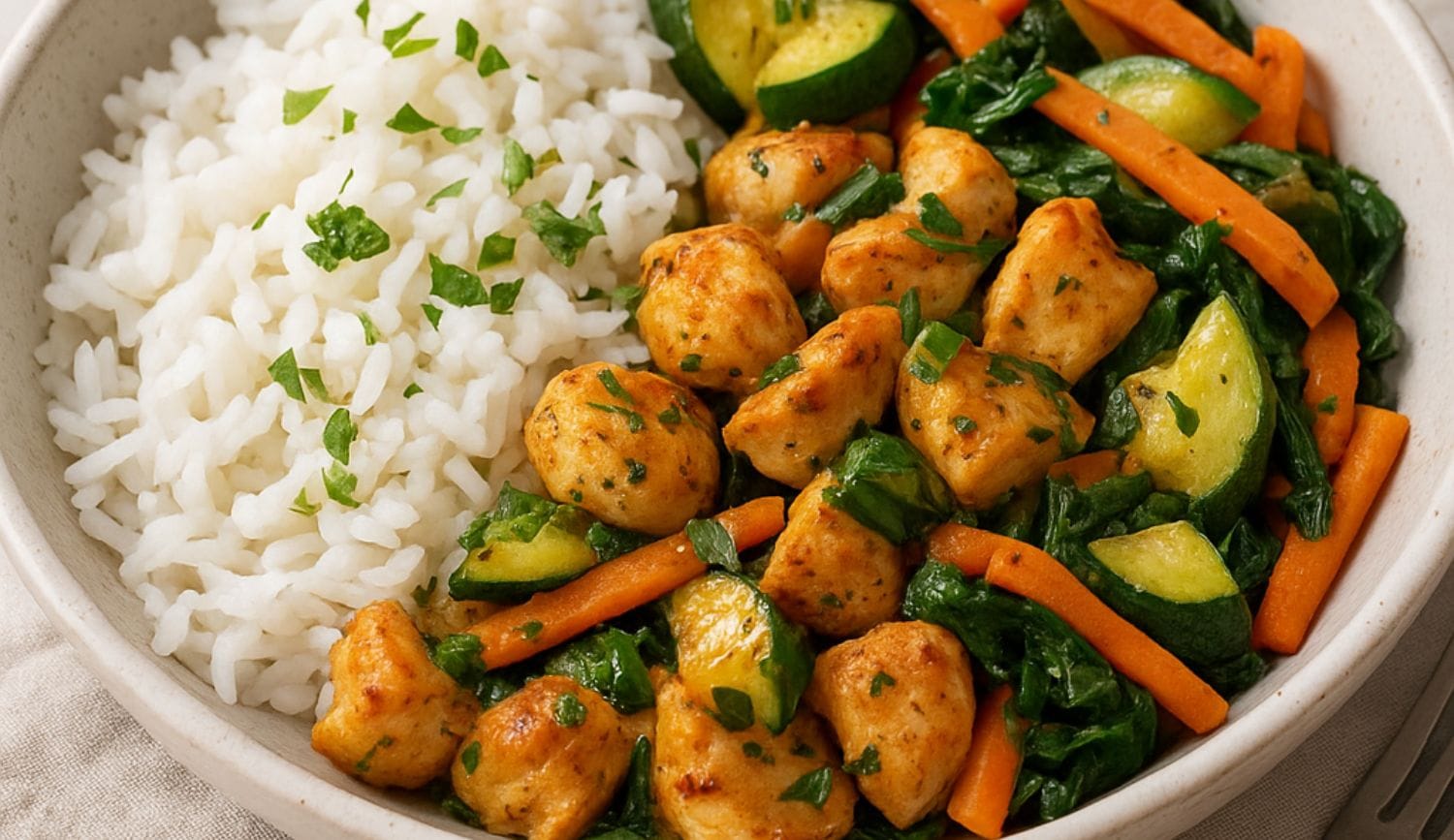
Managing histamine intolerance means planning ahead, but it doesn’t mean spending hours in the kitchen. This chicken rice bowl takes 15 minutes to make and provides four days of reliable meals that won’t trigger symptoms.
Fresh chicken, white rice, and simple vegetables create a complete meal you can actually tolerate. No mystery ingredients, no aged proteins, no fermented seasonings—just straightforward food that works.
What You’ll Learn
- Why fresh chicken and white rice form a reliable base for histamine management
- How to prep four days of meals in one 15-minute cooking session
- Which vegetables to choose (and which to avoid) for better tolerance
- Safe storage methods that prevent histamine buildup
- Simple substitutions for common trigger ingredients
Why This Recipe Works
Fresh chicken breast contains minimal histamine when cooked the same day you buy it. Aged or processed meats accumulate histamine during storage—fresh chicken doesn’t have that problem.
White rice is naturally low in histamine and easy to digest. It provides steady energy without the fermentation issues that come with some whole grains.
The vegetables here—zucchini, carrots, leafy greens—are generally well-tolerated. They provide nutrients and fiber without common trigger compounds found in tomatoes, eggplant, or fermented vegetables.
Fresh herbs add flavor without aged seasonings. Parsley and chives work where dried spices might cause problems.
Ingredients (4 Servings)
Protein:
- 600g fresh chicken breast, cut into bite-sized pieces
- 2 tablespoons olive oil
- ¼ teaspoon sea salt
- ¼ teaspoon black pepper (omit if sensitive)
Rice:
- 300g uncooked white jasmine or basmati rice
- 675ml filtered water
- ¼ teaspoon sea salt
Vegetables:
- 2 medium zucchini, diced (about 300g)
- 2 medium carrots, julienned (about 200g)
- 4 cups fresh baby spinach
- 2 cloves fresh garlic, minced (optional)
Finish:
- ¼ cup fresh parsley, chopped
- 2 tablespoons fresh chives, chopped
- 2 tablespoons olive oil for drizzling
- Sea salt to taste
Instructions
Step 1: Start the Rice
Rinse rice under cold water until it runs clear. Combine with 675ml water and ¼ teaspoon salt in a medium pot. Bring to a boil, then reduce heat to low, cover, and simmer 12-15 minutes. Remove from heat and let stand covered for 5 minutes. Fluff with a fork.
Step 2: Cook the Chicken
Heat 2 tablespoons olive oil in a large skillet over medium-high heat. Season chicken with salt and pepper if tolerated. Add chicken in a single layer and cook 3-4 minutes without moving. Flip and cook another 3-4 minutes until internal temperature reaches 75°C (165°F). Remove to a plate.
Critical: Use chicken purchased within 1-2 days and cook immediately. Histamine levels increase with time and temperature changes.
Step 3: Cook the Vegetables
Using the same skillet, add zucchini and carrots. Sauté 3-4 minutes until tender but slightly crisp. Add garlic in the last minute if using. Add spinach and stir 1-2 minutes until just wilted.
Step 4: Combine
Return chicken to skillet with vegetables. Add parsley and chives. Toss to combine. Adjust salt and drizzle with olive oil.
Step 5: Portion
Divide rice among 4 containers. Top with equal amounts of chicken and vegetables. Cool completely before sealing.
Storage Guidelines
Refrigeration: Store at 4°C (40°F) or below. Consume within 4 days maximum. Histamine levels increase in aging proteins—don’t push this timeline.
Don’t freeze: Freezing and thawing chicken increases histamine formation. Make only what you’ll eat in 4 days.
Reheating: Microwave 2-3 minutes until 75°C (165°F) internal temperature. Add a tablespoon of water before reheating to prevent rice from drying. Or reheat in a skillet over medium heat for 5-7 minutes.
Container choice: Use glass meal prep containers with secure lids. Glass prevents flavor absorption and makes reheating easier.
Ingredient Substitutions
Protein Alternatives:
- Turkey breast: Use fresh turkey in equal amounts, same cooking method
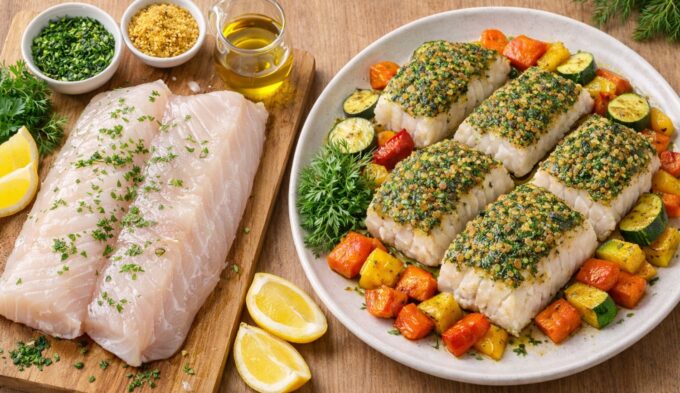
- White fish: 600g fresh cod, haddock, or sole (reduce cooking time to 3-4 minutes per side)
- Tofu: 400g extra-firm tofu (fresh, not aged), pressed and cubed
Vegetable Options:
- Yellow squash instead of zucchini
- Fresh green beans (300g, trimmed and halved)
- Bok choy instead of spinach
- Sweet potato (200g diced) with carrots
Avoid: Tomatoes, eggplant, leftover vegetables
Rice Alternatives:
- White quinoa: 300g uncooked, cook in 600ml water for 15 minutes
- Fresh white pasta: 300g cooked per package directions
- Cauliflower rice: 4 cups for lower carb option
Seasoning Adjustments:
- Black pepper sensitive? Use only fresh herbs
- Garlic sensitive? Skip it and increase herbs
- Need more flavor? Add fresh thyme, oregano, or basil at the end
Meal Prep Tips
Buy fresh: Purchase chicken the same day you cook it. Request packages from the back of the meat case if possible. Check dates. Freshness isn’t negotiable here.
Prep vegetables last: Cut vegetables right before cooking. Pre-cut vegetables degrade even in the refrigerator.
Temperature control: Keep your refrigerator at 4°C (40°F). Use a refrigerator thermometer to verify.
Label containers: Write prep dates on everything. Helps you track the 4-day window.
Batch cooking order: If making multiple recipes, cook this one first before utensils touch higher-histamine ingredients.
Nutritional Information (Per Serving)
- Calories: 445
- Protein: 38g
- Carbohydrates: 52g
- Fiber: 4g
- Fat: 10g
- Sodium: 320mg
Balanced macros provide sustained energy while supporting histamine management.
Common Questions
Can I use frozen chicken?
No. Use fresh chicken only, purchased within 1-2 days of cooking. Frozen chicken that’s been thawed accumulates histamine during the thawing process.
How long will this actually keep?
4 days maximum in the refrigerator. Don’t push it to 5 or 6 days—histamine levels increase in stored proteins.
Can I prep the vegetables ahead?
Cut vegetables right before cooking for best results. Pre-cut vegetables start degrading immediately, even refrigerated.
What if I react to this recipe?
Individual tolerance varies significantly. If you experience flushing, hives, digestive issues, or headaches, consult a healthcare provider or dietitian specializing in histamine intolerance. Some people react to ingredients others tolerate fine.
Why not freeze portions?
Freezing and thawing increases histamine in chicken. For histamine management, make only what you’ll eat in 4 days using fresh ingredients each time.
Continue Learning
More low-histamine recipes and meal planning resources:
- 10 Low Histamine Breakfast Recipes
- Complete Histamine Intolerance Guide
- Low Histamine Food List
- High-Fiber Low Histamine Guide
Free downloadable resources:
- 14-Day Symptom & Trigger Tracker
- High-Fiber Low-Histamine Shopping List – Your Complete Weekly Shopping Guide
- 7-Day High-Fiber Meal Plan
- Low-Histamine Food Swaps Guide
Medical Disclaimer: This recipe provides nutritional information and cooking guidance for educational purposes. It is not medical advice and cannot diagnose, treat, cure, or prevent any condition. Histamine intolerance varies significantly between individuals. Consult qualified healthcare providers or registered dietitians before making significant dietary changes or if you experience persistent symptoms. This information should not replace professional medical advice tailored to your specific health needs.
Note: This article contains affiliate links. If you purchase through these links, we may earn a small commission at no extra cost to you. We only recommend products that support effective meal prep and food storage.