

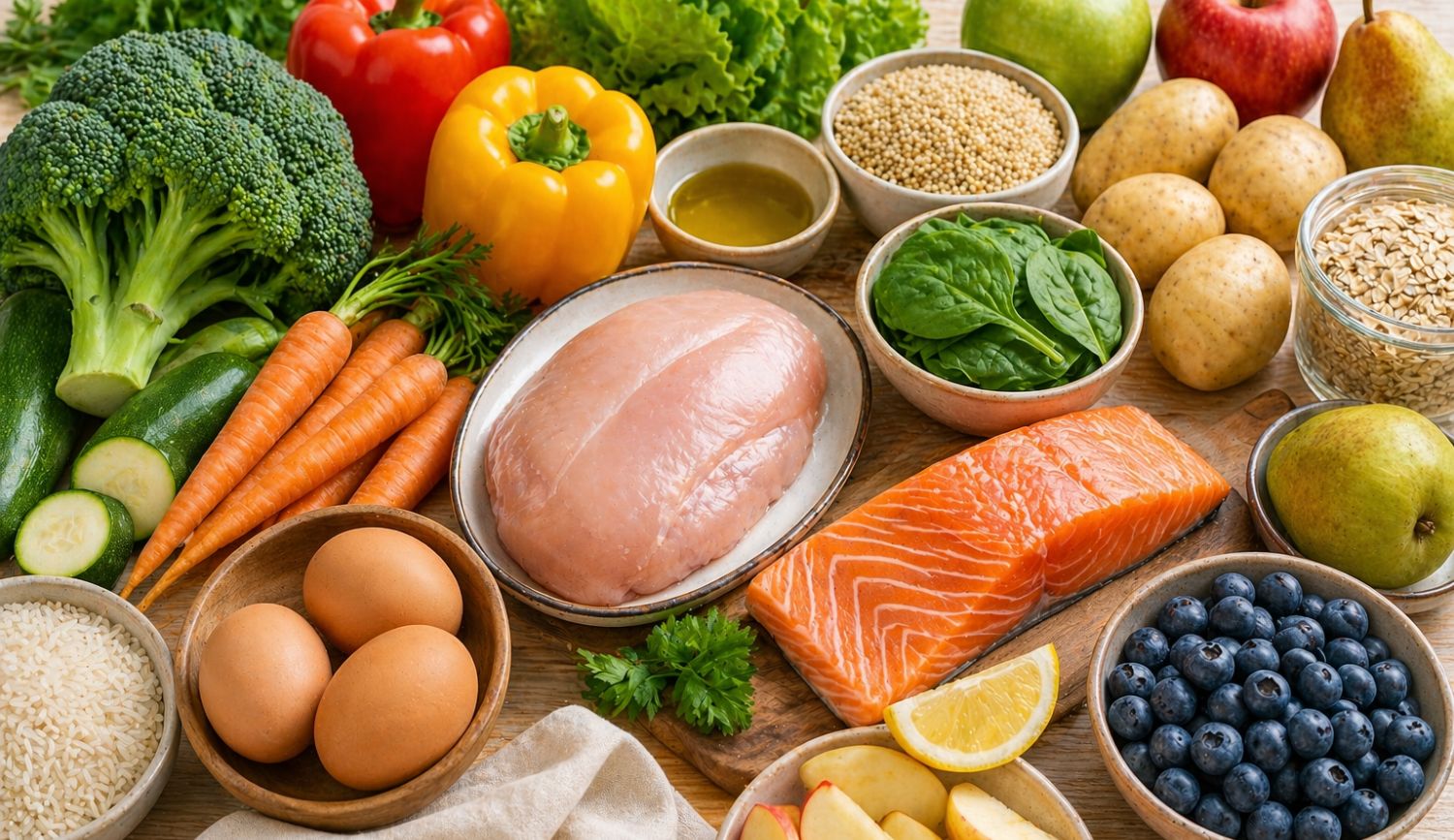
No single low-histamine food list is universally validated — histamine concentrations can vary by processing, fermentation, storage, maturity, and batch, even within the same food. Aged, fermented, cured, and preserved foods have the most consistent evidence for higher histamine, while many plain fresh foods are commonly used as lower-histamine starting options.
Foods that show up on some lists and not others shouldn’t be treated as universally safe or unsafe. A reaction to a food doesn’t prove it was high in histamine. And the goal here isn’t prolonged blanket restriction — it’s a practical starting reference.
Why low histamine food lists disagree
Published low-histamine diet lists disagree substantially with each other. Some exclude dozens of foods; others are far more conservative — and the overlap between them is incomplete.
Part of the disagreement comes from real biology: histamine levels vary within the same food type depending on how it was grown, processed, and stored. Food matrix effects and individual tolerance add further uncertainty, since two people can react differently to the same food.
What people often call “histamine safe foods” are better treated as lower-histamine starting options, not guarantees. Current clinical guidance cautions against unnecessary long-term restriction. A working list should function as a flexible starting point, not a permanent, tightly locked diet.
Quick reference: lower-histamine starting options, variable foods, and higher-histamine categories
The table below groups foods into three practical tiers: common lower-histamine starting options, foods that are genuinely variable or disputed, and categories with more consistent evidence for higher histamine.
| Category | Commonly included / lower-histamine starting options | Variable or often disputed | More consistently higher-histamine examples |
|---|---|---|---|
| Proteins | Freshly prepared, unaged poultry, beef, pork, eggs | Cooked meats stored for longer periods or handled under uncertain time/temperature conditions; processed deli meats | Cured, aged, or smoked meats (salami, pepperoni, some sausages) |
| Fish/seafood | Freshly caught, properly chilled fish, when tolerated | Fish without a strict cold chain; some shellfish | Canned tuna, mackerel, sardines, anchovies; poorly handled scombroid fish |
| Vegetables | Carrots, broccoli, cauliflower, cucumber, zucchini, most leafy greens, potatoes, onions, garlic, green beans, cabbage | Tomato, spinach, eggplant/aubergine | Fermented vegetables are a separate higher-histamine category; fresh vegetables vary by food and handling |
| Fruits | Apples, pears, blueberries, grapes, melon, cherries, mango | Citrus, strawberries, bananas, avocado | No broad fresh-fruit category is established as uniformly high histamine; dried/processed products vary |
| Grains/starches | Rice, oats, quinoa, millet, buckwheat, potatoes, sweet potatoes, plain pasta/bread where tolerated | Some packaged grain products with added ingredients | Not a category with strong evidence of high measured histamine |
| Dairy | Fresh, unaged dairy where tolerated (milk, cream) | Fermented dairy (yogurt, kefir); fresh cheeses such as ricotta or cottage cheese; brined cheeses such as feta vary by product and production | Aged, ripened cheeses (parmesan, cheddar, blue cheese, gouda) |
| Fats/oils | Butter, ghee, olive oil, coconut oil, commonly used but not guaranteed tolerated | Some flavored or fermented oil-based products | Not a category with strong evidence of high measured histamine |
| Fermented foods/condiments | Few plain, unfermented condiments where tolerated | Vinegar-based condiments; some sauces | Sauerkraut, kimchi, soy sauce, miso, fermented vinegar products |
| Beverages | Water; selected plain non-fermented drinks where tolerated | Some teas and coffee; individual tolerance varies | Red wine, some beers, champagne, other fermented/alcoholic beverages |
For a separate evidence-led breakdown of the categories most consistently associated with higher histamine, see our high histamine foods guide.
Proteins and fish: freshness matters, but there is no universal clock
Histamine in proteins forms mainly through microbial decarboxylation — bacteria converting the amino acid histidine into histamine over time. How the food is handled, chilled, stored, and processed all affect how much accumulates.
Freshly prepared, unaged meat and poultry are commonly used as starting options in low-histamine plans. Fish needs particularly careful cold-chain handling, since some species can accumulate histamine quickly if not kept consistently cold.
There’s no reliable “same-day safe, next-day unsafe” rule, and no universal 24-hour cutoff. Freezing can slow further microbial histamine formation, but it doesn’t remove histamine that has already formed.
Vegetables
Vegetables commonly included as lower-histamine starting options include carrots, broccoli, cauliflower, cucumber, zucchini, most leafy greens, potatoes, onions, garlic, green beans, and cabbage.
Tomato, spinach, and eggplant are more genuinely variable or disputed. They appear on many restriction lists, but that inclusion isn’t uniformly supported by measured histamine data — individual tolerance plays a real role here.
Fruits
Fruits commonly included as starting options can include apples, pears, blueberries, grapes, melon, cherries, and mango.
Citrus, strawberries, bananas, and avocado are more often restricted by some plans, but this isn’t settled. Citrus and strawberries aren’t proven histamine liberators, banana ripeness doesn’t reliably predict tolerance, and avocado reactions haven’t been shown to result specifically from related amines.
Grains and starches
Commonly included grains and starches are rice, oats, quinoa, millet, buckwheat, potatoes, sweet potatoes, and plain pasta or bread where otherwise tolerated.
These foods aren’t included because they “lack the protein that drives histamine accumulation” — that’s an oversimplification. They’re included because they’re plain, minimally processed staples with limited evidence of concern.
Dairy, fats and pantry foods
Dairy varies by type. Aged, ripened cheeses — parmesan, cheddar, blue cheese, gouda — carry more consistent concern. Fermented dairy like yogurt and kefir is variable, and fresh, unaged dairy is also variable rather than guaranteed to be fine.
Fats like butter, ghee, olive oil, and coconut oil are often used in low-histamine plans, but that doesn’t mean they’re universally tolerated by everyone.
What about “histamine liberators”?
Current professional guidance doesn’t find reliable evidence establishing food “histamine liberators” as a clinically meaningful general category.
Many online lists exclude foods based on this label, but the underlying mechanism and its clinical relevance remain uncertain. That doesn’t mean individual reactions to these foods aren’t real — it means they haven’t been shown to work through proven histamine release.
For a closer look at why these foods appear on liberator lists and what the evidence actually supports, see our guide to histamine liberator foods.
Freshness, leftovers and freezing
Histamine can rise in susceptible foods as microbial activity continues after preparation. But there’s no universal cutoff — a leftover isn’t automatically high in histamine after a fixed number of hours.
Freezing doesn’t destroy histamine that has already formed; it mainly slows further formation. Ordinary food-safety practices and proper temperature control still matter. Smell and appearance alone do not reliably indicate whether histamine has formed, especially in susceptible fish.
Individual reaction patterns are useful information, but they aren’t the same as a lab measurement of histamine content.
Common foods people search for
A few specific foods come up often enough to answer directly.
- Blueberries are commonly included in many low-histamine plans, but that does not guarantee tolerance.
- Yogurt is fermented, so its histamine content is more variable than plain fresh dairy; some people tolerate it well, others don’t.
- Potatoes and sweet potatoes are widely used starting staples with limited evidence of histamine concern.
- Broccoli is a commonly included vegetable with limited evidence of high histamine content.
- Onion is generally included as a starting option, though some people report sensitivity to it for unrelated reasons.
- Ghee is often used in low-histamine cooking, but tolerance still varies by individual.
- Sauerkraut is fermented, so it is more likely to contain biogenic amines and is commonly restricted.
- Ricotta and cottage cheese are fresh cheeses; feta is a brined, ripened cheese. Histamine can vary by production, maturation, and storage, so avoid treating all cheeses alike.
- Tofu: plain tofu is non-fermented, but evidence is too limited to classify it as universally low histamine. Fermented soy products such as miso and soy sauce are a separate higher-concern category.
How to use this list without over-restricting
Treat this list as a starting reference, not a permanent, universal diet. Current professional guidance favors personalized dietary adjustment over indefinite blanket restriction.
A short, structured period of restriction followed by reintroduction is sometimes used clinically to identify individual triggers — this isn’t the same as staying maximally restrictive indefinitely.
If the diet becomes very narrow, or symptoms are significant and persistent, guidance from a clinician or registered dietitian is appropriate.
For related practical resources, see:
References
This list draws on current clinical guidance and food-histamine research.
- Reese I, Ballmer-Weber B, Beyer K, et al. Guideline on management of suspected adverse reactions to ingested histamine. Allergol Select. 2021;5:305-314. doi:10.5414/ALX02269E
- Sánchez-Pérez S, Comas-Basté O, Veciana-Nogués MT, Latorre-Moratalla ML, Vidal-Carou MC. Low-Histamine Diets: Is the Exclusion of Foods Justified by Their Histamine Content? Nutrients. 2021;13(5):1395. doi:10.3390/nu13051395
- Comas-Basté O, Sánchez-Pérez S, Veciana-Nogués MT, Latorre-Moratalla ML, Vidal-Carou MC. Histamine Intolerance: The Current State of the Art. Biomolecules. 2020;10(8):1181. doi:10.3390/biom10081181
- EFSA Panel on Biological Hazards (BIOHAZ). Scientific Opinion on risk based control of biogenic amine formation in fermented foods. EFSA Journal. 2011;9(10):2393. doi:10.2903/j.efsa.2011.2393
- U.S. Food and Drug Administration. CPG Sec 540.525 Scombrotoxin (Histamine)-forming Fish and Fishery Products — Decomposition and Histamine (CPG 7108.24). November 2024. Available from: U.S. Food and Drug Administration.







Thank you, Derick! Really glad you found it helpful — appreciate you taking the time to comment.