


If your symptoms are active right now — the anxiety that appeared from nowhere, the itching, the flushing, the racing heart, the digestive discomfort — the last thing you need is a long article to read through. What you need is a clear answer to one question: what to eat during a histamine flare without making this worse?
This guide gives you that. Simple foods, quick combinations, what to avoid for the next 24–48 hours, and how to get through this without triggering more symptoms.
If you are unsure which foods are generally safe, the histamine safe foods guide provides a simple starting point before following this flare plan.
What is happening during a histamine flare
During a flare, histamine has built up beyond what your body can comfortably clear. The symptoms are physical responses to that elevated load — affecting the skin, gut, blood vessels, and nervous system.
Your body is not overreacting. It is responding to a higher histamine level than it can currently manage.
Digestion is usually more sensitive at this stage. The goal is not just to “eat low histamine,” but to reduce total load as much as possible for a short period.
What to eat during a histamine flare
Start simple. Choose foods that are low in histamine, easy to digest, and consistent. Keep portions moderate and avoid large meals.
Safe proteins
Fresh protein helps maintain energy without increasing histamine — but freshness is critical.
Choose freshly cooked chicken, turkey, or white fish such as cod or haddock. Cook and eat the same day.
Eggs are also tolerated by many people during a flare. A simple boiled or scrambled egg with rice and vegetables is often one of the easiest meals to manage.
Safe carbohydrates
Carbohydrates provide stable energy and are usually very well tolerated during a flare.
Use plain white rice, potatoes, oats, or quinoa. White rice is often the gentlest option and easy to keep simple.
A bowl of rice with butter and salt is something most people tolerate well during a flare.
Safe vegetables
Most fresh vegetables are fine, with a few key exceptions.
Avoid spinach, tomatoes, and aubergine during a flare. These can increase symptoms when your tolerance is already low.
Stick to carrots, courgette, broccoli, cauliflower, cucumber, and celery. Keep preparation simple — steamed or lightly cooked with olive oil.
Safe fruits
Keep fruit simple and in small amounts.
Choose apple, pear, or blueberries. Avoid citrus, strawberries, and pineapple for now.
Overripe fruit can also be harder to tolerate, so aim for fresh, firm options.
Safe drinks
Hydration supports recovery and histamine clearance.
Water should be your main drink. Herbal teas like chamomile or peppermint can also help with calmness and digestion.
Reduce or avoid coffee during a flare. It can stimulate histamine release in some people and make symptoms feel worse.
Simple meals during a flare
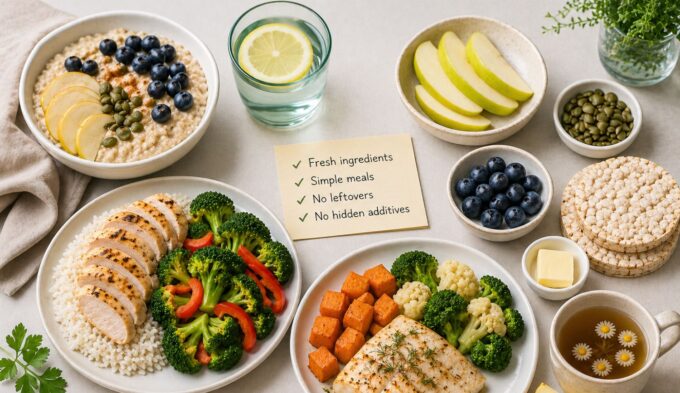
These combinations are designed to be easy, low-risk, and repeatable while symptoms are active. If you want a full daily structure, the low histamine meal plan shows how to organise these meals across the day.
Meal 1: Rice + chicken + carrots
Meal 2: Oats + blueberries
Meal 3: Potato + butter + broccoli
Meal 4: Eggs + rice cakes + cucumber
Meal 5: Fish + sweet potato + cauliflower
Meal 6: Rice + egg + carrots
Rotate two or three of these meals for a day or two. Repetition helps stabilise symptoms faster.
Foods to avoid during a flare
During a flare, avoiding certain foods is just as important as choosing the right ones. This is a short-term strategy to reduce load quickly.
- Leftovers: Even safe foods become problematic after storage. Fresh only.
- Fermented and aged foods: Yogurt, cheese, vinegar, kombucha, soy sauce, alcohol.
- Processed foods: Packaged meals, snacks, and condiments often contain additives that interfere with histamine breakdown.
- Tomatoes, citrus, spinach: These can worsen symptoms during a flare.
- Large meals: Smaller meals are easier to tolerate.
What to do for the next 24 to 48 hours
Focus on lowering histamine load and giving your body time to recover.
Keep meals repetitive. Choose a few safe combinations and stick with them.
Eat fresh every time. Avoid anything stored or reheated.
Reduce variety. Fewer ingredients mean fewer variables.
Stay hydrated throughout the day.
Rest where possible. Stress can worsen histamine activity.
Try to eat earlier in the evening. This helps reduce overnight symptoms.
Common mistakes during a flare
Trying too many foods at once makes it harder to stabilise.
Eating leftovers, even if they were originally safe, increases histamine load.
Relying on packaged “healthy” foods often introduces hidden triggers.
Over-restricting or not eating enough can slow recovery. Keep meals simple, but eat regularly.
How this connects to your longer-term diet
A flare is temporary. Once symptoms settle, your diet can expand again.
The low histamine food list gives a full overview of safe and conditional foods when you are ready to add variety.
The low histamine grocery list helps you choose the right ingredients so you are not relying on last-minute decisions.
Over time, the goal is not restriction — it is building a diet you can follow confidently.
Frequently Asked Questions
These questions address common concerns during an active histamine flare.
What can I eat during a histamine flare?
Fresh proteins, simple carbohydrates like rice or potatoes, low-risk vegetables, and limited fruits such as apples or pears are generally safe. Meals should be fresh, simple, and free from additives.
How long does a histamine flare last?
Many histamine flares improve within 24 to 48 hours when histamine load is reduced, though duration can vary depending on the cause and individual sensitivity.
Can I eat eggs during a histamine flare?
Yes, most people tolerate whole eggs well when cooked simply, such as boiled or scrambled, and paired with low histamine foods.
Should I fast during a histamine flare?
No, fasting is not recommended. Eating small, simple meals supports recovery and helps maintain the body’s ability to process histamine.
Conclusion
A histamine flare feels intense, but it follows a pattern — and that means it can be managed.
Focus on fresh food, simple meals, and consistency for the next couple of days. Give your body the conditions it needs to reduce histamine load.
This is not permanent. It is a short phase to help you stabilise.
You now have a clear, simple way to get through this.
This article is for informational purposes only and does not constitute medical advice. If symptoms are severe or persistent, seek medical guidance.






Thankyou for the information, very interesting and will help