

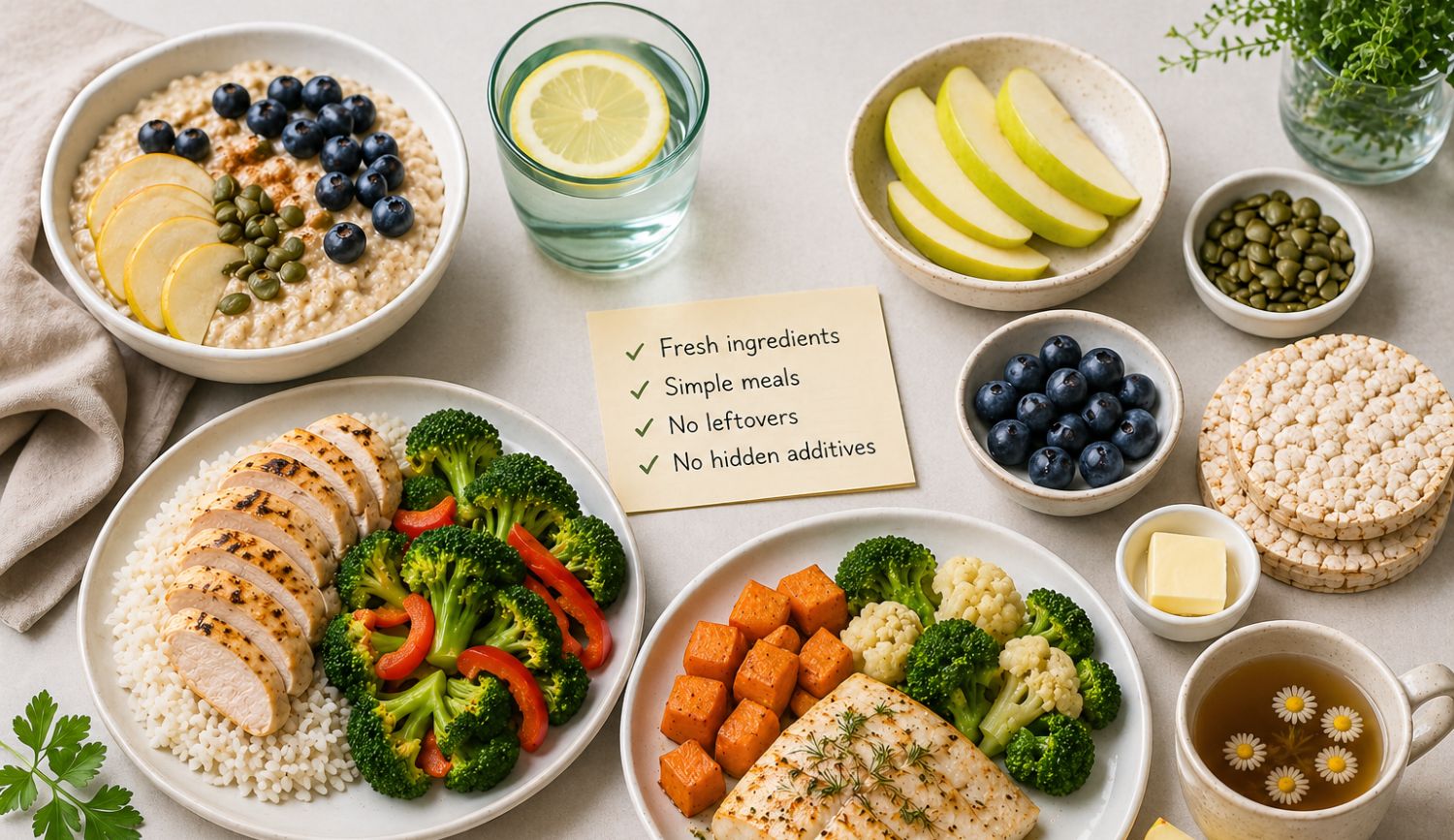
A low histamine meal plan can feel confusing at first, especially when you are trying to turn food lists into real meals you can follow throughout the day. The food lists make sense in theory, but turning them into breakfast, lunch, dinner, and snacks — in the right order, with the right ingredients — is where most people feel stuck.
This one-day meal plan answers that question directly. No theory, no lengthy explanations. Just a clear, simple structure you can follow from morning to night using fresh, safe ingredients.
If you are still unsure which foods are safe to use, the histamine safe foods guide provides a simple starting point before following this plan.
How this meal plan works
This plan is built on three principles: fresh food, simple combinations, and a consistent daily structure. The low histamine food list helps you understand which foods to choose when building these combinations.
Fresh food means proteins bought and cooked the same day wherever possible. Leftovers accumulate histamine during refrigeration and are one of the most common hidden triggers.
Simple combinations means two or three ingredients per meal, not complex recipes. Simple meals are easier to prepare and easier to adjust if something does not suit you.
Repeatable structure means breakfast, a mid-morning snack, lunch, an afternoon snack, dinner, and an optional light evening option. You do not need a different combination every day. Repeating meals that work is not boring — it is effective.
The 1-day low histamine meal plan
This simple one-day plan shows how to structure your meals from morning to night using low histamine foods. Each section focuses on practical combinations that are easy to prepare, easy to repeat, and designed to reduce the risk of symptoms throughout the day.
Breakfast
A good low histamine breakfast provides protein, complex carbohydrates, and some fresh fruit to start the day without triggering histamine.
Option 1: Plain oats made with water or carton coconut milk, topped with fresh blueberries, a thin drizzle of maple syrup, and a pinch of Ceylon cinnamon.
Option 2: Two scrambled or fried eggs cooked in fresh butter, served with a portion of white rice or plain toast, and half a sliced fresh apple on the side.
Option 3: A small bowl of plain oats with sliced fresh pear and a tablespoon of pumpkin seeds.
Keep breakfast simple. It sets the tone for the day and helps your body start the day without unnecessary stress.
For quick, plant-based morning options, explore these 10 easy low-histamine vegan breakfasts that are free from eggs and dairy. These recipes provide simple, compliant solutions to start the day.
Mid-morning snack
A light mid-morning snack keeps energy steady without adding significant histamine load to the day.
Options: A fresh apple or pear on its own, a small handful of plain pumpkin seeds or macadamia nuts from a recently opened packet, or two to three plain rice cakes with a thin spread of fresh butter.
If you are not hungry mid-morning, skip this. Snacking is not required — it is an option for people who need something between breakfast and lunch.
Lunch
Lunch should include a protein, a carbohydrate, and vegetables. This combination keeps blood sugar stable, provides sustained energy, and ensures the meal is satisfying without being heavy.
Option 1: Freshly cooked chicken breast, sliced or pulled, served over white rice with steamed broccoli and a drizzle of olive oil and sea salt.
Option 2: Baked or pan-cooked white fish (cod or haddock) with a portion of quinoa and a side of roasted courgette and bell peppers.
Option 3: A simple salad bowl with fresh chicken, cucumber, shredded carrot, rocket, fresh parsley, olive oil, and sea salt, with plain rice crackers on the side.
Cook protein fresh where possible. Protein storage is one of the fastest ways histamine increases. If needed, cook in the morning and store only briefly.
Afternoon snack
The afternoon snack should be light. By this point, histamine from earlier meals has already accumulated, so simpler choices help maintain tolerance.
Options: A fresh pear or a small bowl of blueberries, a few plain rice cakes with fresh butter, or a small handful of pumpkin seeds.
Avoid reaching for packaged snack bars or flavoured crisps here. Most of these contain preservatives that interfere with histamine clearance even when the snack itself appears healthy. The low histamine snacks guide covers this in more detail.
Dinner
Dinner is the most important meal to get right for overnight symptoms. Eating dinner at least two to three hours before bed, from fresh ingredients, significantly reduces the risk of nighttime reactions. This is particularly important for people who experience nighttime symptoms.
Option 1: Fresh cod or haddock, baked with olive oil and fresh dill, served with roasted sweet potato and steamed broccoli or cauliflower. Cook and eat the same day.
Option 2: Freshly cooked chicken thigh or breast, pan-cooked with garlic, courgette, and carrots, served over white rice.
Option 3: Fresh turkey mince, cooked the same evening, with white potatoes and green beans.
Keep dinner moderate in size. A lighter dinner eaten earlier is consistently better tolerated overnight than a heavy dinner eaten late.
Optional evening snack
If you feel genuinely hungry in the evening, a very light option is better than going to bed uncomfortable. Keep this minimal and fresh.
Options: A small cup of fresh chamomile or peppermint herbal tea with a plain rice cake, or a few slices of fresh apple.
Avoid proteins in the evening snack. Any additional protein close to bedtime adds to the overnight histamine processing load.
Why this plan works
This plan works because it removes the three variables that most commonly cause unexpected histamine reactions: high-histamine ingredients, stored or leftover food, and hidden additives in packaged products.
Every meal uses foods from the consistently safe category. Every protein is cooked fresh for that meal.
It is not a complicated system. That is exactly why it works. The histamine safe foods guide provides a broader reference for the foods used across this plan. This consistency is what allows your body to stabilise and makes it easier to identify what actually affects you.
Common mistakes to avoid
Eating leftovers as the next day’s meals. The dinner from last night is not today’s safe lunch. Cooked proteins accumulate histamine in the refrigerator. If you cook more than you need, freeze the extra immediately.
Buying packaged convenience foods to save time. Pre-made meals, commercial soups, and packaged ready-to-eat proteins almost always contain preservatives, vinegar, or additives. Cook simply and freshly instead.
Overcomplicating meals. Adding multiple sauces, marinades, or seasonings introduces variables. Fresh olive oil, salt, fresh garlic, and fresh herbs are all you need.
Snacking on aged or processed foods. Crackers with a long ingredient list, flavoured nuts, and dried fruit all carry hidden histamine or additive risk. Stick to the simple snack options above.
How to customise this plan
This plan is a template, not a fixed prescription. Swap any protein for another fresh protein from the safe list. Rotate between the fruit options at snacks. Adjust portion sizes to suit your appetite and energy needs.
If a particular food consistently causes a reaction, remove it and replace it with another option from the same category. If everything is fine, begin adding one new food at a time from the conditional list — eggs in larger quantities, banana, or avocado — to test your individual tolerance.
Repetition is fine. Eating the same three or four meals in rotation for the first few weeks gives you a reliable baseline. Once you know what works, expanding the variety becomes easier and more confident.
How this fits into the bigger picture
This one-day plan is a practical starting point. For a comprehensive food reference, the low histamine food list covers every category in more detail. For shopping guidance on buying the ingredients used here, the low histamine grocery list shows how to select fresh products reliably.
If you want to build a broader dietary system rather than following a single day, the low histamine diet plan provides a complete framework for structuring meals across a week.
Frequently Asked Questions
The questions below address the most common concerns when following a low histamine meal plan in daily life.
What can I eat in a day on a low histamine diet?
Fresh proteins, most vegetables, selected fruits, simple grains like rice and oats, and fresh fats such as butter and olive oil can be combined into simple, repeatable meals across the day.
Can I repeat the same meals every day?
Yes. Repeating safe meals that you know work for you is one of the most effective strategies in histamine intolerance management.
Can I snack between meals on a low histamine diet?
Yes. The snack options above are appropriate between meals. The key is keeping snacks fresh, simple, and free from packaged additives.
Is a low histamine meal plan permanent?
No, it is usually a starting point to stabilize symptoms before gradually reintroducing foods based on individual tolerance.
Conclusion
A low histamine meal plan does not need to be complicated to be effective. Fresh proteins, safe vegetables and fruits, plain grains, and clean fats — combined in simple ways and eaten fresh — form a reliable foundation.
Follow this plan for a few days and pay attention to how your body responds. Repeat what works and adjust what does not. Consistency and simplicity matter more than perfection.
This is a starting point, not a limitation — a way to regain control, reduce symptoms, and build a diet that works for your body.
This article is for informational purposes only and does not constitute medical advice.