
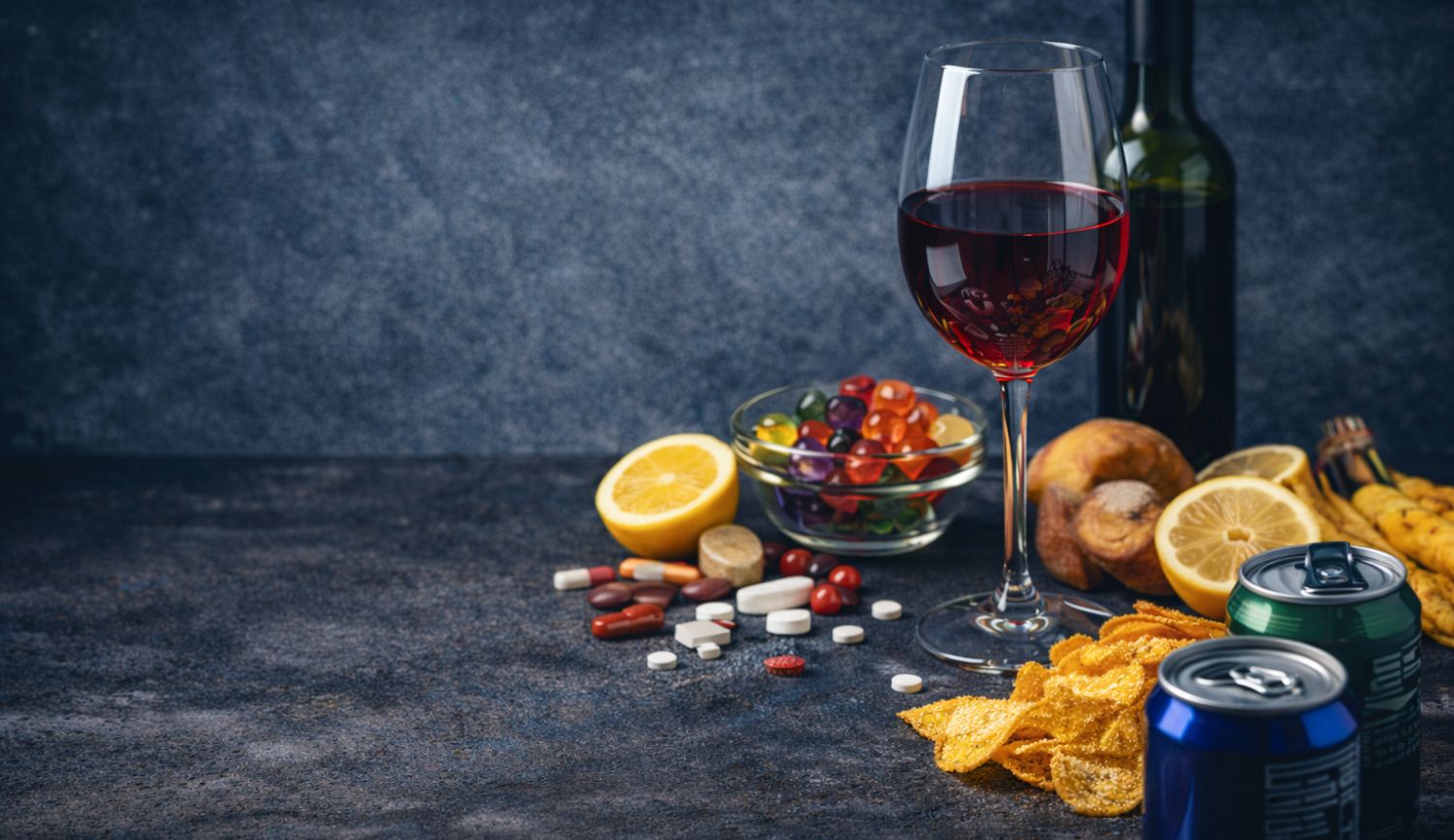
Foods that block DAO are one of the most overlooked reasons people continue to react to foods that should be safe.
Most discussions about histamine intolerance focus on what to avoid eating. The emphasis tends to fall on aged cheeses, fermented foods, wine, and cured meats — a familiar list of high-histamine sources that makes intuitive sense.
What this framing misses is a structurally different problem: not foods that contain histamine, but foods and substances that interfere with the system responsible for clearing it.
The enzyme diamine oxidase (DAO) performs that function. When DAO activity is reduced, histamine accumulates more easily, and reactions become unpredictable.
This is the part of histamine intolerance many people overlook — and often the reason a strict low-histamine approach does not fully resolve symptoms.
What DAO actually does and why inhibition matters
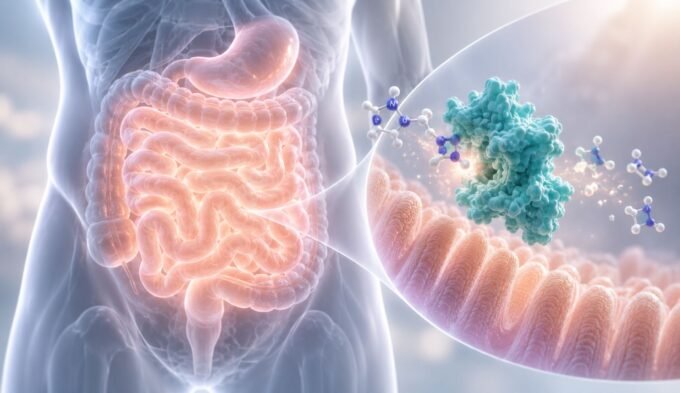
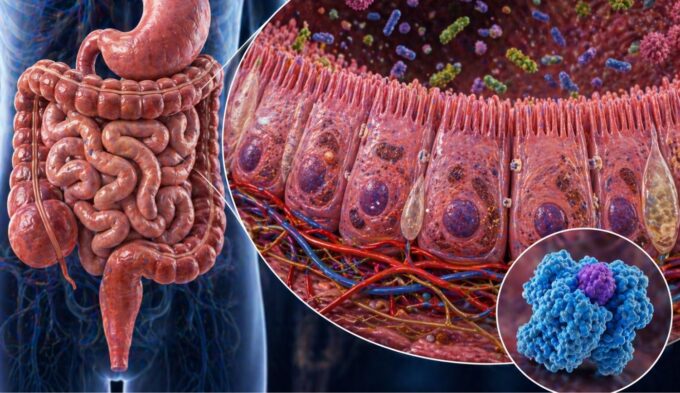
DAO is produced by the epithelial cells lining the small intestine and is responsible for breaking down histamine before it enters the bloodstream. It converts histamine into inactive compounds, effectively limiting how much reaches systemic circulation.
When DAO function is impaired, the threshold for symptoms drops. A meal that would normally be tolerated can suddenly trigger symptoms, not because its histamine content changed, but because the body’s ability to clear that histamine has been reduced.
This is why reactions often appear inconsistent. The variable is not always the food itself — it is the level of DAO activity at the time of eating.
If you’re unsure whether DAO dysfunction is contributing to your symptoms, our low DAO levels guide explains the patterns behind these inconsistent reactions.
Foods that block DAO (complete breakdown)
Certain foods and compounds interfere directly or indirectly with DAO activity. These are not necessarily high in histamine themselves, but they can worsen symptoms by reducing the body’s ability to break histamine down.
Alcohol
Alcohol is the most significant dietary inhibitor of DAO.
It reduces DAO activity directly at the enzymatic level and also competes with histamine for breakdown. This means the enzyme is occupied processing alcohol instead of histamine at the same time histamine exposure is increasing.
Many alcoholic drinks, especially wine and beer, also contain histamine. The combined effect is not additive — it is multiplicative. This explains why alcohol consistently triggers symptoms even in small amounts.
Energy drinks and high-caffeine intake
High caffeine intake has been shown to inhibit DAO activity in laboratory settings. While the real-world impact varies, energy drinks amplify the issue by combining caffeine with preservatives, additives, and artificial compounds.
For sensitive individuals, the overall combination is more relevant than caffeine alone.
Plant compounds and high-dose supplements
Certain flavonoids, including quercetin and kaempferol, have demonstrated DAO-inhibiting effects in laboratory studies.
At dietary levels, these compounds are generally not problematic. However, high-dose supplementation — particularly quercetin used for mast cell stabilization — may create a conflicting situation where histamine release is reduced, but DAO-mediated breakdown is also impaired.
This interaction is often overlooked in supplement strategies.
Food additives and preservatives
A major and frequently underestimated source of DAO inhibition comes from processed food additives.
Artificial colorings such as tartrazine (E102) and other azo dyes have been shown to inhibit DAO activity. These are commonly found in processed snacks, sweets, and beverages.
Benzoate preservatives (E210–E213), widely used in soft drinks, sauces, and packaged foods, are particularly problematic because they both inhibit DAO and act as histamine liberators.
Sulphites (E220–E228), present in wine, dried fruit, and processed foods, also inhibit DAO and can trigger reactions independently.
Glutamate-based flavor enhancers (E620–E625) have been implicated in DAO interference, although the evidence is less consistent. Their presence in highly processed foods still warrants attention.
What blocks DAO enzyme the most?
The strongest inhibitors of DAO activity are not always obvious.
Alcohol remains the most consistent and potent inhibitor due to its multiple mechanisms of interference. Certain medications can reduce DAO activity significantly, sometimes suppressing it for the duration of treatment.
Food additives — especially benzoates, sulphites, and artificial dyes — are another major contributor.
In many cases, DAO inhibition is cumulative. Multiple smaller inhibitors consumed together can reduce enzyme activity enough to trigger symptoms even without high histamine intake.
DAO inhibitors beyond food
DAO inhibition is not limited to diet. In many cases, the most significant contributors come from non-food factors.
Medications
Several commonly used medications interfere with DAO activity.
Nonsteroidal anti-inflammatory drugs (NSAIDs) such as ibuprofen and aspirin reduce DAO function and can lower histamine tolerance when used regularly.
Antibiotics containing clavulanic acid have been shown to significantly suppress DAO activity. This explains why some people develop new or intensified histamine symptoms during or after antibiotic use.
Certain antidepressants, cardiovascular medications, and H2 blockers also inhibit DAO. These interactions are often overlooked because the medications are not directly associated with histamine intolerance.
Gut inflammation and intestinal damage
DAO production depends on the health of the intestinal lining.
Conditions such as celiac disease, inflammatory bowel disease, and small intestinal bacterial overgrowth (SIBO) damage the epithelial cells responsible for DAO production. As a result, enzyme availability decreases regardless of diet.
This creates a situation where histamine exposure remains constant, but the body’s ability to process it declines.
Alcohol contributes to this process over time by damaging the gut lining, further reducing DAO production.
Nutrient deficiencies
DAO requires specific cofactors to function properly.
Vitamin B6 is essential for DAO activity, and deficiency directly reduces enzyme function. Copper is required for the enzyme’s active site, and low intake impairs its effectiveness.
Vitamin C supports both DAO function and histamine regulation, but many high-vitamin C foods are also histamine liberators. This makes food selection more complex.
Addressing these deficiencies is one of the most direct ways to support DAO function.
Why this creates confusion: the three-category problem
Histamine-related reactions are often misunderstood because they fall into three different categories.
High-histamine foods contain histamine that must be broken down. Histamine liberators trigger the body to release its own histamine. DAO blockers reduce the body’s ability to clear histamine.
These categories overlap but are not the same.
A meal can appear safe based on histamine content but still trigger symptoms if DAO activity is suppressed at the same time. This is why people often react unpredictably despite following a low-histamine diet.
Why this matters in real-world meals
DAO inhibition rarely occurs in isolation.
A meal that appears low in histamine can still trigger symptoms when combined with alcohol, processed sauces, or additive-containing foods. These factors reduce enzyme activity at the same time histamine exposure occurs.
This creates a mismatch between intake and clearance.
Understanding this interaction explains why symptoms persist even when dietary choices seem correct.
What supports DAO instead
Supporting DAO requires addressing both enzyme function and production.
Our guide on how to increase DAO naturally covers this in depth, but several principles are central.
Freshly prepared food reduces histamine accumulation and lowers the burden on DAO. Nutrients such as vitamin B6, copper, and non-citrus vitamin C support enzyme activity.
Gut health plays a foundational role, as DAO is produced in the intestinal lining. Reducing inflammation and supporting intestinal repair improves long-term enzyme availability.
The low histamine foods list provides a practical starting point, but identifying and removing DAO inhibitors is what resolves the remaining unexplained reactions.
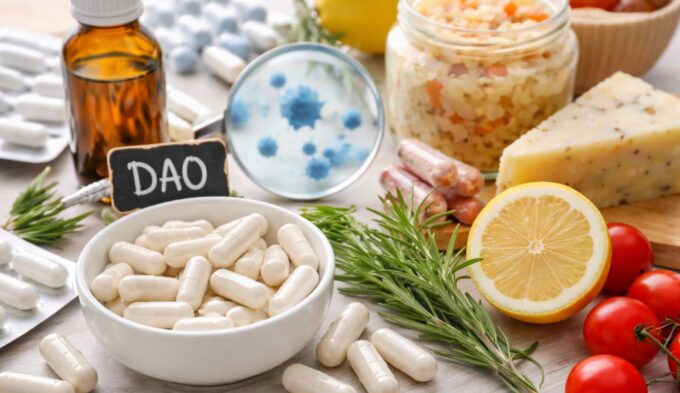
For situations where avoiding DAO blockers is not always possible, many people use targeted support before meals. Our DAO supplements guide explains how these products work and what to look for.
Practical takeaways
Understanding DAO inhibition changes how histamine intolerance is managed in practice.
Alcohol consistently reduces DAO activity and should be treated as a primary trigger rather than a minor contributor.
Processed foods often contain hidden inhibitors such as benzoates, sulphites, and artificial dyes, which can disrupt histamine tolerance even when the food itself is low in histamine.
Medication use can significantly influence DAO activity, and changes in symptoms should be evaluated in that context.
Nutrient status directly affects DAO function, particularly vitamin B6, copper, and vitamin C.
Gut health determines how much DAO the body can produce, making intestinal integrity a central factor in long-term tolerance.
Frequently Asked Questions
These are the most common questions people ask when trying to understand DAO inhibition.
What foods block DAO enzyme?
Alcohol is the most significant dietary DAO inhibitor. Food additives such as benzoates, sulphites, and artificial colorings also reduce DAO activity. High-dose quercetin supplementation can inhibit DAO as well. These factors reduce enzyme function even if the food itself is not high in histamine.
What reduces DAO enzyme activity?
DAO activity can be reduced by medications (including NSAIDs and certain antibiotics), gut inflammation, and nutrient deficiencies. These factors affect either enzyme production or function, leading to increased histamine sensitivity.
What vitamin deficiency causes histamine intolerance?
Vitamin B6 deficiency has the most direct impact on DAO activity. Copper and vitamin C deficiencies also impair enzyme function. In addition, poor gut health can reduce DAO production regardless of nutrient intake.
What foods help DAO?
No food directly supplies DAO in a usable form. Foods support DAO indirectly by providing necessary nutrients and supporting gut health. Fresh, minimally processed foods with adequate micronutrient content are the most effective approach.
Final thoughts
DAO inhibition is one of the most overlooked factors in histamine intolerance.
Most people focus on reducing histamine intake, but breakdown capacity is just as important. When DAO activity is compromised, even low-histamine meals can trigger symptoms.
Understanding and addressing DAO blockers provides a clearer framework for managing histamine-related reactions and explains why standard dietary approaches sometimes fail.
This article is for informational purposes only and does not constitute medical advice. Consult a qualified healthcare provider before making changes to medications or supplementation strategies.