
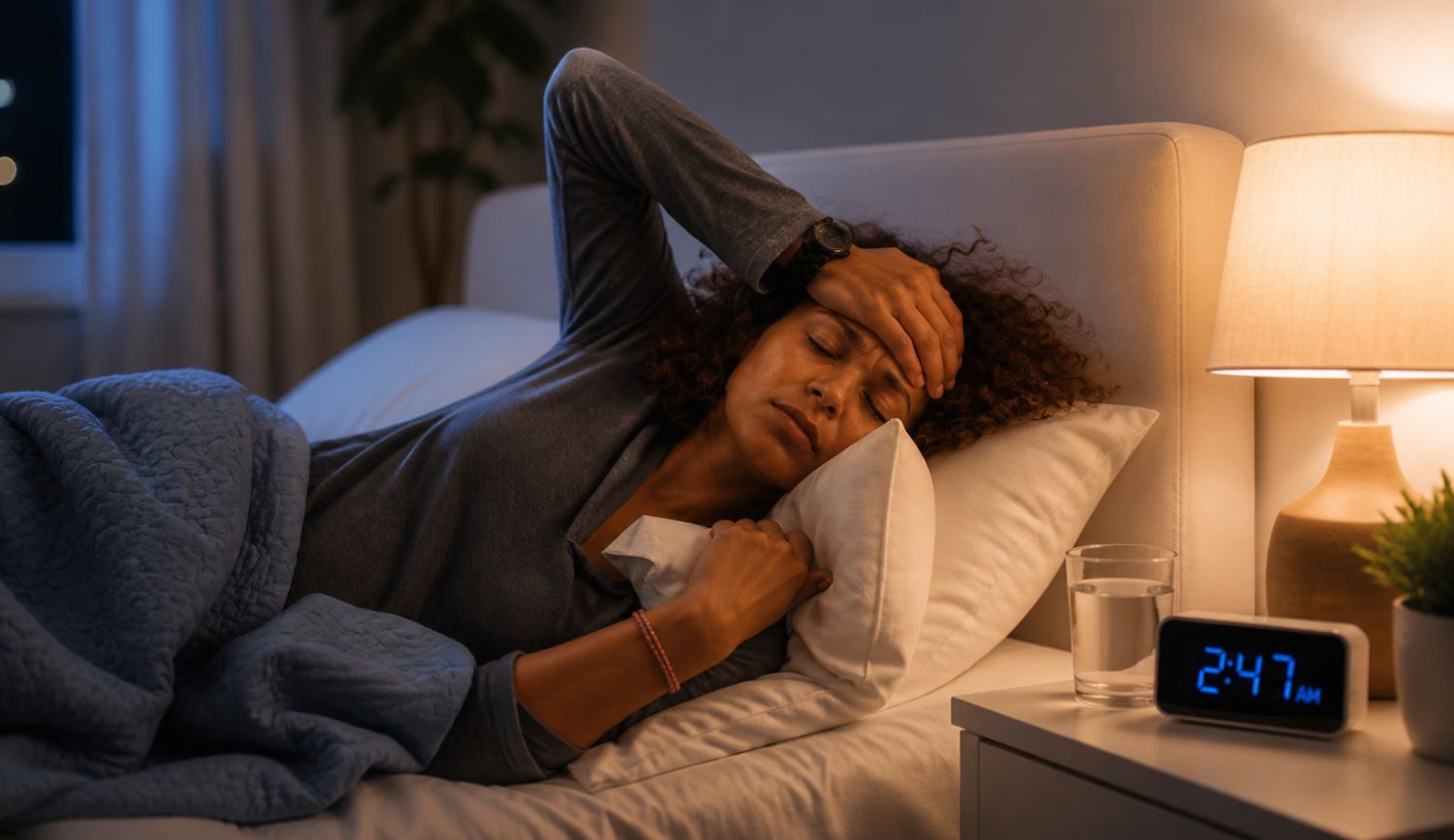
The lights are off. You should be asleep.
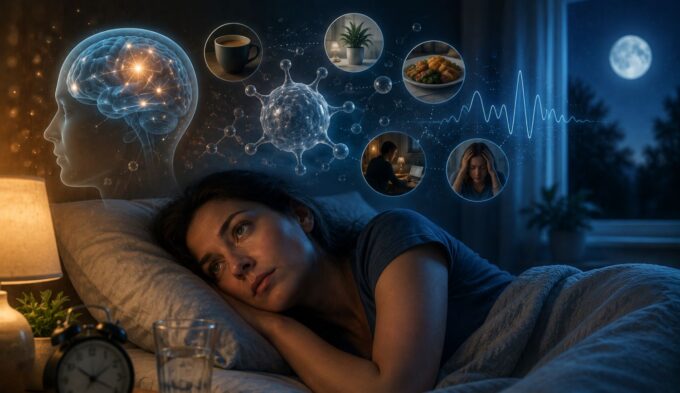
Instead, your mind is running. Your skin is prickling. There’s a low, restless alertness in your body that has no business being there at midnight.
Sometimes you fall asleep — only to jolt awake at 2am or 3am, suddenly and completely alert. Your heart is slightly elevated. You can’t understand why.
This is histamine intolerance insomnia.
Not stress. Not anxiety. A physiological state of arousal that shows up at night and refuses to leave.
Once you understand the mechanism, the pattern stops feeling random — and starts becoming manageable.
What histamine intolerance insomnia actually feels like
The symptom pattern is consistent across most people.
Falling asleep feels harder than it should. There’s no clear worry. Just a background alertness that doesn’t switch off.
Your body is tired. Your mind doesn’t follow.
Waking between midnight and 4am is the most common pattern. It’s sudden — not gradual.
You wake up fully alert.
- Slightly elevated heart rate
- Warm or flushed feeling
- Difficulty getting back to sleep
The nervous system feels “ON.”
Thoughts move faster. There may be mild anxiety or unease that wasn’t there earlier.
Some people also notice:
- Tingling
- Itching
- Heat across the face or chest
This isn’t psychological. It’s a physical pattern with a clear physiological cause.
Why histamine disrupts sleep
Histamine is not just an immune chemical. It is one of the body’s primary wakefulness signals. In the brain, it activates H1 receptors that keep you alert during the day.
That’s normal.
The problem begins when histamine stays elevated into the evening. Now your body receives two competing signals:
- Your circadian rhythm says: sleep
- Histamine says: stay alert
And alertness usually wins.
This is also why certain antihistamines make you drowsy. They don’t relax you — they block the wakefulness signal.
Histamine intolerance does the opposite. It turns that signal up at the wrong time.
Why it gets worse between midnight and 4am
This time window is not random.
Several biological patterns overlap here, making symptoms more likely.
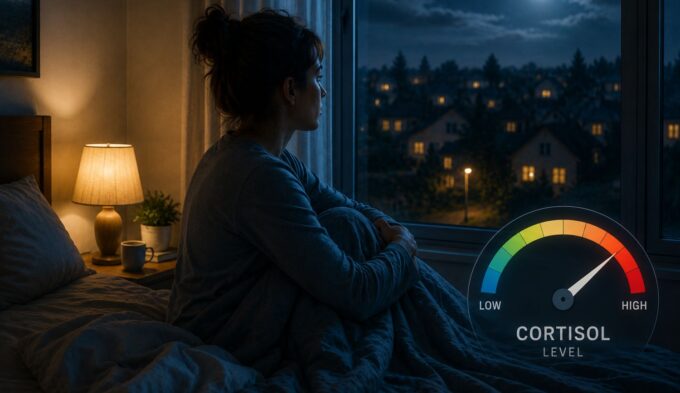
- Cortisol reaches its lowest point. During the day, cortisol helps suppress mast cell activity. At night, that suppression weakens.
- Histamine naturally rises overnight. This is part of your circadian rhythm — but becomes a problem when clearance is impaired.
- DAO enzyme activity drops. Histamine breakdown is reduced as digestion slows.
When these three factors combine, the body is less able to manage histamine — and more likely to react.
This is why so many people wake at the same time each night.
Why dinner timing makes it worse
The connection between dinner and sleep is direct.
A late meal means histamine is still being processed during the most sensitive overnight window.
- Dinner at 9pm → histamine processed at midnight
- Dinner at 6pm → histamine cleared earlier
The food didn’t change. The timing did.
Portion size also matters.
A large meal:
- takes longer to digest
- increases histamine load
- extends into the night
A lighter meal:
- finishes sooner
- reduces overlap with the high-risk period
The most consistent improvement people notice is simple: Eat earlier. Eat lighter.
What actually helps tonight
If symptoms are already active, keep it simple.
You’re not trying to fix everything. You’re reducing the current load.
Do this:
- Stop eating. Adding food increases histamine processing.
- Cool the room. Lower temperature reduces heat and arousal.
- Slow your breathing. Inhale 4 seconds, exhale 6–8 seconds.
- Avoid screens. Don’t add stimulation.
- Drink water. Supports clearance.
You’re not forcing sleep. You’re removing what’s keeping you awake.
Evening habits that improve sleep consistency
These are long-term stabilizers. They work through repetition, not perfection.
- Consistent dinner timing. Eating around the same time each evening helps regulate digestion and clearance.
- Smaller evening meals. Avoid making dinner your largest meal. The low histamine dinner ideas guide can help structure this.
- Reduced stimulation before bed. Lower light. Fewer screens. Calm environment. Histamine already increases alertness — don’t amplify it.
- Consistent sleep schedule. A fixed wake time matters more than a perfect bedtime. Over time, this improves cortisol rhythm and reduces nighttime reactivity.
What consistently makes histamine insomnia worse
These patterns are common — and often overlooked.
- Late, heavy meals
- Evening alcohol
- Caffeine after midday
- Testing new foods at night
That last one is critical. Night is the worst time to experiment. If a new food triggers symptoms:
- sleep is disrupted
- the cause becomes unclear
- recovery is slower
Test new foods earlier in the day — always.
Stress also plays a role. It activates mast cells through the same pathway as histamine. Managing stress is not separate from managing histamine.
Building a stable night routine
Consistency matters more than perfection. A simple routine is enough.
- Dinner at 6–7pm
- Nothing heavy after 8pm
- Low-stimulation evening
- Fixed wake time
- Water, no caffeine
This reduces variables and supports histamine clearance before night. If symptoms are more intense, the histamine flare guide provides additional support.
A structured low histamine meal plan helps stabilise the full day.
Frequently Asked Questions
These are the most common questions people ask when dealing with histamine-related sleep disruption.
Why does histamine cause insomnia?
Histamine is a wakefulness chemical in the brain. When levels stay elevated at night, it activates alertness pathways instead of allowing sleep, leading to difficulty falling or staying asleep.
Why do I wake up between 2am and 4am?
This is when histamine tends to peak while cortisol and DAO activity are lowest. The body has less ability to control and clear histamine, making sudden wake-ups more likely.
What helps histamine insomnia immediately?
Stop eating, cool the room, slow your breathing, avoid screens, and drink water. These steps reduce stimulation and help the body begin clearing histamine.
Is the food connection always the cause?
No. Food is one factor, but stress, hormones, environmental triggers, and natural histamine rhythms can also contribute.
Do antihistamines help histamine insomnia?
Some antihistamines can cause drowsiness by blocking histamine in the brain. They may help short term, but they don’t fix the underlying cause and may have drawbacks with long-term use.
Conclusion
Histamine intolerance insomnia is not random. It follows biology — wakefulness pathways, circadian rhythm, and overnight enzyme decline.
Once you understand the pattern, it becomes predictable. And once it’s predictable, it becomes manageable.
Start simple.
Tonight:
- Earlier dinner if possible
- Nothing heavy after 8pm
- Cool room
- Slow breathing if you wake
That is enough to begin.
This article is for informational purposes only and does not constitute medical advice. If sleep disruption is severe or prolonged, consult a qualified healthcare provider. Individual responses vary.