
Home Symptoms & Systems Brain & Nerves Sleep Architecture & Insomnia Melatonin and Histamine Intolerance: Why Sleep Supplements Sometimes Backfire
Sleep Architecture & Insomnia

Melatonin and Histamine Intolerance: Why Sleep Supplements Sometimes Backfire

Melatonin helps many people sleep, but some with histamine intolerance wake up feeling worse. Learn what may be behind morning flushing, congestion, and other unexpected reactions.

Share
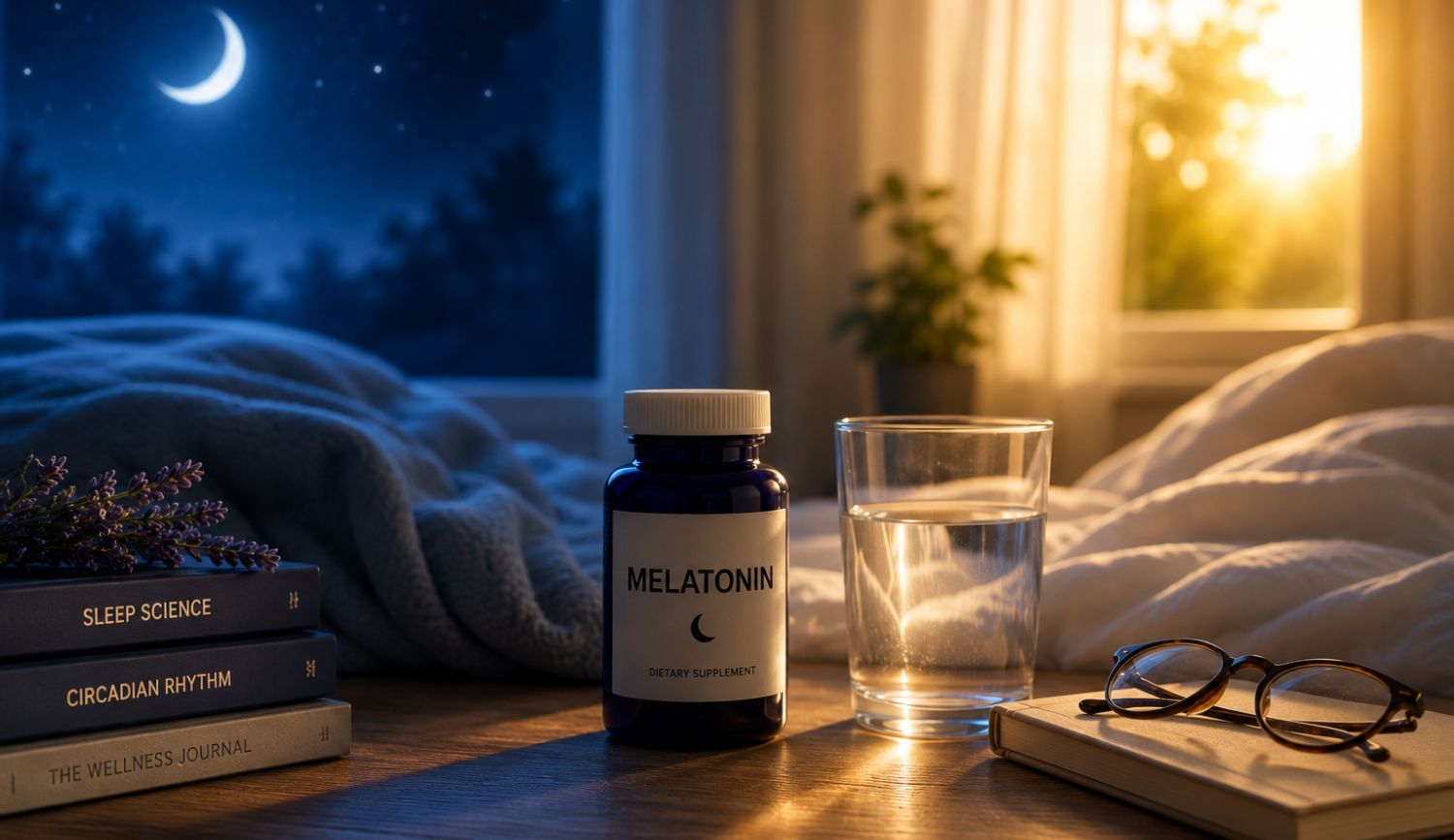
Melatonin and histamine intolerance concept showing a melatonin supplement beside a bed during the transition from night to morning
©2026 Nourishly
Share

Melatonin and histamine intolerance can be a frustrating combination. Melatonin helps many people sleep, yet some wake up feeling flushed, congested, itchy, or simply worse than they did before taking it.

If that sounds familiar, you’re not alone. One of the most confusing parts of histamine intolerance is that something often recommended for better sleep doesn’t always feel helpful in real life.

So what’s going on?

The answer usually isn’t as simple as blaming melatonin itself. The dose, the ingredients in the product, your current histamine load, and even what happened earlier in the day can all influence how you feel the next morning.

In this article, we’ll look at why melatonin seems to help some people, why others react poorly to it, and what researchers currently know about the connection between melatonin and histamine intolerance.

Why Standard Melatonin May Backfire

Three separate issues can turn a “calming” supplement into a trigger for sensitive people.

None of them mean melatonin is inherently bad. They mean the standard commercial version doesn’t always match your body’s natural pattern.

Dose

Your body produces melatonin in very small amounts. Healthy adults typically generate somewhere around 0.1 to 0.3 mg at the peak of nighttime production [1][2].

Most store-bought supplements contain 3 mg to 10 mg, ten to thirty times higher than your natural nighttime peak.

In a controlled study, a 3 mg “pharmacological” dose kept blood melatonin levels elevated into daylight hours, and also caused a drop in body temperature. A physiological dose of 0.3 mg did neither of those things [1].

Lingering melatonin into the morning may contribute to grogginess, altered alertness, or skin changes in sensitive individuals. This is a dose effect, not proof that melatonin itself is harmful.

Additives

Many melatonin products are gummies, and gummies bring along far more than just melatonin.

Artificial colors, flavor systems, citric acid, and proprietary herbal blends are all common in gummy formulations. So are “unnecessary” inactive ingredients added purely for texture or shelf life.

Valerian, chamomile, and other herbs are frequently bundled into “sleep blends” without much explanation on the front label.

For some people, the reaction may have more to do with what’s packaged alongside the melatonin than the melatonin itself. This is part of why sensitive individuals often comb through ingredient lists more carefully than the average shopper.

There’s also a quality control problem worth knowing about. A 2023 JAMA analysis tested 25 melatonin gummy products and found 22 of them were inaccurately labeled, with actual content ranging from 74% to 347% of what the label claimed [3].

If you don’t know your real dose, you can’t predict your real response.

Immune sensitivity

Melatonin isn’t just a sedative. It’s also an immune-system signaling molecule [4].

For most people, that immune role is quiet and unnoticed. For someone whose mast cells are already easily triggered, an immunomodulator behaving unpredictably is at least biologically plausible.

Researchers are still trying to understand exactly how this plays out in real people, but it may help explain why one person feels great on melatonin while another feels noticeably worse.

Melatonin and Histamine Intolerance Connection: Common Reactions People Report After Taking Melatonin

If you’ve searched for this topic before, some of these will sound familiar.

In histamine intolerance and MCAS communities, people commonly describe a similar cluster of reactions after taking melatonin.

Morning flushing or facial redness is one of the most frequently mentioned.

Some people wake up feeling like they’ve developed allergies overnight. Puffy eyes, congestion, facial warmth, or a feeling that something is “off” are common themes in patient discussions.

Some people describe waking around 3am specifically, a pattern closely related to what we cover in our guide to the histamine dump at night.

A racing or pounding heart right after waking is another common report.

So is the strange combination of feeling wired and exhausted at the same time.

Itching and a general sense of skin warmth round out the list.

That doesn’t mean melatonin was definitely responsible. It simply means enough people describe similar experiences that the pattern is worth paying attention to.

The rest of this article looks at why these patterns might happen, what researchers know, what they’re still investigating, and where personal experience fits into the picture..

When Melatonin May Not Be The Real Problem

It’s easy to blame the last thing you took, especially when symptoms show up overnight.

But melatonin is often entering a system that is already carrying a significant histamine load.

A high-histamine dinner, leftovers, alcohol, seasonal allergies, an ongoing flare, poor sleep, or even a new supplement taken alongside melatonin can all influence how you feel the next morning.

For many people, melatonin works well. It simply means that morning symptoms are often the result of multiple factors interacting at the same time rather than a single supplement acting in isolation.

Looking at the bigger picture is often more useful than focusing on melatonin alone.

Why Histamine Affects Sleep

Histamine isn’t only a food-reaction molecule. It’s also a brain chemical.

Inside the brain, histamine is produced by a small cluster of neurons that researchers describe as wake-promoting [5].

These neurons fire fastest when you’re alert and active. They go quiet during deep sleep.

This is why many over-the-counter sleep aids, like diphenhydramine, work by blocking histamine’s H1 receptor [5]. Calming the histamine system is already a recognized way to fall asleep.

If your histamine signaling runs high for any reason, that wakeful pull can show up at night. It can also show up as morning grogginess colliding with wired, alert symptoms, which connects directly to our guide on histamine intolerance and insomnia.

Melatonin and histamine sit on somewhat opposite sides of this picture. One nudges the brain toward sleep, the other toward wakefulness.

When those systems are already out of balance, adding a sleep supplement can sometimes produce results that are very different from what you expected.

Why Research and Real Life Don’t Always Match

Here’s where it gets confusing. Early research does suggest melatonin may help calm mast cell activity.

In cell studies, melatonin has been shown to reduce inflammatory signaling inside mast cells and limit certain types of cell stress [6][7].

A 2021 review described melatonin and histamine as deeply linked through the body’s circadian clock, with mast cell activity shifting across the day-night cycle partly under melatonin’s influence [4].

A more recent commentary in a major allergy journal echoed this, framing melatonin as a potential mast cell stabilizer worth further study [8].

That’s where things become a little more complicated.

Your own pineal gland releases melatonin gradually. It typically begins rising in the evening and peaks quietly in the middle of the night [1]. That release is slow, small, and tightly regulated by your body’s own clock.

Almost all of the mast cell research above comes from animal models, isolated cells, or preclinical laboratory models. It is not the same as a clinical trial in people with histamine intolerance or MCAS.

And the melatonin in a bottle from the pharmacy is not the same as the melatonin your pineal gland releases at night. Dose, timing, purity, and added ingredients all change the picture.

Can Melatonin Cause Histamine Intolerance?

Current evidence does not show that melatonin causes histamine intolerance.

In fact, much of the available research points in the opposite direction, with melatonin being studied for its potential effects on mast cell regulation and inflammatory signaling.

The confusion comes from the fact that some individuals report worsening symptoms after taking melatonin supplements.

In those situations, the issue may involve the dose, formulation, additives, timing, existing histamine load, or individual sensitivity rather than melatonin directly causing histamine intolerance.

This distinction matters because reacting to a supplement is not the same thing as developing histamine intolerance from the supplement itself.

Why Morning Flushes Happen

Morning flushing is one of the most common reasons people start questioning melatonin in the first place.

If your symptoms are strongest after waking, you may also find our guide on Histamine Intolerance Morning Symptoms helpful, since many people notice flushing, congestion, anxiety, headaches, or feeling “off” first thing in the morning.

There likely isn’t one single cause behind a melatonin-related morning flush. Several separate factors can plausibly contribute, often layered on top of each other.

Histamine load

Many people with histamine intolerance report symptoms clustering in the early morning hours, a pattern we cover in more depth in our guide to the histamine dump at night.

Adding a supplement on top of an already-full histamine bucket may simply tip the balance for some people, even if the supplement itself isn’t the root trigger.

Vascular effects

Rising melatonin is linked to natural blood vessel widening in the skin, particularly in the hands and feet, as part of normal sleep-onset physiology [9].

This vasodilation helps the body lose heat and fall asleep. In a sensitive person, added skin blood flow could plausibly read as flushing, even with no histamine involvement at all.

Excessive dosage

As covered earlier, standard supplement doses run far above your body’s natural nighttime peak.

A higher dose means more melatonin circulating for longer, which gives any of the other mechanisms on this list more time and more material to act on.

Additive reactions

Dyes, sweeteners, citric acid, or herbal blends in your specific product could be playing a role that has nothing to do with melatonin itself.

This is one reason two people taking “the same” supplement, but different brands, can have completely different mornings.

Delayed clearance

If a high dose is still active in your system after waking, that lingering presence could shift how you feel that morning [1].

Clearance speed varies by individual, by liver function, and by how much was taken, which is part of why the same dose doesn’t affect everyone the same way.

Individual sensitivity

By the time you take melatonin, your body has already been responding to everything that happened during the day.

No supplement works in isolation. It becomes part of everything else that is already happening in your body.

Most mornings, it’s probably not just one of these six factors. It’s some combination, layered on top of each other, which is exactly why this question doesn’t have one tidy answer.

Physiological Dosing

If standard doses feel too strong, a lower dose may be worth discussing with your healthcare provider.

Physiological microdosing generally refers to doses in the 0.1 mg to 0.3 mg range, which mirrors what your body produces naturally at night [1][2].

In controlled research, this physiological range raised blood melatonin to normal nighttime levels without the lingering daytime elevation or temperature drop seen at higher doses [1].

That doesn’t make it automatically safe for every sensitive person. Even small amounts of a new substance deserve a cautious, one-at-a-time introduction.

These low doses can be harder to find on store shelves, since most commercial products are formulated well above this range.

Some people split a higher-dose tablet, though this can affect accuracy and isn’t a substitute for a properly dosed product.

Start low, and watch your response for several nights before judging the outcome.

How to Choose a Cleaner Product

If you and your healthcare provider decide melatonin is worth trying, formulation matters as much as dose.

A few label-reading habits can reduce your odds of an additive-related reaction.

Choose the lowest effective dose rather than the largest bottle on the shelf.

Avoid gummies if you’re chemically or additive-sensitive, and consider a simple capsule or tablet instead.

Avoid artificial dyes and flavors wherever possible.

Skip products with unnecessary herbal blends layered in, unless you’ve separately confirmed those herbs are well tolerated.

Look for third-party testing, which at least confirms the bottle contains what the label claims [3].

Favor short, simple ingredient lists over long ones, and introduce only one new product at a time so any reaction is easier to trace.

If You Have MCAS

MCAS doesn’t predict melatonin response in one direction.

Some people with MCAS tolerate melatonin extremely well and use it as a stable, helpful part of their routine.

Others react, but the reaction traces back to fillers, dyes, or flavoring rather than the melatonin molecule itself.

Some react specifically to high doses, and tolerate the same hormone fine at a physiological microdose.

And some react to an entirely different ingredient bundled into the product, like a proprietary herbal blend they wouldn’t otherwise have taken.

If you’ve reacted after taking melatonin, it’s worth looking closer before deciding the hormone itself is the culprit.

For broader context on managing MCAS day to day, our Histamine Intolerance & MCAS guide is a useful starting point.

What To Do If Melatonin Makes You Feel Worse

If melatonin keeps causing problems even at a lower dose, the issue may not be melatonin specifically. It may be your total nighttime histamine load.

Reducing evening histamine load is a reasonable place to start, and it’s distinct from general sleep hygiene advice.

Avoid high-histamine foods late in the evening, since these add directly to your nightly load right before your body is trying to settle down. Our guide on what to eat before bed with histamine intolerance covers this in more practical detail.

Review every nighttime supplement and additive you take, not just melatonin. Fillers and “inactive” ingredients show up in far more products than most people expect.

Support your body’s own melatonin rhythm through consistent darkness in the evening and natural light exposure in the morning, rather than leaning entirely on a supplement to do that work.

And if reactions or insomnia persist despite these changes, that’s a reasonable point to bring in a clinician familiar with histamine intolerance or MCAS, who can also rule out other contributors outside the scope of this article.

If Melatonin Seems To Make You Feel Worse

Before writing off melatonin completely, it may be worth asking:

  • Is the dose much higher than physiological levels?
  • Does the product contain dyes, flavors, sweeteners, or herbal blends?
  • Was your histamine load already high before bed?
  • Did you eat high-histamine foods the evening before?
  • Are you introducing multiple new supplements at once?

These questions won’t provide all the answers, but they often reveal patterns that are easy to miss when focusing on melatonin alone.

Frequently Asked Questions

These are the questions readers ask most often about melatonin and histamine intolerance. Short, direct answers are below.

Can melatonin worsen histamine intolerance?

It’s possible for some individuals, though it isn’t established as a general rule. Dose, additives, and personal sensitivity all appear to matter more than melatonin itself.

Can melatonin cause morning flushing?

It’s been reported by some patients, and there are several biologically possible explanations, including dose, vascular effects, and additives, covered in the Why Morning Flushes Happen section above. It hasn’t been proven as a direct, universal cause-and-effect relationship.

Is low-dose melatonin better?

For many sensitive individuals, a physiological dose in the 0.1 mg to 0.3 mg range appears better tolerated than standard 3 mg to 10 mg doses. Always introduce any new dose cautiously and with medical guidance.

Are melatonin gummies worse for sensitive people?

They can be, mainly because of added dyes, flavorings, and sweeteners, plus documented label accuracy problems in the supplement industry. A simple, third-party-tested capsule or tablet is often a more predictable choice.

Should people with MCAS avoid melatonin?

Not automatically. As covered in the If You Have MCAS section above, responses vary widely and a reaction doesn’t automatically mean melatonin itself is the problem. This is a decision to make individually with a knowledgeable healthcare provider.

What should I check on the label?

Check the dose, the full ingredient list, and whether the product is third-party tested. Watch closely for dyes, artificial flavors, and unnecessary herbal additions you haven’t tried before.

Conclusion

If melatonin leaves you feeling worse the next morning, don’t assume you’ve found the answer on the first try. The dose may be too high. The product may contain ingredients that don’t agree with you. Or melatonin may simply be arriving on top of an already difficult night for your nervous system and immune system. Looking at the full picture usually reveals more than focusing on a single supplement.

A 3 mg gummy with dye and a proprietary herbal blend is a genuinely different product from a 0.3 mg, third-party-tested capsule, even though both bottles say “melatonin” on the front.

If you’ve reacted before, that reaction is real and worth taking seriously. It just isn’t the end of the conversation.

Start with the basics: check your dose, check your ingredient list, and consider whether your nighttime histamine load was already high before melatonin entered the picture.

From there, a knowledgeable healthcare provider can help you work out whether melatonin has a place in your routine, and if so, what form of it actually fits your body.

This article is for general education and isn’t a substitute for personalized medical advice. If you’re managing histamine intolerance, MCAS, or another condition, talk with a knowledgeable healthcare provider before starting, stopping, or changing any supplement, including melatonin.

References

  1. Zhdanova IV, Wurtman RJ, Regan MM, Taylor JA, Shi JP, Leclair OU. Melatonin treatment for age-related insomnia. J Clin Endocrinol Metab. 2001;86(10):4727-4730. https://academic.oup.com/jcem/article/86/10/4727/2849013
  2. Givler D, Givler A, Luther PM, et al. Chronic administration of melatonin: physiological and clinical considerations. Neurol Int. 2023;15(1):518-533. https://pmc.ncbi.nlm.nih.gov/articles/PMC10053496
  3. Cohen PA, Avula B, Wang YH, Katragunta K, Khan I. Quantity of melatonin and CBD in melatonin gummies sold in the US. JAMA. 2023;329(16):1401-1402. https://pmc.ncbi.nlm.nih.gov/articles/PMC10130950
  4. Pham L, Baiocchi L, Kennedy L, et al. The interplay between mast cells, pineal gland, and circadian rhythm: links between histamine, melatonin, and inflammatory mediators. J Pineal Res. 2021;70(2):e12699. https://pubmed.ncbi.nlm.nih.gov/33020940
  5. Scammell TE, Jackson AC, Franks NP, Wisden W, Dauvilliers Y. Histamine: neural circuits and new medications. Sleep. 2018;42(1):zsy183. https://pmc.ncbi.nlm.nih.gov/articles/PMC6335869
  6. Maldonado MD, Garcia-Moreno H, Calvo JR. Melatonin protects mast cells against cytotoxicity mediated by chemical stimuli PMACI: possible clinical use. J Neuroimmunol. 2013;262(1-2):62-65. https://pubmed.ncbi.nlm.nih.gov/23870536
  7. Maldonado MD, García-Moreno H, González-Yanes C, Calvo JR. Possible involvement of the inhibition of NF-κB factor in anti-inflammatory actions that melatonin exerts on mast cells. J Cell Biochem. 2016;117(8):1926-1933. https://onlinelibrary.wiley.com/doi/10.1002/jcb.25491
  8. Ye H, Cheng P, Jin B, Xu H, Wang B. Melatonin inhibits mast cell activation, indicating its potential as a therapeutic agent in inflammatory diseases. Ann Allergy Asthma Immunol. 2024;132(5):659-661. https://pubmed.ncbi.nlm.nih.gov/38253124
  9. Kräuchi K, Cajochen C, Werth E, Wirz-Justice A. Functional link between distal vasodilation and sleep-onset latency? Am J Physiol Regul Integr Comp Physiol. 2000;278(3):R741-R748. https://journals.physiology.org/doi/full/10.1152/ajpregu.2000.278.3.R741
Was this article helpful?
YesNo
Share
Written by
Clara W.

Gut Health & Low Histamine Nutrition Writer: Clara Whitmore is a nutrition writer specializing in low histamine diets, gut health, and anti-inflammatory eating. She focuses on simplifying complex dietary strategies into clear, practical guidance that helps readers build sustainable eating habits and reduce symptoms. Reviewed & edited under Nourishly editorial standards for accuracy and clarity.

Leave a Reply

Your email address will not be published. Required fields are marked *

Related Articles
Woman using a CPAP machine during sleep, representing sleep apnea and histamine symptoms linked to nighttime breathing disruptions
Sleep Architecture & Insomnia

Sleep Apnea and Histamine: How Poor Oxygenation Triggers Nighttime Mast Cell Flares

Could disrupted breathing during sleep be fueling nighttime histamine symptoms? Learn how...

Woman lying awake at night representing nighttime histamine symptoms, stress accumulation, and disrupted sleep patterns
Sleep Architecture & Insomnia

Why Histamine Symptoms Feel Worse at Night

Why wakefulness, overstimulation, and accumulated stress can make nighttime symptoms feel more...

Sleep and histamine symptoms illustration showing nighttime wakefulness, disrupted sleep, and evening symptom patterns
Sleep Architecture & Insomnia

Sleep & Histamine Symptoms: A Calm Guide to Nighttime Reactivity

Understanding why nighttime wakefulness, reactive mornings, and disrupted sleep patterns can feel...