
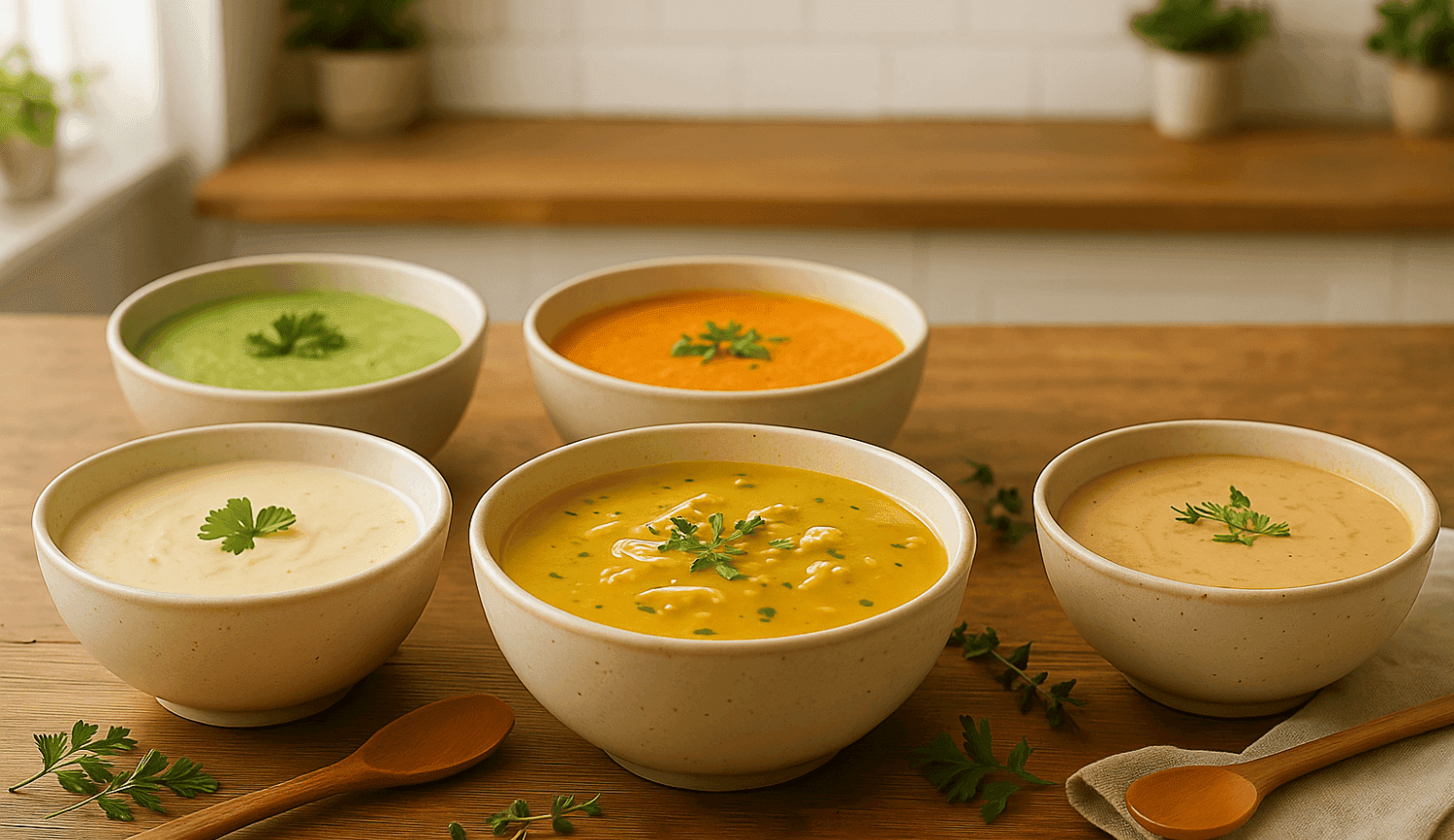
Nourishing, anti-inflammatory soups that won’t trigger histamine reactions. Fresh ingredients, quick cooking, and freezer-friendly.
What You’ll Learn
- Five complete soup recipes specifically designed for histamine intolerance
- Why fresh ingredients and quick cooking prevent histamine buildup
- The freeze-immediately rule that makes leftovers safe
- Batch cooking strategies that create 12-15 portions in one session
- Which common soup ingredients to avoid (and what works instead)
Low Histamine Cooking Principles
Histamine forms rapidly in foods as they age, even in your refrigerator. Traditional cooking advice contradicts low histamine needs—long-simmered bone broths accumulate massive histamine during 12-24 hour cooking times. Leftovers become problematic as bacterial action converts amino acids into histamine.
Three core principles:
- Use the freshest ingredients: Same-day proteins or immediately frozen options, peak-fresh vegetables, fresh herbs over dried.
- Keep cooking times short: Pressure cookers or quick stovetop methods under 1 hour minimize histamine formation.
- Freeze within two hours: Freezing halts bacterial processes that create histamine. Frozen leftovers are safer than refrigerated ones.
Avoid these high-histamine ingredients: Tomatoes, spinach, eggplant, vinegar, citrus, aged dairy, processed meats, bone broth, leftover meats, canned soups, fermented ingredients.
Emphasize instead: Fresh poultry, root vegetables, cruciferous vegetables, coconut products, olive oil, anti-inflammatory herbs.
For more foundation, see our complete low histamine food list.
Recipe 1: Healing Golden Chicken and Herb Soup
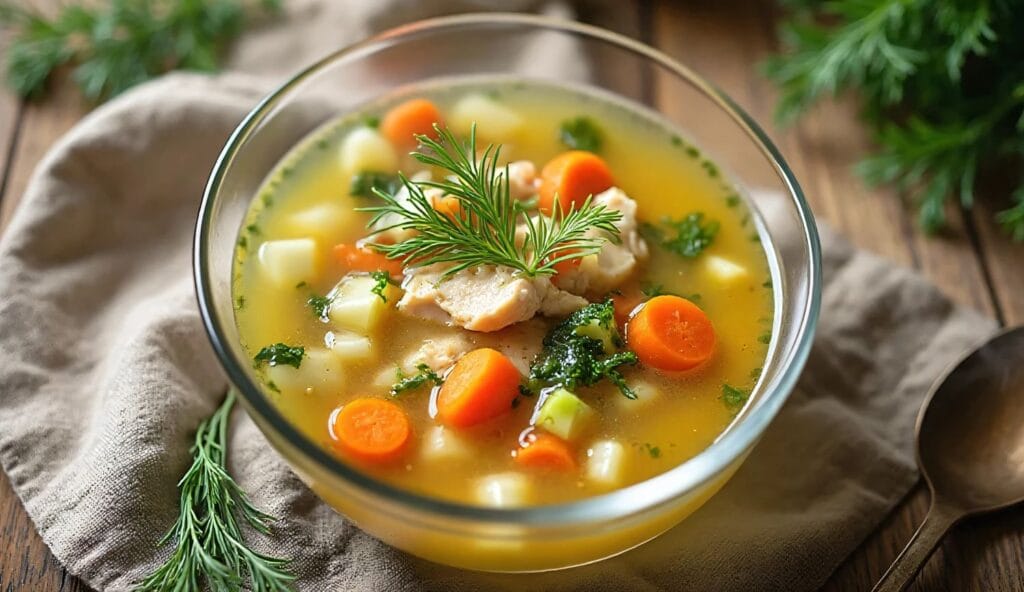
Prep: 15 min | Cook: 35 min | Total: 50 min | Servings: 6
Protein-rich soup with tender chicken, aromatic vegetables, and fresh herbs. Golden color comes from turmeric-infused broth that’s gentle on sensitive digestion.
Ingredients
- Fresh chicken breast: 1 lb, cubed
- Low-histamine vegetable broth: 6 cups
- Olive oil: 2 tablespoons
- Carrots: 2 medium, diced
- Celery: 3 stalks, diced
- Sweet onion: 1 medium, diced
- Zucchini: 2 medium, diced
- Fresh garlic: 3 cloves, minced
- Fresh dill: 2 tablespoons, chopped
- Fresh parsley: 2 tablespoons, chopped
- Fresh thyme: 1 tablespoon
- Bay leaf: 1
- Sea salt: 1 teaspoon
- Black pepper: ½ teaspoon (optional)
Instructions
- Heat olive oil in large pot over medium heat. Add onions, sauté 3-4 minutes until translucent. Add garlic and celery, cook 2-3 minutes.
- Add chicken pieces, stir to coat. Cook 4-5 minutes until lightly seared.
- Pour in broth, add carrots and bay leaf. Bring to boil, reduce to medium-low, cover, simmer 15 minutes until carrots are tender and chicken reaches 165°F.
- Add zucchini, simmer uncovered 5-7 minutes until just tender. Remove bay leaf. Stir in fresh dill, parsley, thyme. Add salt and pepper. Let rest 3-5 minutes.
- Serve immediately or cool rapidly in ice bath, portion, and freeze within 2 hours.
Nutrition per serving: 185 cal, 21g protein, 12g carbs, 6g fat, 3g fiber
Vegetarian swap: Replace chicken with 1 cup cooked white beans or 8 oz fresh firm tofu. Add 1 cup cooked quinoa for protein.
Storage: Freeze in individual glass containers, leaving 1-inch headspace. Keeps 3 months. Refrigerate only if consuming within 24 hours.
Recipe 2: Creamy Cauliflower and Kale Healing Soup
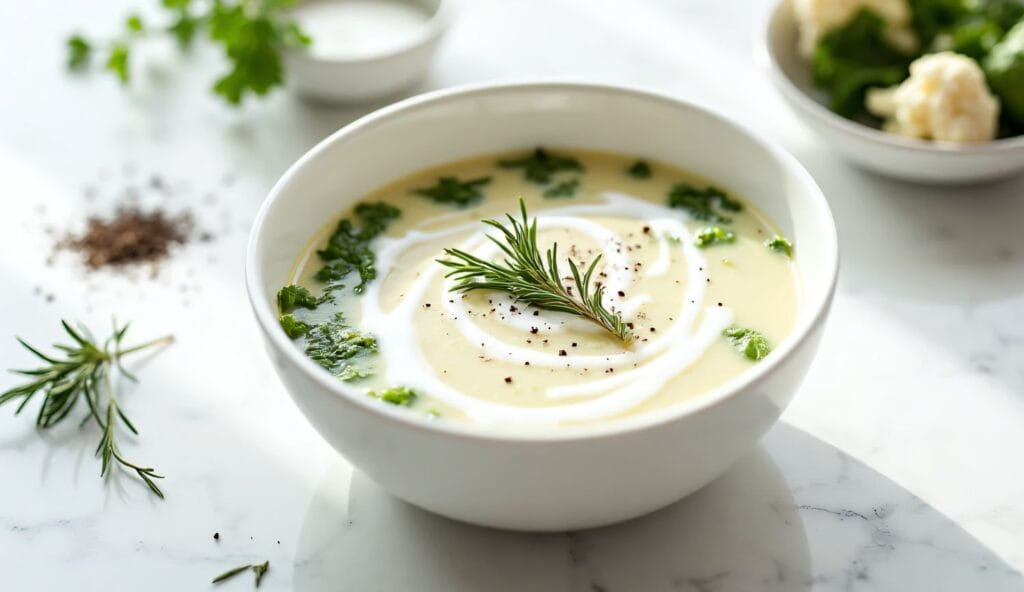
Prep: 15 min | Cook: 30 min | Total: 45 min | Servings: 6
Velvety soup with cauliflower’s mast cell stabilizing sulfur compounds, nutrient-dense kale, and warming coconut milk. Completely plant-based.
Ingredients
- Large cauliflower head: 6 cups florets
- Fresh kale: 2 cups chopped, stems removed
- Carrots: 2 medium, chunked
- Celery: 3 stalks, chopped
- Yellow onion: 1 large, diced
- Fresh garlic: 3 cloves, pressed
- Leek: 1 small, sliced
- Vegetable broth: 5 cups
- Full-fat coconut milk: 1 cup unsweetened
- Olive oil: 2 tablespoons
- Fresh rosemary: 2 tablespoons, chopped
- Fresh parsley: ¼ cup, chopped
- Sea salt: 1 teaspoon
- Ground turmeric: ½ teaspoon
- Black pepper: ¼ teaspoon (optional)
Instructions
- Heat olive oil in large stockpot over medium-low. Add onion and leek, sauté 5-6 minutes until softened. Add garlic (let sit 10 minutes after pressing to activate allicin), cook 2 minutes. Add celery, stir 2 minutes.
- Add cauliflower, carrots, broth, rosemary, turmeric. Bring to boil, reduce to medium-low, cover partially, simmer 20 minutes until vegetables are very tender.
- Blend with immersion blender until completely smooth. Stir in coconut milk over low heat for 2-3 minutes without boiling.
- Add kale, cook 3-4 minutes until wilted but bright green. Stir in parsley. Add salt and pepper. Thin with additional broth if needed.
Nutrition per serving: 158 cal, 4g protein, 16g carbs, 10g fat, 5g fiber
Vegetarian: Already vegetarian! For protein, add 1 cup cooked chickpeas, ½ cup hemp seeds, or 1 cup fresh firm tofu.
Storage: Cool quickly, freeze within 2 hours with 1-inch headspace. Coconut milk may separate when frozen—stir well when reheating.
Recipe 3: Ginger-Turmeric Turkey and Spring Vegetable Soup
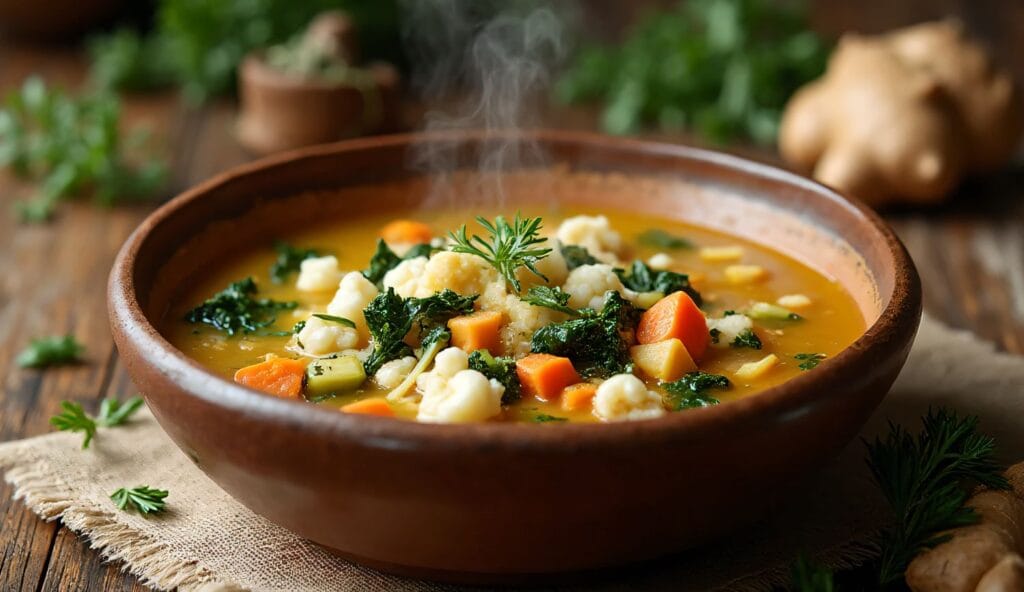
Prep: 15 min | Cook: 35 min | Total: 50 min | Servings: 6
Warming ginger and turmeric transform turkey and vegetables into therapeutic soup with powerful anti-inflammatory properties. Light and brothy.
Ingredients
- Fresh turkey breast: 1 lb, cubed
- Olive oil: 1 tablespoon
- Yellow onion: 1 medium, diced
- Garlic: 3 cloves, minced
- Carrots: 2 medium, diced
- Celery: 3 stalks, diced
- Zucchini: 1 medium, diced
- Fresh cauliflower florets: 2 cups, chopped small
- Low-sodium broth: 6 cups
- Fresh ginger: 2 tablespoons, minced
- Fresh turmeric: 1 teaspoon grated or ½ teaspoon dried
- Fresh parsley: 2 tablespoons, chopped
- Fresh thyme: 2 teaspoons
- Fresh sage: 1 teaspoon, chopped
- Sea salt: ½ teaspoon
- Black pepper: ¼ teaspoon (optional)
- Bay leaf: 1
- Fresh kale: 1 cup chopped
Instructions
- Heat olive oil over medium heat. Add onion, sauté 3-4 minutes. Add garlic and ginger, cook 1-2 minutes until fragrant.
- Add turkey cubes, stir to coat, cook 5-6 minutes until lightly browned outside.
- Add carrots and celery, cook 3-4 minutes. Pour in broth. Add turmeric, bay leaf, thyme, sage, salt. Bring to boil, reduce to low, cover, simmer 15 minutes.
- Add zucchini and cauliflower, simmer 8-10 minutes until vegetables are tender and turkey reaches 165°F.
- Add kale, cook 3-5 minutes until just wilted. Remove bay leaf. Adjust salt. Stir in parsley before serving.
Nutrition per serving: 185 cal, 22g protein, 12g carbs, 5g fat, 3g fiber
Vegetarian swap: Replace turkey with 1½ cups cooked white quinoa or 1 cup diced fresh firm tofu. Use vegetable broth.
Storage: Use same-day fresh turkey or frozen immediately after processing. Freeze in single servings within 2 hours. Reheat from frozen.
Recipe 4: Harvest Root Vegetable Bisque with Herbs
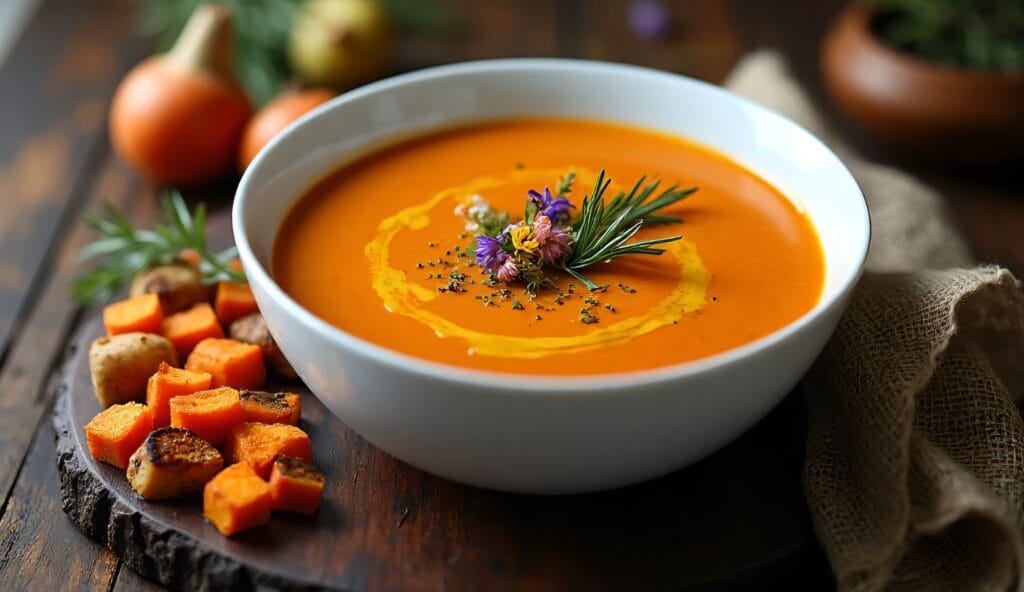
Prep: 20 min | Cook: 45 min | Total: 65 min | Servings: 6
Roasting root vegetables intensifies natural sweetness in this creamy bisque. Parsnips, carrots, and celery root create complex flavor without high-histamine ingredients.
Ingredients
- Olive oil: 2 tablespoons divided
- Yellow onion: 1 large, chopped
- Garlic: 3 cloves, roughly chopped
- Carrots: 3 large (12 oz), cut in 1-inch pieces
- Parsnips: 2 large (10 oz), cut in 1-inch pieces
- Sweet potato: 1 medium (8 oz), cubed
- Celery root: 1 small (8 oz), cubed
- Celery stalks: 2, chopped
- Vegetable broth: 6 cups
- Fresh ginger: 1 tablespoon, grated
- Fresh thyme: 2 teaspoons plus extra for garnish
- Fresh rosemary: 1 teaspoon, chopped
- Fresh sage: 1 tablespoon, chopped
- Sea salt: ¾ teaspoon
- White pepper: ¼ teaspoon (optional)
- Bay leaf: 1
- Full-fat coconut milk: ½ cup (optional)
- Fresh parsley or chives for garnish
Instructions
- Preheat oven to 400°F. Toss carrots, parsnips, sweet potato, celery root with 1 tablespoon olive oil. Spread on lined baking sheet, roast 25-30 minutes until tender and lightly caramelized. Flip halfway through.
- While vegetables roast, heat remaining oil in large pot over medium heat. Add onion and celery, sauté 5-6 minutes. Add garlic and ginger, cook 1-2 minutes.
- Pour in broth, add thyme, rosemary, sage, bay leaf, salt. Once root vegetables finish roasting, add to pot. Bring to gentle boil, reduce to low, cover, simmer 15 minutes.
- Remove bay leaf. Blend with immersion blender until completely smooth. Stir in coconut milk if using, heat 2-3 minutes without boiling. Thin with broth if needed.
- Serve with olive oil drizzle and fresh herbs.
Nutrition per serving: 195 cal, 4g protein, 32g carbs, 7g fat, 6g fiber
Vegetarian: Already vegetarian! For protein, add hemp seeds, toasted pumpkin seeds, or serve with fresh cooked chicken.
Storage: Freeze in 1-cup servings immediately after cooking. Keeps 3 months. Reheat from frozen.
Recipe 5: Creamy Roasted Cauliflower and Carrot Soup
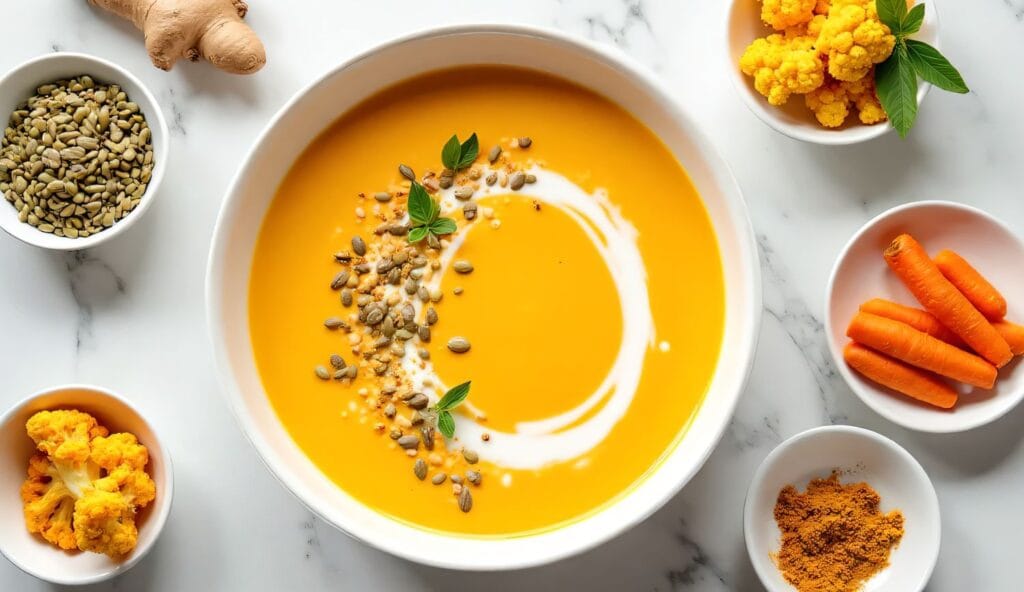
Prep: 15 min | Cook: 35 min | Total: 50 min | Servings: 6
Luxuriously creamy soup with roasted cauliflower and carrots in velvety coconut milk base, seasoned with gut-healing ginger and turmeric. Roasting adds depth without extending cooking time significantly.
Ingredients
- Medium cauliflower head: 1 (1.5 lbs), florets
- Carrots: 3 large (12 oz), cut in 1-inch pieces
- Red onion: 1 medium, diced
- Fresh garlic: 3 cloves, minced
- Coconut oil: 3 tablespoons, divided
- Vegetable broth: 4 cups
- Full-fat coconut milk: 1 can (13.5 oz), preservative-free
- Fresh ginger: 2 tablespoons, grated
- Ground turmeric: 1½ teaspoons
- Ground coriander: 1 teaspoon
- Ground cumin: ½ teaspoon
- Sea salt: 1 teaspoon
- Black pepper: ¼ teaspoon (optional)
- Pumpkin or sunflower seeds for garnish
- Fresh parsley or basil
- Extra virgin olive oil drizzle
Instructions
- Preheat oven to 400°F. Toss cauliflower and carrots with 2 tablespoons melted coconut oil, turmeric, pinch salt. Spread on lined baking sheet, roast 25-30 minutes until golden brown and fork-tender.
- While vegetables roast, heat 1 tablespoon coconut oil in soup pot over medium-low. Add onion, cook 5 minutes. Add garlic and ginger, cook 2-3 minutes. Add coriander and cumin, stir 30 seconds to toast spices.
- Add roasted vegetables to pot. Pour in broth, bring to gentle simmer, reduce to medium-low, cover, cook 10 minutes. Remove from heat, stir in coconut milk. Cool slightly 5 minutes.
- Blend with immersion blender until completely smooth. Adjust salt. Thin with broth if needed. Gently reheat 2-3 minutes without boiling. Rest 3 minutes.
- Top with seeds, fresh herbs, and olive oil drizzle.
Nutrition per serving: 245 cal, 5g protein, 18g carbs, 19g fat, 5g fiber
Vegetarian: Already vegetarian! For protein, add freshly cooked chicken breast, hemp hearts, pumpkin seed butter, or fresh white beans.
Storage: Cool quickly in ice bath, freeze within 2 hours with ½-inch headspace. Use within 3 months. Reheat from frozen.
Batch Cooking Strategies
Managing histamine intolerance doesn’t mean hours in the kitchen daily. Create a week’s worth of meals in one 2-3 hour session.
The Freeze-Immediately Rule
Histamine forms rapidly in cooked food even in the refrigerator, but freezing completely halts this process.
How to do it:
- Cook soup and cool rapidly using ice bath
- Portion into individual servings within 2 hours
- Get all portions into freezer within 3 hours maximum
- Label with date and contents
This prevents histamine buildup that makes leftovers problematic.
Batch Cook Components
Prepare ingredients separately to mix and match throughout the week.
Smart prep:
- Roast three types of vegetables separately, freeze in 2-cup portions
- Pressure-cook whole chicken from frozen, freeze shredded meat in ½-cup portions
- Make Instant Pot broth in 90 minutes, freeze in ice cube trays
- Pre-chop fresh vegetables, use within 24 hours
Quick assembly: Combine frozen roasted vegetables + broth cubes + coconut milk cube, heat on stovetop, blend if desired. Fresh soup in 15 minutes.
Use Pressure Cookers
Pressure cookers reduce cooking time while minimizing histamine formation.
Quick wins:
- Frozen chicken breast to perfectly cooked in 30-35 minutes
- Vegetable broth in 60-90 minutes vs. 8-12 hours traditional
- Complete soups from raw to done in 20-30 minutes
The Instant Pot Duo 7-in-1 is the game-changer for low histamine cooking—makes broth in 90 minutes instead of 12+ hours.
Multitask with Multiple Appliances
One power cooking session produces:
- 12-15 servings various soups
- 8-10 cups roasted vegetables
- 3-4 lbs shredded chicken
- 8 cups homemade broth
- 2 cups herb sauces
Run three sheet pans of vegetables in oven while chicken cooks in pressure cooker and soup simmers on stovetop. Make herb sauces in blender while other items cook.
Reheat From Frozen
Thawing allows histamine formation to resume. Always reheat directly from frozen.
Stovetop: Place frozen soup in pot over medium-low heat, add 2-3 tablespoons water, stir frequently 8-12 minutes until steaming.
Microwave: Heat individual portions 4-6 minutes on medium power, stirring halfway.
Boost freshness with fresh herbs, olive oil drizzle, or microgreens.
Shop Strategically Twice Weekly
Sunday primary shop:
- Fresh proteins (use within 24 hours or freeze immediately)
- Hardy vegetables
- Pantry staples and frozen items
Wednesday refresh:
- Delicate greens and herbs
- Fresh proteins if needed
- Fresh garnishes
Store herbs in water like flowers. Keep vegetables in crisper with humidity control.
Essential Tools
Instant Pot Duo 7-in-1: Makes broth in 90 minutes vs. 12+ hours, cooks frozen chicken perfectly in 30 minutes, creates complete soups under an hour.
Souper Cubes Freezer Trays: 2-cup silicone trays designed for soups. Stack flat, pop out individual servings without thawing entire batch.
Immersion Blender: Blend directly in pot—saves time, reduces dishes, prevents histamine buildup from food sitting at room temperature.
Glass Meal Prep Containers Set: BPA-free glass essential for freezing individual portions safely. Lock-tight lids prevent freezer burn.
Common Questions
What ingredients should I avoid in low histamine soups? Tomatoes, spinach, eggplant, vinegar, citrus, leftover meats, aged dairy, bone broth (12+ hour cooking), canned soups, fermented ingredients, and any proteins older than 24 hours. Fresh is critical.
Can I freeze low histamine soup without increasing histamine levels? Yes. Freezing completely halts histamine formation. Cool soup rapidly in ice bath, portion within 2 hours, freeze within 3 hours. Frozen leftovers are safer than refrigerated ones. Reheat directly from frozen—don’t thaw first.
Why is bone broth not recommended? Traditional bone broth simmers 12-24 hours, allowing massive histamine accumulation. The long cooking time that extracts minerals also creates histamine through bacterial action. Make quick vegetable broth in 60-90 minutes instead.
What are the best herbs and spices for MCAS-friendly soups? Fresh herbs over dried: parsley, dill, thyme, rosemary, sage, basil. Spices that support mast cell stabilization: ginger, turmeric, coriander, cumin. Avoid: chili powder, cayenne, paprika, cinnamon, cloves.
How long to see improvements on a low histamine diet? Most people notice symptom reduction within 2-4 weeks of strict low histamine eating. Optimal improvement typically occurs within 4-8 weeks. Individual timelines vary based on underlying causes and adherence.
Continue Learning
More low histamine recipes and resources:
- 15-Minute Chicken Rice Bowl
- Low Histamine Overnight Oats
- 10 Vegan Breakfast Ideas
- Complete Low Histamine Food List
- Histamine Intolerance Guide
Free downloadable resources:
- 14-Day Symptom & Trigger Tracker
- High-Fiber Low-Histamine Shopping List – Your Complete Weekly Shopping Guide
- 7-Day High-Fiber Meal Plan
- Low-Histamine Food Swaps Guide
Medical Disclaimer: This article provides general information about low histamine soup recipes and should not replace professional medical advice. Always consult qualified healthcare providers or registered dietitians before making significant dietary changes. Individual food tolerances vary. Nutritional information is approximate.
Note: This article contains affiliate links. If you purchase through these links, we may earn a small commission at no extra cost to you. We only recommend products that support effective histamine management.