
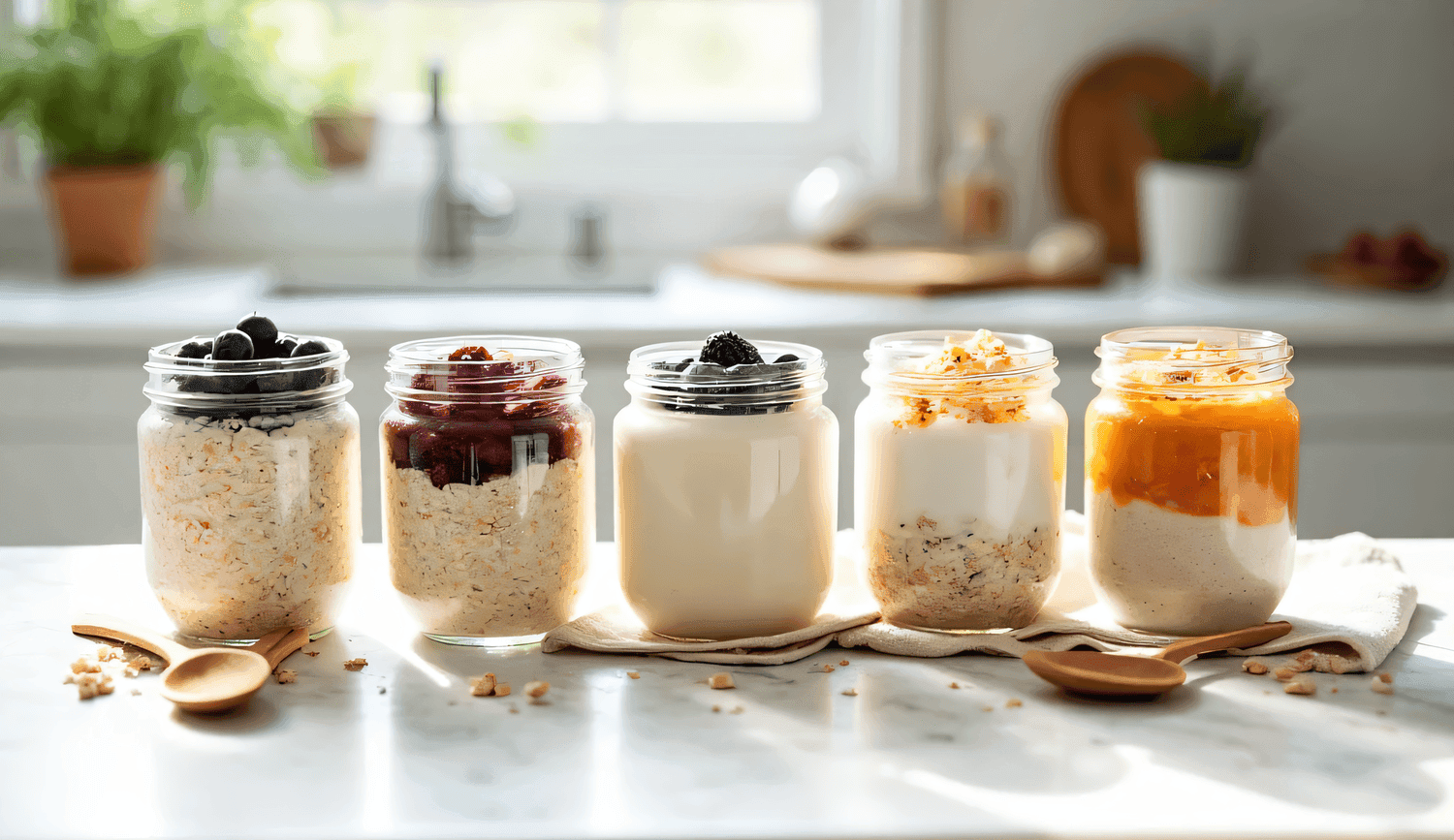
If you’re managing histamine intolerance, you’ve likely wondered whether overnight oats work for you. Traditional recipes requiring 8-12 hours of soaking create problems—histamine-producing bacteria multiply during extended soaking, even at refrigeration temperatures.
The convenience factor makes overnight oats appealing. You prepare them the night before, and breakfast is ready when you wake up. But if you have histamine intolerance, this convenience comes with risks you need to understand.
Here’s what happens during extended soaking: bacteria naturally present in foods and your environment begin metabolizing the amino acid histidine, converting it to histamine. While refrigeration slows this process, it doesn’t stop it completely. After 8-12 hours, histamine levels can increase significantly enough to trigger your symptoms.
But here’s the good news: You don’t have to give up oat-based breakfasts entirely. Understanding how histamine forms helps you create truly histamine-friendly overnight oats using modified preparation methods. This guide provides the quick-set method (30-60 minutes) that balances convenience with symptom control.
What You’ll Learn
- Why traditional overnight oats (8-12 hours) are problematic for histamine intolerance
- How the quick-set method (30-60 minutes) minimizes histamine formation
- Which ingredients are genuinely safe and which trigger symptoms
- 5 complete overnight oats recipes with precise timing guidelines
- How oats support DAO enzyme function and gut health
- The dry mix strategy for maximum convenience without histamine risk
- Practical tips for testing your individual tolerance
- Answers to the most common overnight oats questions
You’ll learn which ingredients support your goals, which sabotage them, and how to prepare oats safely while accommodating gluten-free, dairy-free, vegan, or nut-free needs.
Understanding Histamine Intolerance
Histamine intolerance affects approximately 1-3% of the population, occurring when your body can’t efficiently break down histamine.(1) Unlike food allergies involving immune reactions, this condition stems from reduced activity of diamine oxidase (DAO)—the enzyme that breaks down dietary histamine before it enters your bloodstream.
Research identified over 50 genetic variations affecting DAO function. Your genetics may make you more susceptible to this condition. Additionally, inflammatory bowel disease, celiac disease, or certain medications (NSAIDs, some antibiotics, blood pressure medications) can compromise your DAO activity.
A clinical study analyzing 133 patients found that 97% experienced combinations of three or more symptoms simultaneously, averaging 11 symptoms per person. This multi-system impact makes diagnosis challenging—symptoms can mimic many other conditions including food allergies, IBS, or anxiety disorders.
How DAO Enzyme Works
Your intestinal lining produces DAO enzyme in mature enterocytes (intestinal cells). This enzyme acts as your primary barrier against dietary histamine. When functioning properly, DAO breaks down more than 90% of histamine from food before it affects your body.
When DAO production decreases or enzyme activity is impaired, unmetabolized histamine accumulates and triggers widespread symptoms. This explains why eating the same food can trigger symptoms on some days but not others—your histamine “bucket” may already be full from previous meals, stress, or hormonal fluctuations.
Why Fresh Breakfast Matters
Starting your day with low-histamine breakfast foods establishes better symptom control. After overnight fasting, your body has processed the previous day’s histamine load, potentially giving you a “clean slate” with lower baseline histamine levels.
Morning meals typically use your freshest ingredients—critical since histamine increases exponentially as food ages. Foods prepared fresh in the morning haven’t had time to accumulate histamine through bacterial activity.
Additionally, your DAO enzyme activity and overall digestive function may be optimized after overnight rest. Your body has had time to repair and regenerate intestinal cells that produce DAO enzyme.
For more breakfast variety, see our complete low-histamine breakfast guide.
Are Oats Safe for Histamine Intolerance?
Oats are definitively low histamine, making them an excellent base for breakfast. The Swiss Interest Group Histamine Intolerance (SIGHI)—the gold standard for food compatibility—rates oats as 0 on a scale of 0-3.(2)
Oats don’t trigger histamine release from your cells and don’t contain high levels of biogenic amines that compete with DAO enzyme. Multiple registered dietitians confirm oats as well-tolerated when properly prepared and stored.
Important Considerations
If you have celiac disease: Use certified gluten-free oats. While naturally gluten-free, oats are often contaminated during processing. Bob’s Red Mill Certified Gluten-Free Rolled Oats are tested to under 20ppm gluten and free from cross-contamination. About 25% of people with celiac disease react to avenin (oat protein) even when oats are pure—introduce cautiously.
Choose minimally processed: Select rolled oats or steel-cut oats. Avoid instant oats in packets that may contain problematic additives or spices.
Store properly: Keep oats in airtight containers in cool, dry conditions to prevent histamine accumulation.
The Overnight Oats Problem
Clinical nutritionist Elizabeth Quinn, MS, CNS, warns: “I would use caution with the overnight oat recipes. Histamine levels increase when food sits for hours.”(3)
How Soaking Affects Histamine
Histamine forms through bacterial decarboxylation of histidine. When your oats sit in liquid for 8-12 hours—even refrigerated—bacterial activity continues slowly, producing histamine.
Even proper refrigeration (below 40°F/4°C) only slows bacteria—it doesn’t stop them. The time-temperature-histamine relationship works against you: longer time equals more bacterial growth equals higher histamine.
Your Safest Options
Option 1: Freshly Cooked Oatmeal (Safest) Traditional stovetop oatmeal prepared fresh and consumed immediately gives you lowest risk. Heat kills bacteria, immediate consumption eliminates storage time.
Option 2: Quick-Set “Overnight” Oats (Acceptable) Prepare oats that set in 30-60 minutes using chia seeds or flax meal. This works for many people with moderate histamine tolerance.
Option 3: Traditional Overnight Oats (Not Recommended) The standard 8-12 hour soaking period creates significant histamine accumulation risk. Skip this method entirely if you’re managing histamine intolerance.
Safe Preparation Methods
Quick-Set Overnight Oats Recipe
This modified approach gives you convenience while minimizing histamine risk through controlled timing.
Basic ratio:
- 1/2 cup rolled oats
- 1/2 cup rice milk or coconut milk
- 1/2 tsp ground flax meal
- 1 tbsp chia seeds
- 1 tsp maple syrup
- Pinch vanilla powder
Critical timing:
- Refrigerate 30-60 minutes maximum
- Consume immediately after thickening
- Never store prepared oats
- Make fresh each time
The chia seeds and flax meal accelerate thickening, reducing soaking time, while adding omega-3 fatty acids and fiber for gut health. Ground flax forms a gel when combined with liquid, helping bind the mixture quickly.
Important: If you have diabetes, monitor blood sugar response. While oats have low to moderate glycemic index, individual responses vary. Pair with protein and healthy fats for better control.
Dry Mix Strategy
This method maximizes convenience while eliminating histamine concerns until you’re ready to eat.
How it works:
- Pre-portion dry ingredients (oats, flax meal, chia seeds, spices) into wide-mouth mason jars
- Store at room temperature or refrigerate up to two weeks
- Dry ingredients remain stable since bacteria require moisture to multiply
- Add liquid only 30-60 minutes before consuming
This approach gives you meal prep convenience without histamine accumulation from extended soaking. You can prepare a week’s worth of dry mixes in one session.
Traditional Cooked Oatmeal Method
If you’re highly sensitive or want absolute maximum safety, traditional stovetop oatmeal prepared fresh each morning remains your best option.
Method:
- Cook 1/2 cup oats in 1 cup water or tolerated milk for 5-10 minutes
- Heat kills any bacteria present
- Immediate consumption means zero storage time for histamine to develop
While this method requires active morning preparation time, it offers you the lowest possible histamine risk.
Temperature Guidelines
The 2-hour rule is essential: Cooked grains must be refrigerated within 2 hours of preparation (1 hour if room temperature exceeds 90°F). This isn’t arbitrary—it’s based on food safety research showing that bacterial multiplication accelerates rapidly in the “danger zone” between 40-140°F (4-60°C).
Optimal soaking time for quick overnight oats:
- 30-60 minutes: Safest window, recommended for most people
- 1-4 hours: Acceptable if you’re less sensitive and have tested your tolerance
- Beyond 4 hours: Risk increases significantly
- 8-12 hours: Not recommended—this is when histamine accumulation becomes problematic
Essential Low-Histamine Ingredients
Milk Alternatives
Best choices:
Rice milk: Provides lowest histamine option with hypoallergenic properties and mild flavor.
Coconut milk: Fresh or 100% pure rates 0 on SIGHI scale. Avoid canned versions with additives.
Hemp milk: Offers low histamine status plus omega-3s and protein.
Homemade oat milk: Works if you make it fresh—commercial versions are fermented. A high-speed blender creates smooth, homogenized oat milk in seconds.
Avoid: Commercial oat milk (fermented), soy milk (higher histamine), regular cow’s milk (may act as liberator for some).
Protein Sources
Hemp protein powder: Provides complete protein with all essential amino acids—your best choice. Nutiva Organic Hemp Protein provides complete protein with all essential amino acids.
Pumpkin seed protein: Offers magnesium and zinc (DAO enzyme cofactors). Test individually as some sources mark as potential liberator.
Rice protein powder: Gives hypoallergenic, easily digestible protein with mild taste.
Seeds for nutrition:
- Chia seeds: Add fiber plus protein
- Hemp seeds/hearts: Provide 15g protein per 1/4 cup
- Ground flax seeds: Support hormonal balance
Avoid: Collagen/bone broth protein (high histamine), pea protein (histamine liberator), whey concentrate.
Safe Fruits
Lowest histamine:
Blueberries: Score 0 with highest antioxidants—your best choice.
Blackberries: Also score 0, excellent alternative.
Apples: Score 0, offer versatility. Peel if you have digestive sensitivity.
Pears: Score 1, generally well-tolerated.
Must avoid:
- Strawberries (notorious trigger)
- Bananas (high histamine + liberator)
- Citrus fruits (high histamine)
- Dried fruits (much higher than fresh)
- Avocado (high histamine + liberator)
Freshness requirements: Always use fresh fruits—histamine increases as produce ages. Avoid overripe fruits. Don’t wash or cut until immediately before using.
Sweeteners
Maple syrup: Provides low-histamine sweetening without fermentation. Use minimal amounts as all sugars affect blood sugar.
Honey: Contains low histamine but is high in FODMAPs—if following low-FODMAP approach, limit to 1 teaspoon. Raw honey offers anti-inflammatory benefits.
Coconut sugar: Gives low-histamine option with lower glycemic impact.
What You Must Avoid
Chocolate/Cocoa: Scores 2 (high histamine) on SIGHI scale. Fermentation increases histamine; cocoa acts as liberator and contains biogenic amines interfering with DAO. Chocolate overnight oats recipes are not suitable.
Cinnamon: Research shows sodium benzoate (in cinnamon) boosts histamine release from stomach lining. Don’t sprinkle on your oatmeal.
Yogurt: Traditional recipes often include yogurt. For histamine intolerance, this is problematic—yogurt is fermented and high histamine. Avoid yogurt, kefir, aged cheeses, sour cream.
5 Low-Histamine Overnight Oats Variations
Variation 1: Basic Vanilla
Your safest foundation recipe.
Ingredients:
- 1/2 cup certified gluten-free rolled oats
- 1/2 cup rice milk
- 1 tbsp chia seeds
- 1/2 tsp ground flax meal
- 1 tsp vanilla powder
- 1-2 tsp maple syrup
- Pinch salt
Toppings (add before eating):
- 1/4 cup fresh blueberries
- 1 tbsp hemp seeds
Instructions:
- Mix all base ingredients in a jar or bowl
- Refrigerate 30-60 minutes
- Add toppings immediately before eating
- Consume right away
Accommodates: Gluten-free, dairy-free, vegan, nut-free, low-FODMAP
Nutrition: 280 calories | 8g protein | 8g fiber
Variation 2: Berry Bliss
Antioxidant-rich without problematic strawberries.
Ingredients:
- 1/2 cup certified gluten-free rolled oats
- 1/2 cup coconut milk
- 1 tbsp chia seeds
- 1/2 tsp ground flax meal
- 1-2 tsp maple syrup
- 1/2 tsp vanilla powder
Toppings:
- 1/2 cup fresh blueberries or blackberries (never strawberries)
- 1 tbsp hemp seeds
Instructions:
- Combine base ingredients
- Refrigerate 30-60 minutes
- Top with fresh berries immediately before eating
- Don’t store—berries oxidize quickly
Accommodates: Gluten-free, dairy-free, vegan, nut-free
Nutrition: 295 calories | 8g protein | 10g fiber
Variation 3: Pumpkin Spice
Warm flavors without problematic cinnamon.
Ingredients:
- 1/2 cup certified gluten-free rolled oats
- 1/2 cup rice milk
- 3 tbsp pumpkin puree (100% pumpkin—not pie filling)
- 1 tbsp chia seeds
- 1/2 tsp fresh grated ginger
- 1/4 tsp ground cardamom
- 1/2 tsp vanilla powder
- 1-2 tsp maple syrup
Toppings:
- 1 tbsp pumpkin seeds
- 1 tbsp hemp seeds
Instructions:
- Mix all ingredients thoroughly
- Refrigerate 30-60 minutes
- Add seeds before serving
- Consume immediately
Why no cinnamon: Cinnamon triggers histamine release from your stomach lining. This recipe substitutes fresh ginger (antihistamine properties) and cardamom.
Accommodates: Gluten-free, dairy-free, vegan, nut-free, low-FODMAP
Nutrition: 310 calories | 10g protein | 9g fiber
Variation 4: Protein-Powered
Sustained energy with 25-30g protein.
Ingredients:
- 1/2 cup certified gluten-free rolled oats
- 1/2 cup hemp milk
- 1 scoop hemp or rice protein powder (unflavored)
- 1 tbsp ground flax seeds
- 1 tbsp chia seeds
- 1-2 tsp maple syrup
- 1/2 tsp vanilla powder
Toppings:
- 2 tbsp hemp seeds
- 1/4 cup fresh blueberries
Instructions:
- Mix dry ingredients first
- Add liquids, stir vigorously
- Refrigerate 30-60 minutes
- Stir again (protein settles)
- Add toppings
- Consume immediately
Important: If you have kidney disease, consult your healthcare provider before significantly increasing protein intake.
Always choose: Single-ingredient protein powders without additives—these can be problematic for histamine intolerance.
Accommodates: Gluten-free, dairy-free, vegan, nut-free
Nutrition: 380 calories | 26g protein | 11g fiber
Variation 5: Simple Apple Pie
Comforting breakfast without triggers.
Ingredients:
- 1/2 cup certified gluten-free rolled oats
- 1/2 cup rice milk
- 1 tbsp chia seeds
- 1/2 tsp ground flax meal
- 1 tsp vanilla powder
- 1-2 tsp maple syrup
- 1/4 tsp fresh grated ginger (optional)
Toppings:
- 1/2 fresh apple, diced
- 1 tbsp chopped pecans or macadamias
Instructions:
- Mix base ingredients
- Refrigerate 30-60 minutes
- Dice fresh apple just before serving
- Add toppings
- Consume immediately
Accommodates: Gluten-free, dairy-free, vegan
Nutrition: 320 calories | 8g protein | 10g fiber
Health Benefits of Oats
Beyond being low histamine, oats provide nutritional support for managing your condition.
Supporting Your DAO Enzyme
Research demonstrated specific cofactors essential for DAO function. Your oats contain several:(4)
Vitamin B6: Required for DAO activity (20% increase in histamine elimination when B6 levels are optimal).
Copper: Essential for DAO function.
Magnesium: Helps mitigate histamine effects.
When you combine oats with vitamin C-rich blueberries, you create synergistic support for DAO production.
For additional DAO support, see our complete DAO deficiency guide.
Anti-Inflammatory Properties
Oats contain avenanthramides—phenolic compounds with potent anti-inflammatory activity. These help counteract inflammatory response histamine triggers and may reduce overall histamine burden.
Blood Sugar Stabilization
Soluble fiber beta-glucan slows glucose absorption, creating stable blood sugar and better histamine regulation. Steel-cut oats have low glycemic index (53); rolled oats rate 55-59.
Digestive Support
Fiber in oats promotes healthy gut bacteria and supports intestinal barrier integrity. Since DAO enzyme is produced in your intestinal lining, maintaining gut health directly impacts histamine metabolism capacity.
For more on fiber and histamine, see our complete fiber guide.
Weight Management
If you’re interested in healthy overnight oats for weight management, these versions offer advantages. Beta-glucan creates lasting fullness. Basic recipes provide 280-380 calories per serving—filling without being calorie-dense.
Learn more about histamine and weight gain.
Practical Management Tips
The Freshness Principle
Apply this to your overnight oats:
- Make only what you’ll consume immediately
- Use 30-60 minute quick-set method
- Store dry mixes separately from liquid using wide-mouth mason jars
- Add fresh toppings only at serving time
- Never save prepared overnight oats
Create Your Breakfast Rotation
Don’t rely solely on overnight oats. Rotate between several low-histamine breakfast options:
- Quick-set overnight oats
- Freshly cooked stovetop oatmeal
- Rice porridge with safe toppings
- Fresh fruit with hemp seeds
- Plain eggs with fresh vegetables
- Quinoa breakfast bowl
This prevents monotony and ensures varied nutrient intake.
Testing Your Tolerance
Start conservatively:
- Begin with Basic Vanilla recipe for 3-4 days, noting symptoms
- If well-tolerated, try one new variation
- Wait 3-4 days between introducing new recipes
- Keep detailed food and symptom journal
Red flags indicating recipe isn’t working:
- Bloating or abdominal discomfort within 2 hours
- Headaches or foggy thinking
- Skin reactions
- Heart palpitations
- Fatigue or mood changes
If symptoms occur, return to basic cooked oatmeal and consult your healthcare provider.
Common Questions
Can you make overnight oats with quick oats for low-histamine diet? Yes. Quick oats (also called instant oats) work well for the quick-set method since they absorb liquid faster. Just ensure they’re plain without added flavors, sugars, or problematic spices. The 30-60 minute timing remains the same. Quick oats have the same nutritional value as rolled oats.
Are dairy-free overnight oats better for histamine intolerance? Yes, dairy-free versions are generally safer. Regular cow’s milk can act as a histamine liberator for some people. Rice milk, coconut milk, and hemp milk are your best low-histamine options. Avoid commercial oat milk (it’s fermented during processing) and soy milk (higher histamine).
Can I add protein powder to overnight oats? Yes, but choose carefully. Hemp protein and rice protein are your safest options. Avoid whey protein, pea protein (histamine liberator), and collagen/bone broth protein (high histamine). Always choose unflavored, single-ingredient protein powders without additives that might trigger symptoms.
Are overnight oats with Greek yogurt safe for histamine intolerance? No. Greek yogurt is fermented and high in histamine. All yogurt, kefir, sour cream, and cultured dairy should be avoided with histamine intolerance. Use rice milk or coconut milk instead for a creamy texture. The quick-set method with chia seeds creates creaminess without dairy.
Can I make pumpkin overnight oats without cinnamon? Absolutely—and you should. Cinnamon triggers histamine release from your stomach lining. The Pumpkin Spice variation uses fresh grated ginger (which has antihistamine properties) and cardamom for warm, fall flavors without the histamine trigger. These spices are well-tolerated by most people.
How long can you keep overnight oats with histamine intolerance? You cannot store prepared overnight oats at all. Make only what you’ll eat in one sitting and consume immediately after the 30-60 minute quick-set period. However, you can store dry mixes (oats + chia + flax + spices) for up to 2 weeks—just add liquid 30-60 minutes before eating.
What’s the best milk for low-histamine overnight oats? Rice milk is the lowest histamine option with hypoallergenic properties and mild flavor. Coconut milk (fresh, 100% pure) is also excellent and adds creaminess. Hemp milk provides protein and omega-3s. Avoid cow’s milk, soy milk, and commercial oat milk (fermented during processing).
Can overnight oats recipe with oat milk be low histamine? Only if you make fresh oat milk yourself at home. Commercial oat milk is fermented during processing, making it higher histamine. If you want oat milk, blend rolled oats with water, strain immediately, and use within a few hours. Rice milk or coconut milk are easier low-histamine alternatives.
Are basic overnight oats better than cooked oatmeal for histamine? No—freshly cooked oatmeal is always safer for histamine intolerance. Heat kills bacteria, and immediate consumption eliminates storage time for histamine formation. Quick-set overnight oats (30-60 minutes) are acceptable for many people with moderate tolerance, but cooked oatmeal remains the gold standard for maximum safety.
Is chocolate overnight oats recipe safe for histamine intolerance? No. Chocolate and cocoa score 2 (high histamine) on the SIGHI scale. Cocoa is fermented, acts as a histamine liberator, and contains biogenic amines that interfere with DAO enzyme function. Avoid all chocolate overnight oats recipes and use vanilla, berry, or pumpkin variations instead for satisfying flavors.
Your Action Plan
This week:
- Choose your starting recipe – Begin with Basic Vanilla (safest, simplest option)
- Gather ingredients – Buy certified gluten-free oats, rice milk, chia seeds, flax meal
- Test the 30-60 minute method – Make your first batch tomorrow morning
- Track your response – Use our free symptom tracker
This month:
- Try one new variation – Wait 3-4 days between new recipes to monitor tolerance
- Create dry mixes – Pre-portion ingredients for the week ahead
- Compare to cooked oatmeal – Try both methods to see which you tolerate best
- Build a breakfast rotation – Don’t rely on oats alone for variety
Long-term:
- Refine your tolerance – Identify which variations work best for your body
- Work with a practitioner – If symptoms persist, investigate underlying causes
- Maintain variety – Rotate between multiple breakfast options
- Continue learning – Explore more low-histamine recipes and strategies
Continue Learning
Explore more resources for managing histamine intolerance:
- Low Histamine Breakfast Ideas Complete Guide
- The Ultimate Low Histamine Food List
- Histamine Intolerance Complete Guide
- MCAS and HIT Beginner’s Guide
- Fiber and Histamine Intolerance
Free downloadable resources:
- 14-Day Symptom & Trigger Tracker
- High-Fiber Low-Histamine Shopping List – Your Complete Weekly Shopping Guide
- 7-Day High-Fiber Meal Plan
- Low-Histamine Food Swaps Guide
References
- Comas-Basté O, et al. Histamine Intolerance: The Current State of the Art. Biomolecules. 2020. https://pubmed.ncbi.nlm.nih.gov/32824107/
- Swiss Interest Group Histamine Intolerance (SIGHI). Food Compatibility List, 2024.
Medical Disclaimer: This article provides educational information about histamine intolerance and dietary management. It is not intended to diagnose, treat, cure, or prevent any disease. If you have histamine intolerance or suspect you do, consult qualified healthcare providers before making dietary changes. This is especially important if you have other medical conditions like diabetes, kidney disease, celiac disease, or cardiovascular conditions. Individual responses to foods vary significantly. Registered dietitians specializing in histamine intolerance can provide personalized guidance for your specific situation.
Note: This article contains affiliate links. If you purchase through these links, we may earn a small commission at no extra cost to you. We only recommend products we believe genuinely support histamine management effectively.c



Leave a comment