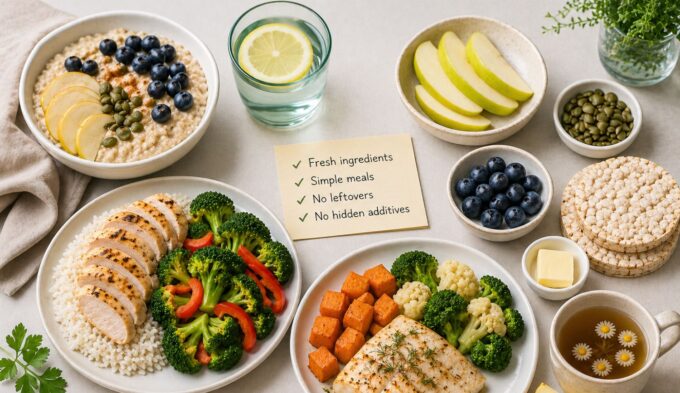


The moment most people learn they have histamine intolerance, the first thing they do is look up what to eat with histamine intolerance — and then feel like they cannot eat anything.
Aged cheese is out. Fermented foods are out. Leftovers are out. Tomatoes, spinach, citrus, most condiments — all out.
It feels restrictive at first. But the reality is different. The list of foods you can eat is actually quite broad — it just gets less attention.
This guide focuses on that side. What you can eat, how to build simple meals, and how to start without overcomplicating everything.
If you want a simplified starting point, the histamine safe foods guide breaks this down into a shorter, confidence-building list.
Why it feels so confusing
Histamine intolerance advice often feels inconsistent, and there are clear reasons for that.
Different food lists. Not all lists are built the same way. Some are based on laboratory data, others on clinical observations, and others on individual reports. That is why the same food can appear as safe in one place and questionable in another.
Individual tolerance. Your response depends on your current histamine load, gut health, and enzyme function. What works for one person may not work for another — especially in the early stages.
Freshness matters. This is the most overlooked factor. Histamine builds up in food over time, especially in proteins. The same food can be low histamine when fresh and problematic after storage.
Once you understand these three factors, the confusion becomes easier to manage.
what to eat with histamine intolerance safely
The goal here is not to memorise a long list. It is to understand a small group of foods you can rely on.
The foods below give you a practical starting point. This is not a complete list — it is what you can use immediately without overthinking.
Proteins
Fresh protein is the most important category.
Start with fresh chicken, turkey, white fish, and eggs. These are widely tolerated when cooked and eaten the same day.
Keep preparation simple. Cook, eat, and avoid storing for later where possible.
Carbohydrates
Carbohydrates are the easiest place to build your meals.
Use simple staples like rice, potatoes, oats, and quinoa. These are consistently well tolerated and provide stable energy.
A basic combination like rice with butter or potatoes with olive oil is often enough to form a safe base.
Vegetables
Most vegetables are safe, which gives you variety without complication.
Focus on a few reliable options: carrots, courgette, broccoli, cucumber, and green beans.
Keep them simple — steamed, boiled, or lightly cooked.
Avoid spinach, tomatoes, and aubergine at the beginning.
Fruits
Fruit is still part of the diet — just choose from the lower-risk group.
Start with apples, pears, and blueberries. Keep portions moderate and avoid overripe fruit.
Fats
Fats help make meals satisfying without adding histamine risk.
Use butter, olive oil, or coconut oil. These work well with all the foods above.
Simple meal combinations
These simple combinations show how to turn safe foods into real meals without overcomplicating things. If you want to structure a full day, the low histamine meal plan expands this into a complete daily routine.
Breakfast ideas:
Oats with apple and maple syrup
Eggs with rice and vegetables
Fruit with oats or seeds
Lunch ideas:
Chicken with rice and carrots
Quinoa with vegetables
Potato with butter and green beans
Dinner ideas:
Fish with sweet potato and vegetables
Chicken with rice and courgette
Turkey with potatoes and greens
Snack ideas:
Apple or pear
Rice cakes with butter
Cucumber and carrot slices
You do not need recipes. You need combinations that are easy to repeat.
What to avoid — the short version
You do not need a long avoid list to get started. Focus on a few key categories first. For a deeper breakdown, the high histamine foods guide covers this in more detail.
- Leftovers. Histamine builds up during storage. Fresh is always better.
- Fermented foods. Yogurt, vinegar, kombucha, and similar foods are high histamine.
- Processed foods. Packaged products often contain additives that interfere with histamine breakdown.
- Aged foods. Especially aged cheeses and cured meats.
- Alcohol. Both high in histamine and reduces your ability to clear it.
How to start without overwhelm
The best way to begin is not to change everything at once.
Pick five to eight foods from the safe categories above. Build your meals around only those foods for the first one to two weeks.
Repeat meals. Keep preparation simple. Avoid experimenting too early.
This helps you create a stable baseline. Once symptoms improve, you can begin adding new foods one at a time.
The histamine safe foods guide expands your options once you are ready to move beyond the basics.
Common mistakes in the early stages
Trying too many foods at once makes it hard to identify what is causing symptoms.
Relying on packaged “healthy” foods often introduces hidden ingredients that disrupt histamine balance.
Ignoring freshness leads to unnecessary reactions, especially with stored protein.
Keeping things simple early on prevents most of these issues.
How this connects to your longer-term diet
This is your starting point, not your final diet.
As your symptoms stabilise, your food range can expand. The low histamine food list provides a broader reference when you are ready to explore more options.
When it comes to shopping, the low histamine grocery list helps you choose ingredients that support freshness and consistency.
Over time, the goal is not restriction. It is building a way of eating that feels normal again.
Frequently Asked Questions
These questions help clarify common concerns when starting a low histamine diet.
What can I eat with histamine intolerance?
You can eat fresh proteins like chicken, fish, and eggs, simple carbohydrates such as rice and potatoes, most vegetables, selected fruits like apples and pears, and clean fats like butter and olive oil.
Is histamine intolerance permanent?
For most people, the strict phase is temporary. As gut health improves, many individuals can reintroduce foods and expand their diet over time.
Can I eat eggs with histamine intolerance?
Yes, most people tolerate eggs well when cooked simply. Egg yolks are generally considered very safe.
Can I eat rice every day on a low histamine diet?
Yes, rice is one of the most reliable staple foods for histamine intolerance and can be eaten daily by most people.
Conclusion
Histamine intolerance can feel restrictive at the beginning, but it becomes much easier once you focus on what works.
Start with a few reliable foods. Keep meals simple. Repeat what feels good.
This is a starting point — not a limitation — and it becomes easier as you go.
This article is for informational purposes only and does not constitute medical advice. Individual responses vary.