
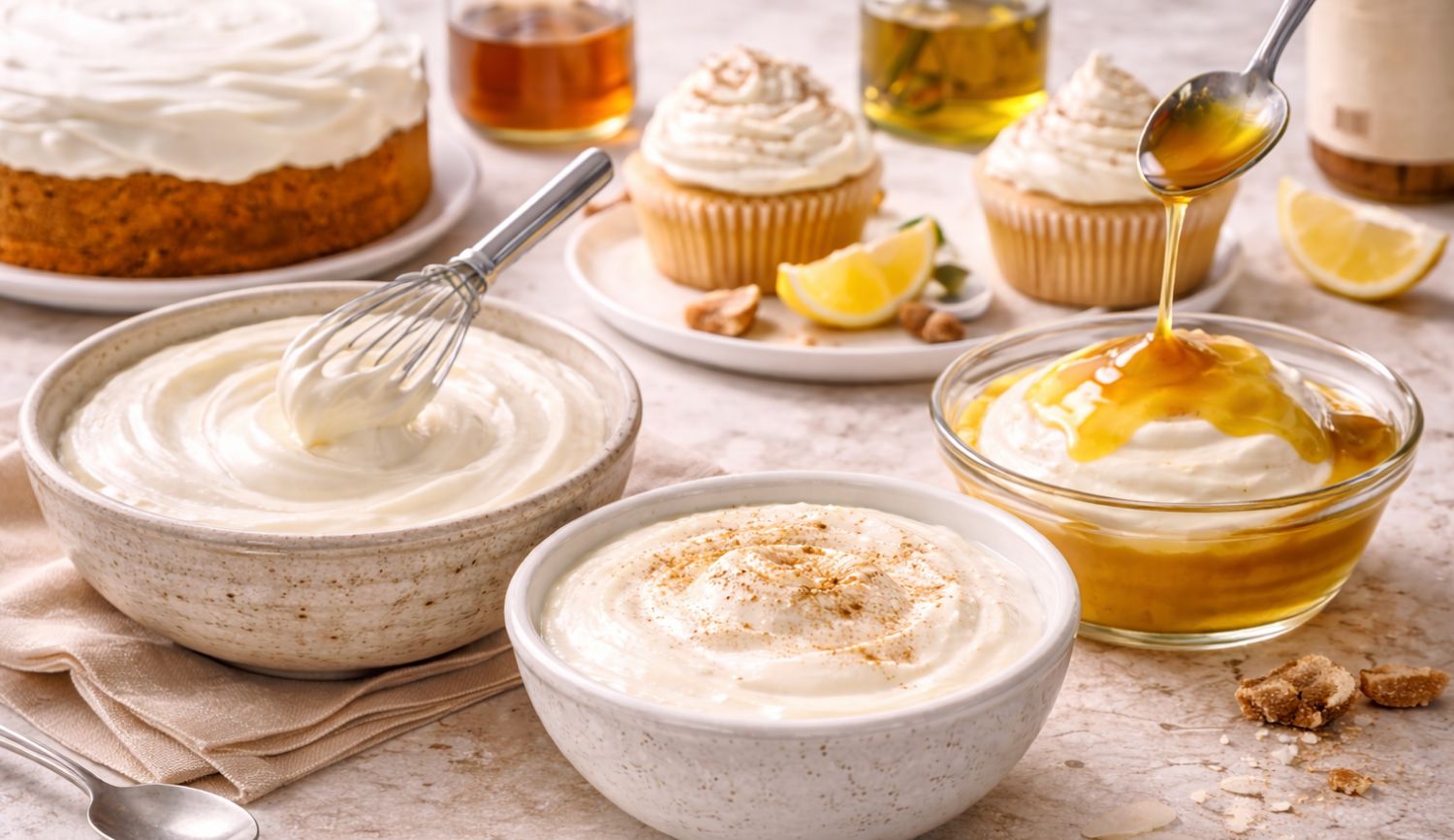
Low histamine frosting is often where otherwise “safe” desserts go wrong. When that happens, the base recipe usually gets blamed. In reality, the problem is often the topping.
Frosting is where most high-histamine ingredients are concentrated. Butter, cream cheese, cocoa, and processed sugar blends are all common in standard recipes. Even small amounts can push your total histamine load past your tolerance.
Cream cheese is fermented dairy. Butter contains aged components. Cocoa is both high in histamine and acts as a liberator. Powdered sugar often includes anti-caking agents that are not always well tolerated.
The issue is not frosting itself, but how it is usually made.
If you are building a full dessert, start with a reliable base like our Low Histamine Cake with Olive Oil or Low Histamine Cupcakes, then adjust the topping carefully.
These recipes are designed to be simple, repeatable, and easier to tolerate.
Start here: choose the right frosting
If you want a quick answer without reading everything:
- Very sensitive → Start with olive oil frosting (lowest risk, no fermentation)
- Moderate tolerance → Coconut cream frosting (closest to traditional texture)
- Want a richer texture → Coconut yogurt topping (only if already tolerated)
Start with a small amount and increase gradually.
What makes frosting a histamine problem
Most conventional frosting triggers fall into three categories.
Fermented dairy accumulates histamine during processing. Chocolate and cocoa contribute both direct histamine and histamine release. Additives such as artificial flavourings and alcohol-based extracts can interfere with histamine breakdown in sensitive individuals.
Simply replacing butter with a “safe” alternative rarely works, because the structure of the recipe stays the same.
A more reliable approach is to rebuild frosting from the ground up using fewer ingredients. These low histamine frosting recipes are designed to be simpler, more predictable, and easier to tolerate.
Before you start: coconut cream matters
Two of the recipes below rely on coconut cream. The result depends on preparation.
Use full-fat coconut cream from a carton and refrigerate it for at least four hours. Overnight is better. The fat must be fully separated and solid.
Check the label. You want coconut and water only. Some products contain guar gum or stabilisers that can trigger reactions in sensitive individuals.
If the cream is not fully chilled, it will not whip properly.
Now let’s go through each option so you can choose what works for you.
Recipe 1: Coconut cream frosting
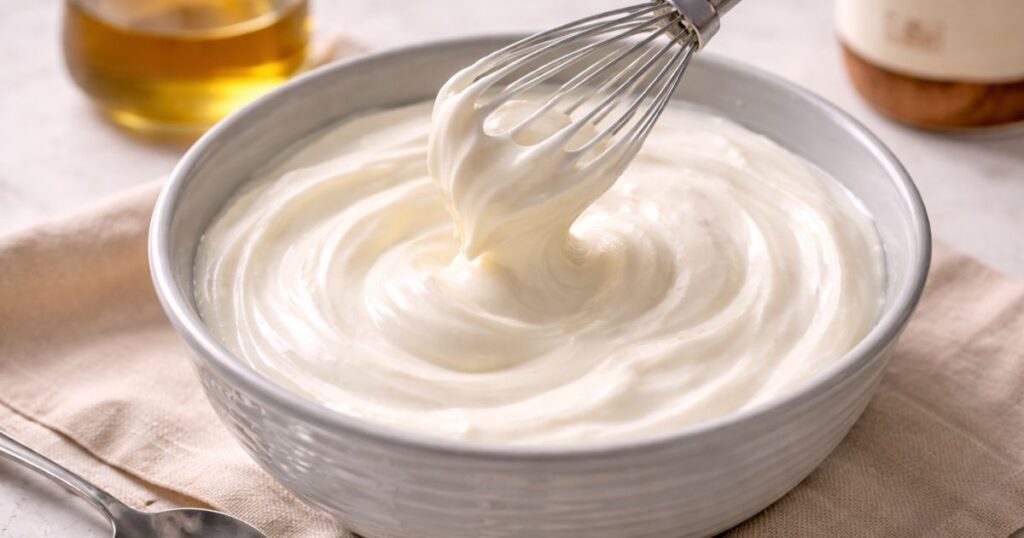
This is the most versatile option. It produces a soft, stable topping that can be spread or lightly piped.
Ingredients
- 1 cup full-fat coconut cream, chilled overnight
- 1 to 2 tablespoons maple syrup
- ½ teaspoon alcohol-free vanilla extract or a pinch of Ceylon cinnamon
Instructions
- Step 1 — Chill your bowl
Place your mixing bowl in the refrigerator for about 10 minutes. This helps keep the coconut cream stable while whipping. - Step 2 — Scoop the solids
Open the coconut cream and transfer only the solid portion into the bowl. Leave all liquid behind. Even a small amount will prevent proper whipping. - Step 3 — Whip to soft peaks
Use a hand mixer on medium speed for 60 to 90 seconds. The mixture should increase in volume and hold a soft shape. - Step 4 — Add sweetener carefully
Add maple syrup gradually and fold with a spatula instead of continuing to whip. This keeps the texture stable. - Step 5 — Finish and use
Add flavor if needed and stop once smooth. Use immediately or refrigerate briefly if it softens.
Why this works
Coconut cream provides fat without fermentation, which makes it more predictable for histamine-sensitive individuals.
Tools that make this easier
- Hand mixer — Check price & availability
- Glass mixing bowls — Check price & availability
Recipe 2: Olive oil frosting

This is the lowest-risk option and the most stable. It forms a smooth glaze rather than a whipped texture.
The olive oil must be fresh. Old oil produces a bitter taste and can be harder to tolerate.
Ingredients
- ¼ cup extra virgin olive oil
- 2 to 3 tablespoons maple syrup
- 2 tablespoons full-fat coconut milk
Instructions
- Step 1 — Combine oil and syrup
Whisk together for about 20 seconds. The mixture will look separated at first. - Step 2 — Build the emulsion
Add coconut milk gradually while whisking continuously until smooth. - Step 3 — Adjust consistency
Add small amounts of coconut milk to thin, or refrigerate briefly to thicken. - Step 4 — Apply immediately
Drizzle or spread over a cooled base. It will firm slightly once applied.
Why this works
This version uses minimal ingredients and avoids fermentation entirely, reducing the risk of histamine reactions.
Recipe 3: Coconut yogurt topping
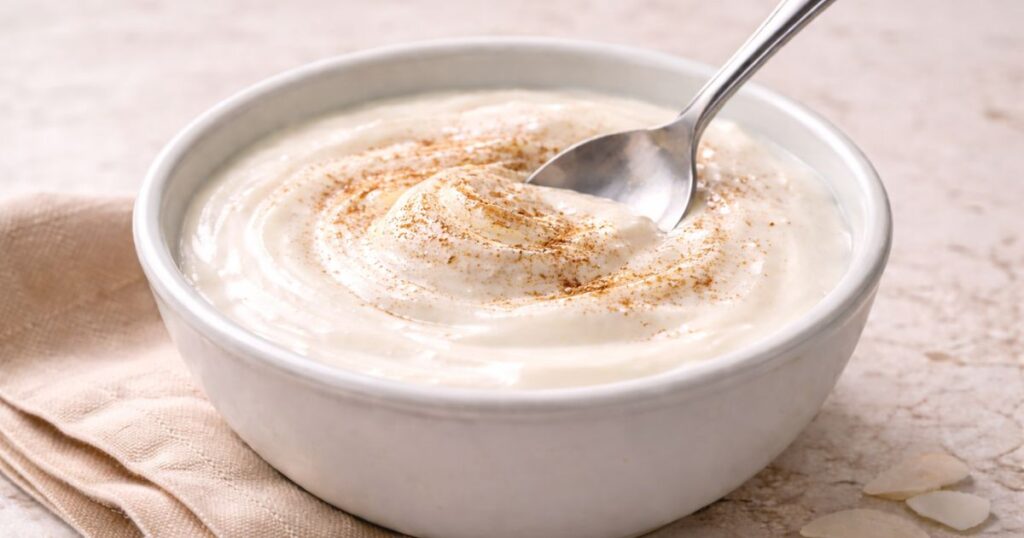
This is the richest option with a mild tang. It works best as a spooned topping.
Not all coconut yogurts are suitable. Avoid products with fruit, citric acid, or long ingredient lists.
Ingredients
- ½ cup plain coconut yogurt, freshly opened
- 1 tablespoon maple syrup
- Pinch of Ceylon cinnamon (optional)
Instructions
- Step 1 — Combine ingredients
Add everything to a bowl. - Step 2 — Mix until smooth
Stir for about 15 seconds until uniform. - Step 3 — Check flavor
It should taste clean and mild. If it tastes noticeably sour or sharp, it is best not to use it. - Step 4 — Apply just before serving
Do not prepare in advance. The texture breaks down quickly.
Why this works
Fresh coconut yogurt provides a thicker texture without relying on dairy, but tolerance depends on the product used.
Which frosting to start with
If you are highly sensitive, start with the olive oil glaze. It has the fewest variables.
If you tolerate coconut, the coconut cream version provides a more familiar texture.
The yogurt option works best once you understand your tolerance.
Use small amounts. Frosting should stay an addition, not the base of the recipe.
If you are deciding between formats, see our Low Histamine Cupcakes for portion control or Low Histamine Cake with Olive Oil for a full-size version.
Storage
All options are best used fresh.
Olive oil frosting can be refrigerated for up to 24 hours and re-whisked before use. Coconut cream frosting can be stored but should not be re-whipped. Coconut yogurt topping should always be made fresh.
Do not freeze these. The texture will not recover.
Use airtight glass containers to reduce contamination and maintain freshness — Check price & availability
Frequently Asked Questions About Low Histamine Frosting
Can frosting be low histamine?
Yes, when made from fresh, simple ingredients without dairy, cocoa, or additives.
Which frosting is best for histamine intolerance?
The olive oil frosting is the lowest-risk option due to minimal ingredients and no fermentation.
Can frosting increase histamine levels?
Yes. Frosting that contains dairy, chocolate, or additives can increase histamine load quickly.
Is coconut cream safe for histamine intolerance?
For most people, yes. Start with a small amount if you have not tested it before.
Can I make frosting ahead of time?
Only the olive oil version holds well. The others are best fresh.
What if I do not tolerate coconut?
Use the olive oil frosting or skip frosting entirely.
Are dairy-free frostings always low histamine?
No. Many dairy-free frostings still contain cocoa, additives, or processed ingredients that can trigger symptoms.
Final thoughts
Most frosting problems come from complexity, not just ingredients.
When you simplify the recipe, control freshness, and keep portions small, frosting becomes predictable.
That is what makes low histamine baking consistent and manageable over time.
Continue reading
If you want to build a complete low histamine dessert setup:
- Low Histamine Cake with Olive Oil (full-size recipe for sharing)
- Low Histamine Cupcakes (easier portion control and storage)
- Low Histamine Food List (build a safer everyday foundation)
This article is for informational purposes only and is not medical advice. Individual tolerance to ingredients varies. Always consult a qualified healthcare provider before making dietary changes.
This article contains affiliate links. If you purchase through these links, we may earn a small commission at no extra cost to you. We only recommend products we believe support effective histamine management.



Leave a comment