
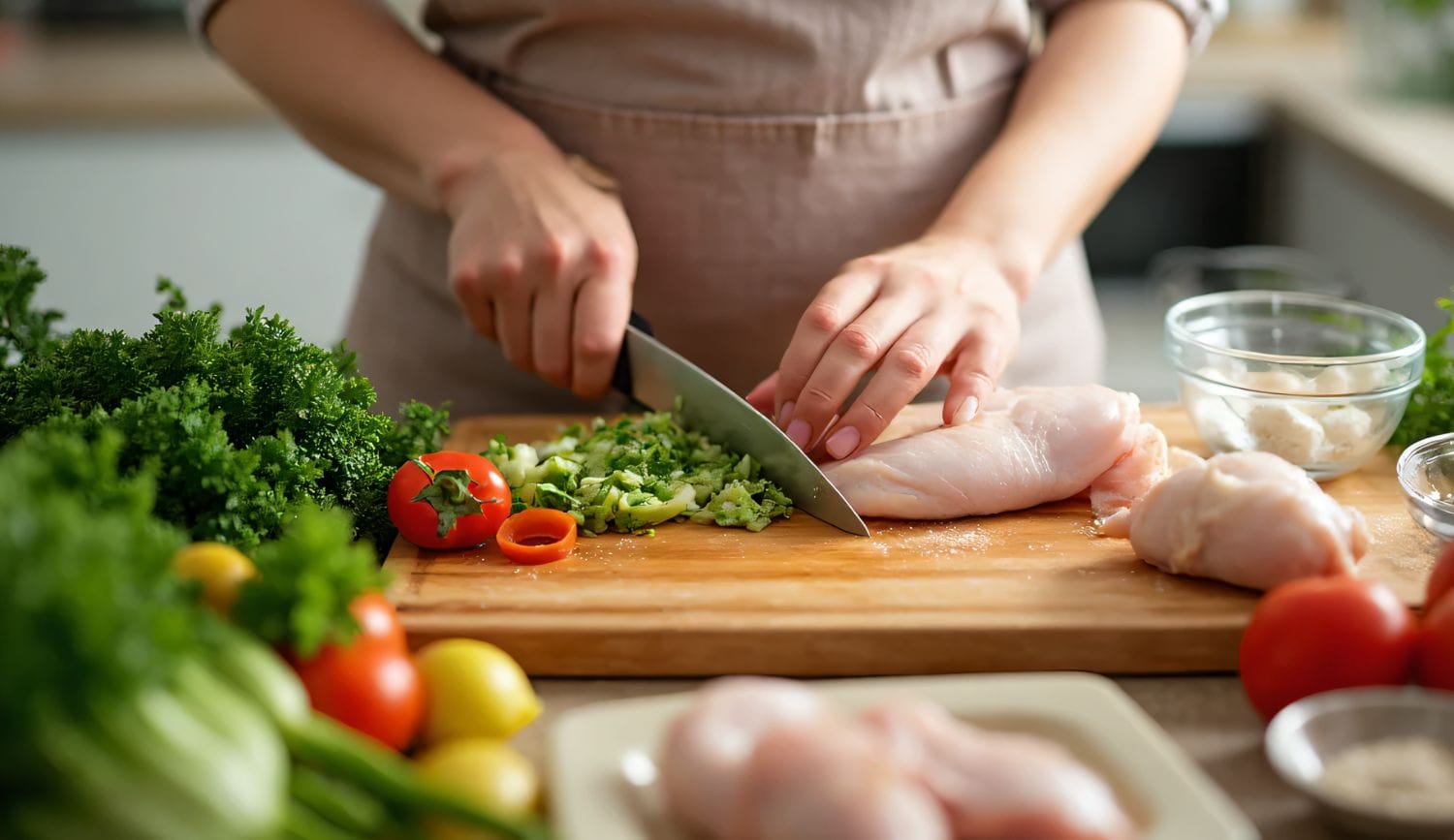

Histamine doubles in cooked meat within 24 hours of refrigeration. Traditional meal prep fails for histamine intolerance. The solution? Fresh-prep systems that focus on raw ingredients for quick assembly rather than pre-cooked meals.
What You’ll Learn
- Why histamine multiplies in leftovers even when refrigerated
- How freezing halts histamine formation (making it superior to refrigeration)
- Fresh-prep systems that maintain convenience without leftovers
- Assembly-style cooking that creates meals in under 20 minutes
- Strategic shopping schedules for maximum ingredient freshness
Why Leftovers Cause Reactions
Histamine accumulation happens through bacterial enzymes that convert histidine into histamine. Refrigeration slows but doesn’t stop this process. Cooked proteins are particularly problematic due to broken-down cellular structure.
Research shows histamine levels in cooked meat can double within just 24 hours of refrigeration.
Storage comparison:
| Method | Histamine Formation | Safe Duration |
|---|---|---|
| Refrigeration (cooked) | Continues rapidly | 2-4 hours max |
| Refrigeration (raw) | Continues slowly | 24 hours max |
| Freezing (any) | Completely halted | 2-3 months |
Why freezing works: At 0°F or below, bacterial enzymes responsible for histamine production become inactive. Histamine formation stops completely.
Why Traditional Meal Prep Fails
Sunday batch cooking creates 4-7 days of histamine-loaded leftovers. Each day multiplies histamine levels exponentially. By Wednesday, your “healthy meal prep” triggers the same symptoms you’re trying to avoid.
The fundamental flaw: Traditional meal prep assumes reheating leftovers is efficient and safe. For histamine intolerance, this doesn’t work.
The Fresh-Prep System
Fresh-prep transforms preparation from cooking complete dishes to preparing components that cook quickly when assembled.
| Traditional Meal Prep | Fresh-Prep System |
|---|---|
| Cook complete meals in advance | Prep raw ingredients for quick assembly |
| Store cooked food 3-7 days | Store raw ingredients or freeze immediately |
| Reheat and eat | Cook fresh at mealtime (15-20 min) |
| Histamine accumulates | Histamine stays minimal |
The goal: Spend 10-15 minutes prepping ingredients, then 15-20 minutes cooking fresh meals daily.
Protein Preparation System
Proteins require the most careful attention since aged proteins contain the highest histamine levels.
Step-by-step:
- Purchase fresh: Buy the freshest proteins available. Ask butchers when shipments arrive.
- Portion immediately: Divide into individual servings right away.
- Wrap properly: Use vacuum sealer or freezer paper to prevent freezer burn.
- Label with date: Mark purchase date for proper rotation.
- Freeze flat: Enables quick thawing.
- Use within 2-3 months: Rotate oldest first.
Safe proteins (quick-cooking):
- Fresh chicken breast (12-15 min)
- Fresh ground turkey (8-10 min)
- Fresh white fish (6-8 min)
- Fresh ground chicken (8-10 min)
Avoid high-histamine proteins:
- Processed deli meats
- Aged cheeses
- Canned fish
- Smoked meats
Essential tool: FoodSaver Vacuum Sealer prevents freezer burn. Instant Pot Duo cooks frozen proteins in 20-30 minutes without thawing.
Vegetable Preparation
Vegetables contain lower histamine, but preparation timing matters.
Why chop same-day: Cut surfaces expose more cellular material to air and bacteria, accelerating histamine formation. Chop vegetables 4-6 hours before cooking maximum.
| Vegetable Type | Best Choices | Prep Timing |
|---|---|---|
| Leafy greens | Romaine, butterhead lettuce | Morning of use |
| Cruciferous | Broccoli, cauliflower | Morning of use |
| Root vegetables | Carrots, parsnips, turnips | Morning or day before |
| Squashes | Zucchini, yellow squash | Morning of use |
| Peppers | Bell peppers (all colors) | Morning of use |
Avoid: Tomatoes, spinach, eggplant, avocados, fermented vegetables
Store chopped vegetables refrigerated in airtight containers with damp paper towels. Use glass storage containers to prevent chemical leaching.
Carbohydrate Options
Carbohydrates offer the most flexibility since they’re generally lower in histamine.
Quick-cooking options:
- Rice: Cook fresh daily in rice cooker (15-20 min)
- Potatoes: Prep and cook same-day
- Sweet potatoes: Microwave individual servings (8-10 min)
- Gluten-free pasta: Quick-cooking varieties (8-10 min)
- Quinoa: Rinse and cook fresh (15 min)
Tool: Zojirushi Rice Cooker prepares perfect rice daily with minimal attention.
Weekly Routine
Strategic timing ensures maximum freshness with minimal time investment.
| Day/Time | Tasks | Duration |
|---|---|---|
| Sunday | Portion all proteins, freeze, plan shopping | 30-45 min |
| Tuesday | Mid-week shopping: vegetables, proteins | 20-30 min |
| Friday | Weekend shopping for Sat-Sun | 20-30 min |
| Daily morning | Move protein to fridge, wash greens | 5-10 min |
| Daily afternoon | Chop vegetables, store with damp towels | 10 min |
| Daily evening | Cook protein, steam vegetables, serve carbs | 20 min total |
Assembly-Style Cooking
Combine prepped ingredients into fresh meals in minutes.
Example 1: Pressure Cooker Bowl Frozen chicken (pressure cook 20 min) + pre-chopped zucchini (sauté 8 min) + rice cooker rice = 5 min active time
Example 2: Steamed Fish Fresh cod (steam 6-8 min) + pre-chopped broccoli (steam simultaneously) + quinoa (15 min) = 20 min total
Example 3: Turkey Skillet Ground turkey + pre-chopped cauliflower rice (sauté 5-7 min) + microwave squash (8 min) = 15 min
MCAS-Specific Cooking Methods
Mast cell activation syndrome requires attention to both histamine levels and inflammatory triggers from cooking methods.
Safe cooking methods:
| Method | Temperature | Best For |
|---|---|---|
| Steaming | 212°F | Vegetables, fish |
| Poaching | 160-180°F | Chicken, fish |
| Light sautéing | Medium (300°F) | Vegetables, ground meat |
| Pressure cooking | 250°F sealed | Frozen proteins |
Avoid: Grilling, roasting above 350°F, deep frying, broiling. Browned or charred foods trigger mast cell degranulation.
Strategic Shopping Schedule
Maximum freshness with minimal trips.
Sunday: All weekly proteins (start week fresh)
Tuesday/Wednesday: Vegetables, additional proteins (mid-week freshness)
Friday: Weekend proteins, vegetables (restock for Sat-Sun)
Protein shopping tips:
- Ask butchers when shipments arrive
- Choose latest “packed on” dates
- Inspect packaging for tears or liquid
Produce tips:
- Avoid pre-cut vegetables
- Choose firm, crisp options
- Visit farmers markets for ultra-fresh produce harvested that morning
Seasonal Strategies
| Season | Key Strategy | Best Vegetables |
|---|---|---|
| Summer | Maximize raw vegetables | Zucchini, peppers, cucumbers |
| Fall | Balance raw and cooked | Butternut squash, carrots, cauliflower |
| Winter | Quick-cooking root vegetables | Broccoli, cabbage, parsnips |
| Spring | Increase raw vegetables | Asparagus, spring greens, radishes |
Common Challenges and Solutions
Time pressure: Simplify to fresh protein + steamed frozen vegetables + rice (20 min). Keep emergency ingredients stocked.
Travel: Pack cooler with frozen proteins. Research grocery stores near destination. Request hotel rooms with microwaves and mini-fridges.
Fatigue: Use pressure cooker exclusively. Rely on frozen vegetables. Prep while sitting. Accept “good enough.”
Social situations: Explain simply: “I have a medical condition requiring fresh food.” Offer to bring your own meal.
Building Your Routine
Sustainable routines develop gradually.
Week 1: Master basics. Cook 1-2 recipes repeatedly. Focus on protein prep.
Week 2: Add variety. Introduce one new vegetable and cooking method.
Week 3: Diversify. Expand to different proteins and combinations.
Success signs:
- Cooking fresh 5-6 days weekly
- Reduced symptoms
- Increased confidence
- Less stress around mealtime
The routine becomes second nature within a month.
Common Questions
Can I freeze cooked meals? Most people do better freezing raw ingredients and cooking fresh daily. Freezing doesn’t reverse histamine that formed during cooking. Individual tolerance varies—test cautiously.
How long can chopped vegetables stay fresh? Chopped vegetables maintain lowest histamine levels within 4-6 hours of preparation when stored refrigerated in airtight containers with damp paper towels. Use same-day for best results.
What’s the safest protein? Fresh chicken, turkey, and white fish contain lowest histamine levels when purchased fresh and cooked immediately. Ground meats cook fastest (8-10 min).
Can I use a slow cooker? Pressure cookers are preferable. Long cooking times at low temperatures can increase histamine formation. Pressure cooking’s speed (20-30 min) minimizes histamine buildup.
Do overnight leftovers cause problems? Yes. Even overnight storage increases histamine levels in most foods, particularly proteins. Eat fresh or freeze immediately after cooking for later use.
Continue Learning
More resources for managing histamine intolerance:
- Complete Low Histamine Food List
- Histamine Intolerance Guide
- 15-Minute Chicken Rice Bowl
- 5 Low Histamine Soup Recipes
- Low Histamine Overnight Oats
Free downloadable resources:
- 14-Day Symptom & Trigger Tracker
- High-Fiber Low-Histamine Shopping List – Your Complete Weekly Shopping Guide
- 7-Day High-Fiber Meal Plan
- Low-Histamine Food Swaps Guide
Medical Disclaimer: This article provides educational information about managing histamine intolerance through dietary approaches and is not intended to replace professional medical advice. Histamine intolerance and MCAS require individualized medical management. Always consult with your physician or registered dietitian before making significant dietary changes or starting supplements.
Note: This article contains affiliate links. If you purchase through these links, we may earn a small commission at no extra cost to you. We only recommend products that support effective histamine management.
Leave a comment