
A low histamine grocery list is where the diet either holds together or falls apart. Many people assume that managing histamine intolerance is simply about choosing the right foods, but in reality, the most important decisions happen before cooking even begins.
At the grocery store, small choices around freshness, storage, and processing determine how much histamine enters your system. A fresh piece of fish and the same fish stored for two days are not equivalent, even though they appear identical on paper.
This guide is based on current clinical understanding of histamine metabolism and practical dietary application.
Why a grocery list matters on a low histamine diet
The grocery store is where histamine load is determined before a single meal is prepared. Every decision made during shopping sets the parameters for the days ahead.
Histamine accumulates in protein-containing foods from the moment they are processed, and this accumulation continues during storage, refrigeration, and transport.
In addition, many foods that appear harmless contain hidden sources of histamine. Condiments, sauces, seasoning blends, and packaged products often include fermented ingredients or additives that interfere with DAO activity.
How to use this grocery list
This is not a rigid list. It is a decision-making framework you can apply in any store, in any country.
The central principle is simple: choose the freshest, least processed version of any food, and buy only what you will use within one to two days.
What to buy on a low histamine diet
Understanding what to buy goes beyond identifying safe food categories. It requires selecting foods in their freshest, least processed form while avoiding hidden sources of histamine introduced during storage and packaging.
Rather than relying on restrictive lists, the goal is to make consistent, practical choices that keep histamine load manageable over time.
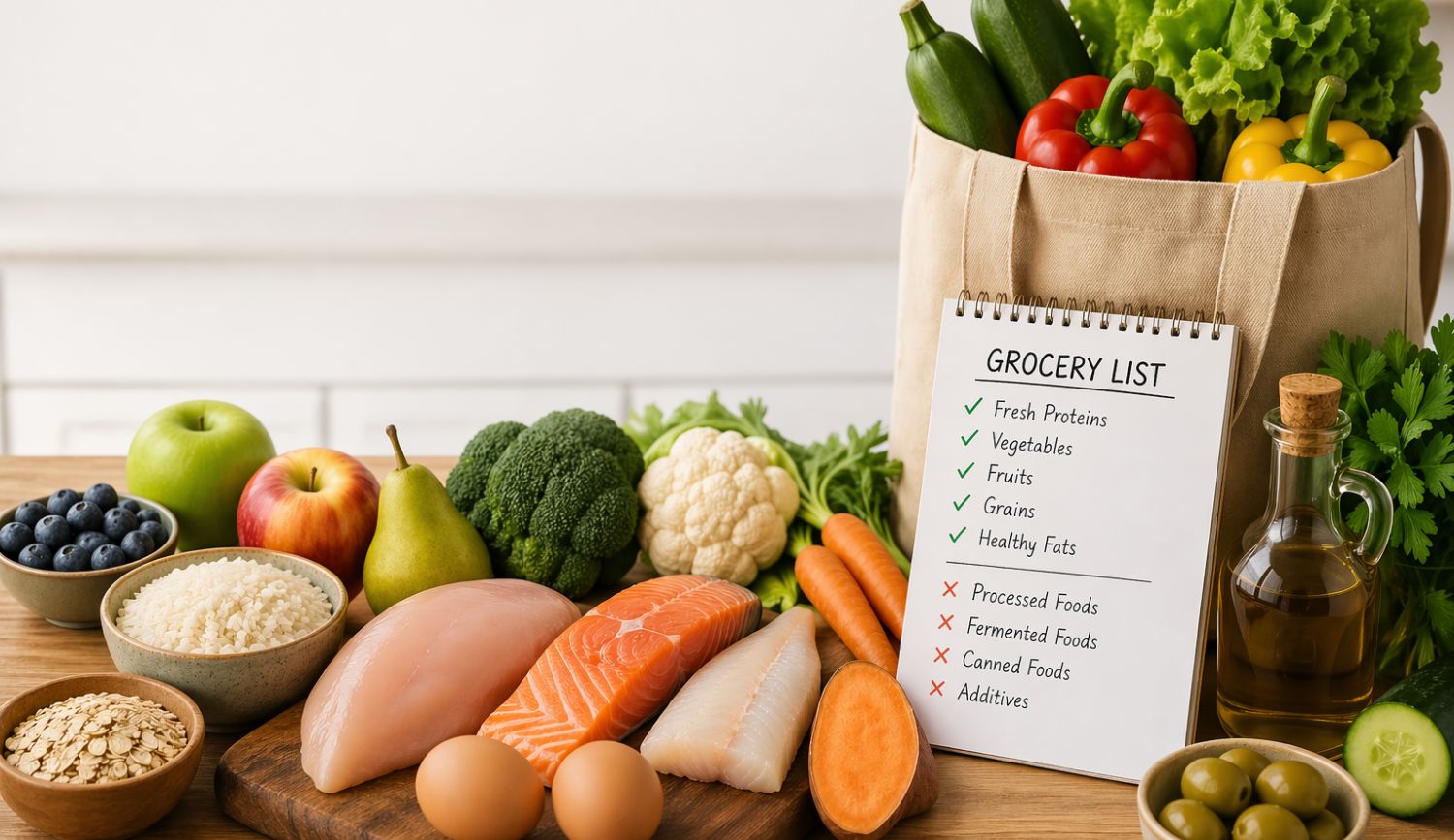
A quick comparison can help clarify which foods are generally safer choices and which are more likely to increase histamine load.
| Category | Low histamine choices | High histamine or problematic |
|---|---|---|
| Proteins | Fresh chicken, turkey, eggs, fresh white fish | Aged cheese, cured meats, canned or smoked fish |
| Vegetables | Carrots, broccoli, courgette, cucumber | Spinach, tomatoes, aubergine, in some cases |
| Fruits | Apples, pears, blueberries, grapes | Citrus fruits, strawberries, pineapple |
| Grains | Rice, oats, quinoa, potatoes | Fermented breads, processed grain products with additives |
| Fats | Olive oil, butter, coconut oil | Vinegar-based dressings, processed sauces |
For a broader breakdown of safe and problematic foods, refer to the low histamine food list.
Low histamine grocery list
The foods below are organised into practical categories to simplify shopping decisions. These selections prioritise freshness, minimal processing, and consistency — the key factors that determine histamine load in real-world conditions.
Fresh proteins
Protein is the highest-risk category for histamine accumulation, making careful selection essential.
Reliable options include chicken, turkey, beef, lamb, fresh white fish, and eggs.
Key selection rules:
- Buy same-day or freeze immediately
- Avoid pre-minced or long-stored meat
- Choose the freshest available stock
Vegetables
Vegetables are generally low risk, but freshness and type still matter.
Reliable options include carrots, broccoli, courgette, cucumber, celery, bell peppers, and leafy greens (excluding spinach).
Key selection rules:
- Choose fresh, firm vegetables
- Avoid pre-cut or long-stored packs
- Introduce borderline foods slowly
Fruits
Fruit provides variety and nutrients, but some act as histamine liberators.
Safe options include apples, pears, blueberries, grapes, mango, and melon.
Key selection rules:
- Choose fresh over dried
- Avoid citrus and strawberries initially
- Keep portions moderate
Grains and carbohydrates
Grains are among the most reliable foods in a low histamine diet.
Safe options include rice, oats, quinoa, potatoes, and plain pasta.
Key selection rules:
- Choose plain, minimal-ingredient products
- Avoid additives like vinegar or preservatives
- Keep processing minimal
Fats
Fats support the diet without contributing to histamine load.
Safe options include olive oil, butter, ghee, and coconut oil.
Key selection rules:
- Choose fresh oils
- Avoid heavily processed blends
- Check for oxidation or old stock
Choosing the right foods is only one part of the process. Equally important is recognising which foods consistently increase histamine load before they ever reach your plate.
What to avoid when shopping
Certain food categories consistently increase histamine load regardless of quality.
- Aged cheeses and fermented dairy
- Processed and cured meats
- Canned and smoked fish
- Fermented foods and sauces
- Alcohol
- Packaged foods with additives
These foods either contain histamine directly or interfere with how your body breaks it down. This relationship between intake and breakdown is explained further in the DAO deficiency diet.
Freshness rules for low histamine shopping
Freshness is not a minor detail in a low histamine diet — it is the central factor that determines whether a food is tolerated or not.
Histamine forms over time in protein-containing foods, even under refrigeration. This means that two identical foods can produce completely different responses depending on how long they have been stored.
Key rules to follow:
- Histamine builds over time — even in the fridge
- Freshness matters more than food category
- Freezing stops histamine accumulation
- Shelf life does not equal freshness
How to shop smart on a low histamine diet
A practical shopping system reduces decision fatigue and improves consistency.
When buying proteins:
- Choose the freshest available cuts
- Prefer butchers over pre-packaged options
- Avoid ground meat unless used immediately
When reading labels:
- Watch for preservatives and additives
- Avoid vinegar, yeast extract, and artificial ingredients
When planning purchases:
- Buy smaller quantities
- Shop more frequently
- Use freezing strategically
These habits become easier to apply when combined with a structured approach like the low histamine diet plan.
Sample weekly low histamine grocery list
The following example shows a practical weekly grocery list based on fresh, low-histamine foods.
Proteins: Chicken, fresh fish, eggs
Vegetables: Carrots, broccoli, cucumber, peppers
Fruits: Apples, pears, blueberries
Grains: Rice, oats, potatoes
Fats: Olive oil, butter
This structure supports simple, repeatable meals without unnecessary complexity.
Common grocery mistakes
Even when food choices appear correct, small shopping habits can significantly increase histamine exposure.
- Buying proteins in bulk and storing them too long
- Trusting “healthy” labels without checking ingredients
- Ignoring how far into shelf life a product is
- Relying on packaged or preserved foods
How this connects to your daily diet
Your grocery choices determine how effective your diet will be. The foods you bring home directly shape your daily meals, consistency, and overall histamine load.
At a deeper level, gut health and enzyme activity influence how your body processes histamine.
The DAO and gut health connection explains why some people continue to experience symptoms despite careful dietary changes.
Frequently Asked Questions
The following questions address common concerns people have when shopping for a low histamine diet and help clarify practical decisions.
What can I buy on a low histamine diet?
Fresh proteins, vegetables, fruits, grains, and clean fats with minimal processing.
Is fresh meat better than packaged?
Yes, because it contains less accumulated histamine.
Can I buy frozen food?
Yes, freezing stops histamine formation and is often safer.
What should I avoid at the grocery store?
Processed, fermented, canned, and additive-heavy foods.
Are “healthy” packaged foods safe?
Not always — ingredient lists matter more than labels.
Conclusion
A low histamine grocery list works best when it is treated as a system rather than a static list of foods.
By prioritising freshness, minimising processing, and building consistent shopping habits, you create a foundation that makes the entire diet easier to follow and more effective over time.