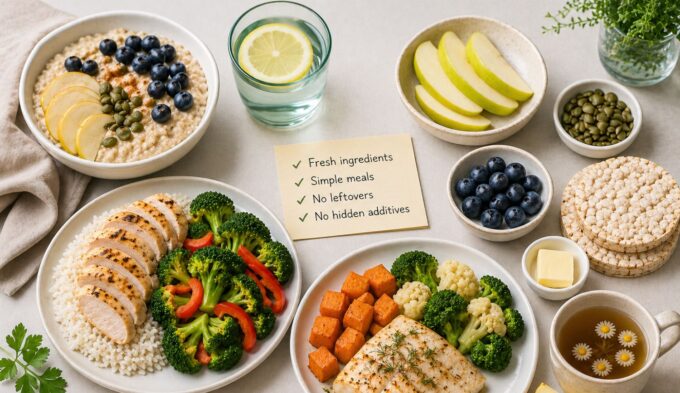

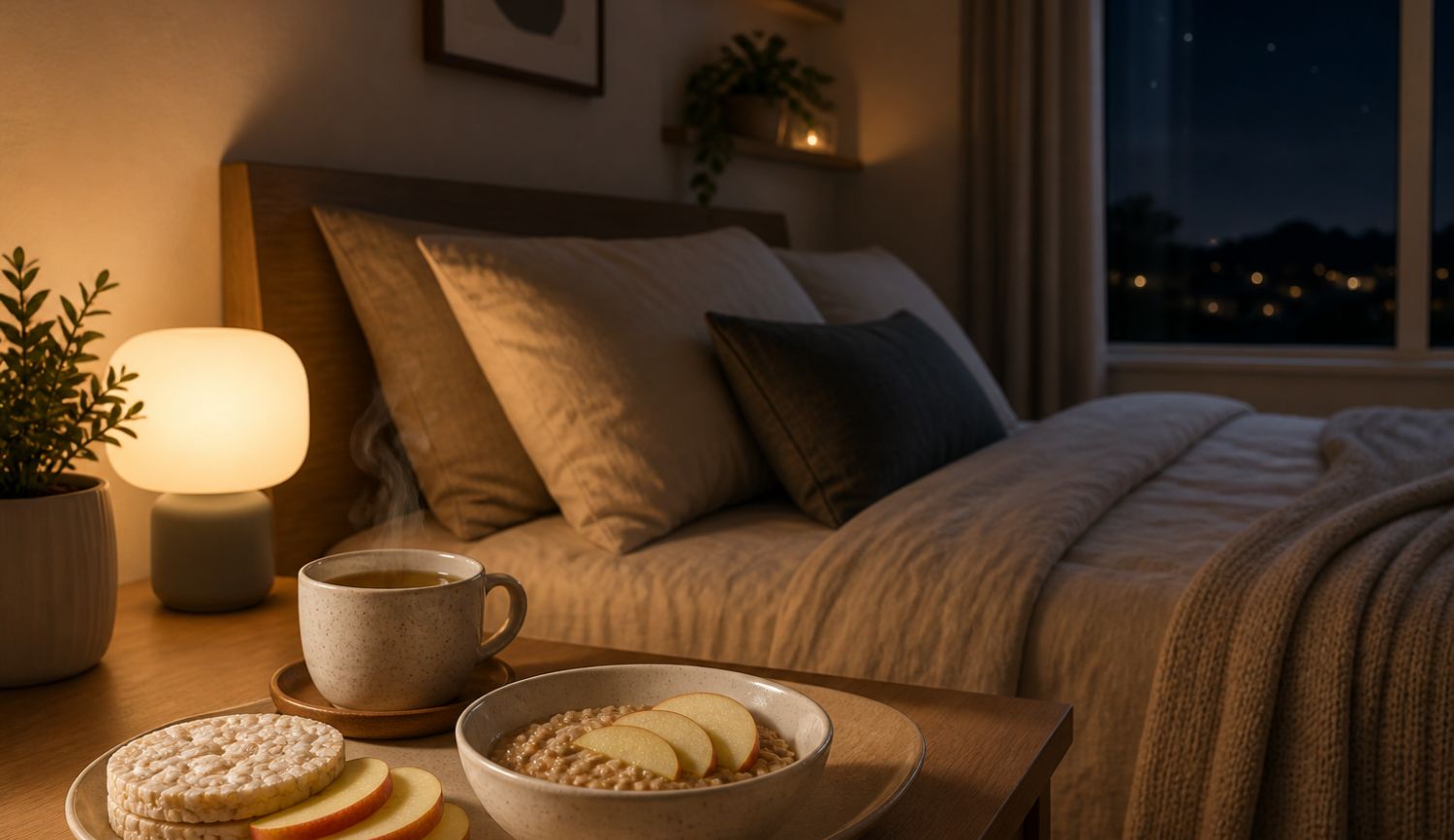
If you are wondering what to eat before bed with histamine intolerance, you are likely asking because something has already gone wrong at night. The heart racing after dinner. The itching that starts at 11pm. The wide-awake-at-2am feeling that should not be there.
These are common patterns, and they are almost always connected to what and when was eaten in the hours before sleep.
The good news is that eating before bed is not categorically off-limits. The problem is not that you ate — it is what you ate, how much, and when.
This guide explains the simple rules for safe pre-bed eating and gives you specific options that most people with histamine intolerance handle well in the evening.
Why nighttime symptoms happen
Nighttime symptoms follow a predictable pattern when histamine builds beyond what the body can comfortably handle. Understanding this pattern makes the evening much easier to manage.
Histamine accumulates across the day. By the time evening arrives, the body has been processing histamine from every meal, snack, and environmental source for ten to fourteen hours. The tolerance margin is narrower than it was at breakfast.
At the same time, DAO enzyme activity — the enzyme that degrades dietary histamine in the gut — declines as digestion slows toward sleep. Cortisol, which partially suppresses mast cell reactivity, reaches its daily minimum around midnight. Mast cells themselves also show increased activity during overnight hours.
The result is that any histamine arriving from late food or snacks is handled during the window when histamine breakdown is at its lowest.
This is why a dinner eaten at 9pm causes overnight symptoms that the same meal eaten at 6pm would not. The food did not change — the body’s capacity to handle it did.
Should you eat before bed?
The decision to eat before bed depends on hunger, not rules. The goal is to avoid both extremes — going to bed uncomfortably hungry or eating in a way that increases histamine overnight symptoms.
Going to bed genuinely hungry adds stress to the body and can disrupt sleep from a different direction. A small, safe snack before bed is often better than lying awake or reaching for something less considered later.
If you are unsure which foods are generally safe, the what to eat with histamine intolerance guide provides a broader framework for building meals throughout the day.
What is not helpful is a substantial protein meal, anything fermented, or anything heavy eaten close to sleep. These place a significant processing demand on the body during the overnight window when its capacity to handle that demand is already reduced.
The practical distinction is simple: a light snack can help, but a late meal usually creates problems.
What to eat before bed with histamine intolerance: the immediate answer
If you are reading this tonight and need an answer right now, these are the options that work.
- Plain rice cakes with fresh butter. Two or three rice cakes with a small spread of fresh butter. Minimal histamine, easy to digest, and quick to prepare.
- A small bowl of plain oats. Made with warm water or coconut milk, with a small drizzle of maple syrup. Oats are calming and consistently well tolerated.
- A fresh apple or pear. Eaten as is. No preparation needed. Low histamine and easy on digestion.
- Warm herbal tea with a small piece of fruit. Chamomile or peppermint tea alongside a fresh apple or a few plain biscuits made with clean ingredients.
- A small portion of plain cooked rice. If something slightly more filling is needed, plain white rice with a drizzle of olive oil is appropriate. Grains accumulate histamine very slowly, making same-day rice a safer option than leftover protein.
These five options cover most situations and are easy to repeat without introducing unnecessary variables at night.
Safe pre-bed snack options
Once the basic approach is clear, these options provide a simple rotation of safe pre-bed snacks without overcomplicating choices.
Very light options
These work best when appetite is low and the goal is simply to avoid going to bed hungry.
- A fresh pear. One of the most consistently well-tolerated fruits. Gentle on digestion and not stimulating.
- Plain rice cakes. Two rice cakes eaten plain or with a small spread of butter. Minimal ingredients and no preparation required.
- Chamomile or peppermint tea. A warm drink that supports the transition to sleep without adding histamine load.
- A small handful of pumpkin seeds. From a recently opened packet. Provides magnesium and light satiety without heaviness.
Slightly more filling options
These are useful when dinner was lighter than expected or hunger is more noticeable.
- Small bowl of plain oats with sliced apple. Warm oats made with water and topped with apple. Filling but still easy to digest.
- Plain rice with olive oil. A small portion of rice from the same day’s cooking. Simple and predictable.
- Rice cakes with mashed banana. A slightly more satisfying option. Use a just-ripe banana, not overripe.
- Warm coconut milk with cinnamon. Gently heated coconut milk with a pinch of cinnamon. Calming without stimulation.
- A small portion of sweet potato. Warm, soft, and easy to digest. One of the most reliable evening carbohydrates.
What to avoid before bed
Some foods consistently increase the risk of nighttime symptoms. Avoiding these in the evening makes a noticeable difference.
Protein-heavy foods increase histamine processing during the overnight window. Even freshly cooked protein is better eaten earlier in the evening.
Leftovers from dinner are a common trigger. Cooked protein accumulates histamine during storage, even in the refrigerator.
Fermented foods such as yogurt and kefir are high in histamine and inappropriate before sleep.
Chocolate and cocoa contain histamine and can act as histamine liberators, often leading to flushing and disrupted sleep.
High sugar foods and large portions of dried fruit can disrupt sleep and increase histamine load.
Caffeinated drinks stimulate the nervous system and may interfere with histamine clearance.
Timing rules
Timing is often more important than the food itself. Small adjustments here can significantly improve nighttime symptoms.
Finish dinner two to three hours before sleep. This allows the body to process most of the meal before histamine clearance slows.
If a pre-bed snack is needed, keep it small and carbohydrate-focused. A piece of fruit or a few rice cakes is usually enough.
Consistency helps regulate digestion and histamine response. Eating at similar times each day reduces unpredictability.
Common mistakes in evening eating
Even when food choices seem correct, small habits can still lead to symptoms. These are the most common mistakes to watch for:
- Eating dinner too late and compensating with a snack
- Overeating before bed when anxious
- Experimenting with new foods at night
- Reaching for “healthy” packaged snacks
Night is the worst time to test anything unfamiliar. If a new food causes a reaction, it disrupts sleep and makes it difficult to identify the cause because symptoms overlap with natural nighttime histamine patterns.
Testing new foods earlier in the day is far more reliable.
How this connects to your day
Evening eating is influenced by everything that came before it. What you eat during the day determines how much tolerance remains by bedtime.
The low histamine dinner ideas guide explains how to structure your evening meal to reduce the overall load before night begins.
The low histamine snacks guide shows how simple daytime choices help preserve tolerance heading into the evening.
A structured low histamine meal plan brings the full day together and reduces the need for late adjustments.
Frequently Asked Questions
These are the most common questions people ask when trying to eat safely at night without triggering symptoms.
What can I eat before bed with histamine intolerance?
The safest pre-bed options are fresh fruit including apple or pear, plain rice cakes with fresh butter, a small bowl of plain oats with water or coconut milk, plain cooked rice with olive oil, or warm herbal tea with a small piece of fruit.
Can I eat at night if I have histamine intolerance?
A small, carbohydrate-focused snack is appropriate if hunger is present. Avoid protein-heavy foods, fermented items, leftovers, and large portions close to sleep.
What are the best snacks before sleep for histamine intolerance?
Plain rice cakes with butter, a fresh apple or pear, a small bowl of oats, or chamomile tea with fruit are among the most reliable options.
Why are histamine symptoms worse at night?
Histamine follows a daily rhythm, with higher activity at night. DAO enzyme activity declines, cortisol levels drop, and mast cells become more reactive, making symptoms more likely after late eating.
Conclusion
What to eat before bed with histamine intolerance comes down to a few clear principles: keep portions small, focus on simple carbohydrates, and avoid adding unnecessary histamine load late in the day.
The options are straightforward once the approach is clear. A small bowl of oats, a piece of fruit with rice cakes, or a warm herbal tea is often enough to support comfortable sleep.
Keep it simple, keep it consistent, and allow the body the best chance to settle overnight. Those habits consistently make the difference between disrupted sleep and stable, predictable nights.
This article is for informational purposes only and does not constitute medical advice. Individual responses vary.