

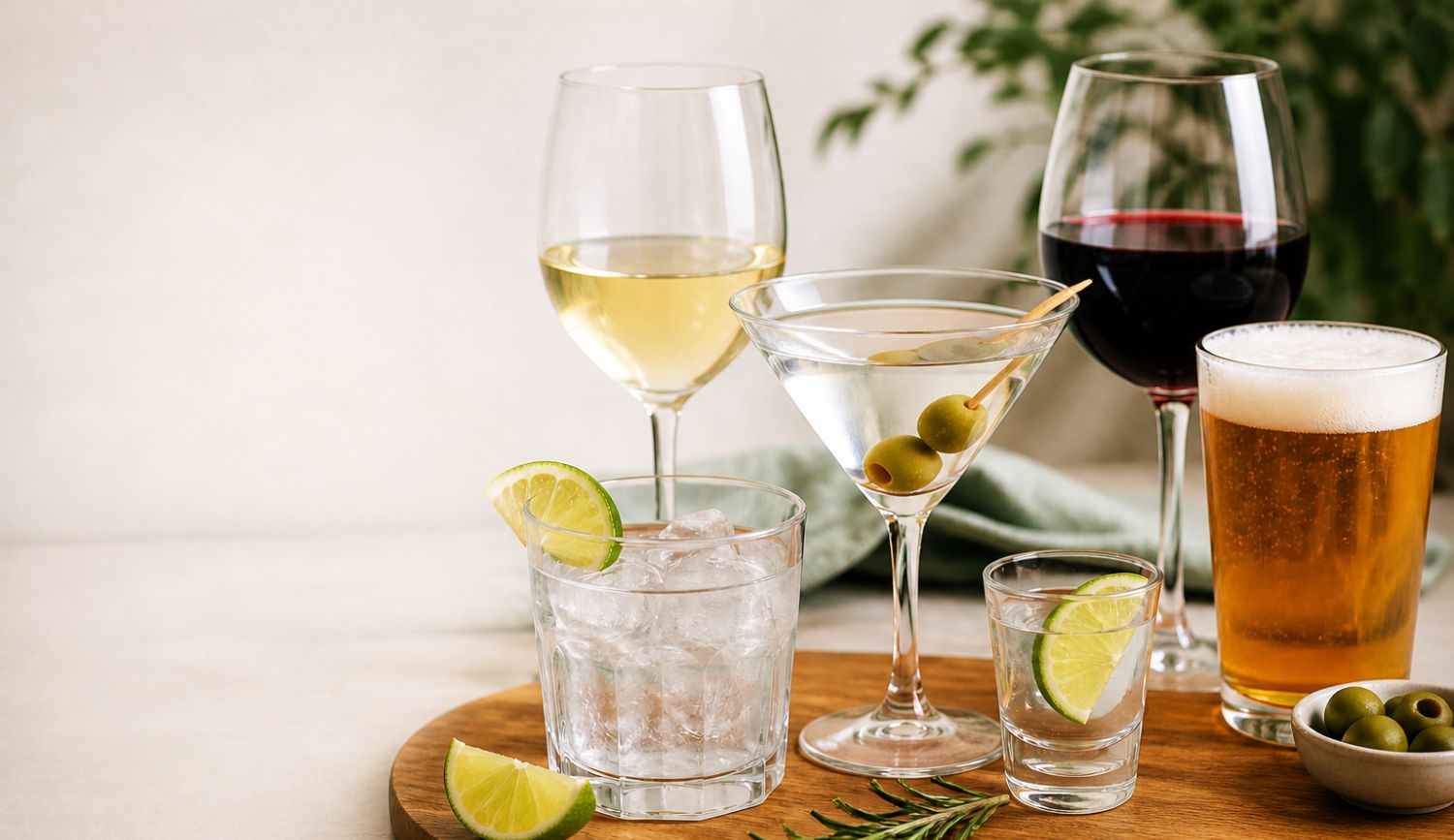
Low histamine alcoholic drinks sound like a simple solution — until you actually try to figure out what that means in real life.
You might have a drink one evening and feel completely fine. Then a few days later, the same drink — same brand, same amount — suddenly causes flushing, a racing heart, or that wired feeling that wakes you up at 3am.
Most people assume it’s the drink itself.
In practice, it’s rarely that simple.
What tends to happen is that alcohol interacts with everything else going on in your body that day — what you ate, how much histamine has already built up, how well you slept, and even your stress levels.
Once you start looking at it that way, the inconsistency starts to make more sense.
Why alcohol triggers histamine symptoms
Alcohol and histamine intolerance don’t clash for just one reason — it’s usually a combination.
First, some alcoholic drinks already contain histamine. Wine, beer, and aged alcohol are the main ones. Red wine, in particular, is consistently higher.
But that’s only part of it.
Alcohol also blocks DAO (diamine oxidase) — the enzyme your body uses to break down histamine. So even if you choose alcoholic drinks low in histamine like vodka, your body becomes less efficient at clearing histamine already present.
This is where it gets confusing.
Because even when the drink itself looks “safe,” the reaction doesn’t always match.
A common pattern we see is this:
Someone carefully chooses low histamine alcohol drinks, keeps everything simple, and still wakes up in the night feeling wired or restless.
That’s usually not the drink alone — it’s the combination of reduced clearance and overall histamine load.
Alcohol can also trigger mast cells directly, causing your body to release histamine internally.
So you’re dealing with:
- Histamine in the drink
- Reduced histamine breakdown
- Increased histamine release
All at once.
What low histamine alcoholic drinks actually means
It doesn’t mean safe.
A better way to think about low histamine alcoholic drinks is:
“better tolerated under certain conditions.”
What matters most is how the alcohol is produced.
- Fermented drinks → higher histamine
- Aged drinks → more compounds that trigger reactions
- Additives → sulphites and preservatives add another layer
This is why wine reactions feel so unpredictable. It’s rarely just histamine.
Clear distilled spirits tend to be simpler — which is why they’re often better tolerated.
Best alcoholic drinks with low histamine (better tolerated options)
These are not safe — just generally easier for some people.
Vodka
Vodka is one of the lowest histamine alcohol options.
It’s highly distilled and filtered, leaving very little histamine behind.
In practice, many people find vodka to be the most consistent choice.
Gin
Gin is also distilled, but the added botanicals can create variation.
Some people tolerate it well. Others notice mild reactions depending on ingredients.
Clear tequila (Blanco)
Tequila can be a decent option when it’s not aged.
But compared to vodka, it’s slightly less predictable due to fermentation differences.
Vodka vs tequila: which is lower in histamine?
Both vodka and tequila are considered low histamine alcoholic drinks.
But vodka tends to be more consistent.
Tequila comes from agave fermentation, which introduces variability depending on the brand and process.
If you’re unsure, vodka is usually the safer starting point.
Moderate options (sometimes tolerated)
White wine
White wine has less histamine than red wine — but still enough to trigger symptoms.
Sulphites also play a role here.
Some people tolerate small amounts. Others don’t.
Beer
Beer varies a lot.
Light lagers may be better tolerated than darker beers, but it depends heavily on the brewing process.
This is one area where trial and error becomes unavoidable.
High histamine alcohol to avoid
These are the most common triggers:
- Red wine
- Champagne and sparkling wine
- Aged spirits (whisky, bourbon, rum)
These combine multiple triggers — histamine, sulphites, and fermentation byproducts.
Low histamine mixers (important but often ignored)
Mixers can quietly turn a manageable drink into a trigger.
Better options:
- Soda water
- Plain water
- Fresh juice (only if truly fresh)
This is where it gets confusing again.
Most packaged juices contain citric acid, which is often produced through fermentation — and that can trigger symptoms.
Avoid:
- Artificial mixers
- Preserved juices
- Energy drinks
Why low histamine alcoholic drinks can still cause symptoms
This is the part most people miss.
Even if you choose the lowest histamine alcohol, alcohol still reduces DAO activity.
That means your body struggles to process histamine from:
- earlier meals
- snacks
- environmental triggers
Drinking later in the evening makes this worse.
Histamine naturally builds throughout the day, and your ability to clear it is lowest at night.
From what we see repeatedly, alcohol reactions are less about the drink itself and more about the total load.
How to drink with fewer symptoms
If you choose to drink, small adjustments can make a difference.
- Eat beforehand
- Avoid drinking late
- Keep drinks simple
- Limit quantity
- Stay hydrated
Nothing here eliminates symptoms completely. It just reduces the likelihood.
How alcohol connects to sleep and next-day symptoms
Alcohol often explains nighttime symptoms people don’t immediately connect.
You fall asleep fine — then wake up suddenly, alert and restless.
The next day might feel like:
- brain fog
- congestion
- low energy
This pattern shows up consistently once you start noticing it.
How this connects to your day
Alcohol doesn’t act in isolation.
What you eat earlier matters.
Your dinner choices matter.
If you haven’t already, read:
Low Histamine Dinner Ideas
What to Eat During a Histamine Flare
Low Histamine Meal Plan
Frequently Asked Questions
What alcohol is lowest in histamine?
Clear distilled spirits like vodka, gin, and tequila are the lowest histamine alcohol options.
Does vodka have histamine?
Very little. But it still affects how your body processes histamine.
What drinks are good for low histamine?
Vodka with soda water is usually the simplest and best tolerated option.
What alcohol has no sulphites or histamines?
No alcohol is completely free of both. Some are lower, but none are zero.
Can alcohol reduce histamine levels?
No. Alcohol typically increases histamine load through multiple mechanisms.
Final thought
Alcoholic drinks low in histamine can reduce the risk — but they don’t remove it.
If you do drink, the real difference comes from understanding your overall histamine load, not just the drink itself.
That’s usually where the pattern becomes clearer.
This article is for informational purposes only and does not replace medical advice. Individual responses to alcohol vary, and it’s always best to consult a qualified professional if you’re managing ongoing symptoms.