

Around 1 or 2 in the afternoon, something shifts.
The morning was manageable. Then lunch happens — and within an hour, everything feels heavier. Energy drops. Focus disappears. Sometimes there’s a subtle anxiety or irritability that wasn’t there earlier.
This is the afternoon histamine crash.
It’s one of the most common — and most misunderstood — patterns in histamine intolerance.
It often gets mistaken for low blood sugar, stress, or just being tired. But this isn’t random fatigue. It follows a clear physiological pattern.
What an afternoon histamine crash actually feels like
Once you recognize the pattern, it becomes predictable.
Energy drops suddenly. This isn’t gradual tiredness. It feels like a sharp dip within 30 to 90 minutes after eating.
The body feels heavy. Even simple tasks take more effort.
Brain fog sets in. Clear thinking fades.
- Words are harder to find
- Focus takes effort
- Tasks feel slower
Mood shifts without a clear reason.
- Irritability
- Low-level anxiety
- Restlessness
This often feels psychological — but it isn’t.
Physical symptoms may appear.
- Flushing
- Mild headache
- Nasal congestion
- Skin warmth
These are signs of histamine acting beyond digestion.
This is not just post-lunch tiredness. It’s a consistent physiological response with a clear cause.
Why the afternoon crash happens
Two main mechanisms drive this pattern.
Cumulative histamine load
By midday, your body has already processed:
- breakfast
- snacks
- environmental exposure
Histamine is not starting at zero. Your tolerance margin is already reduced.
Lunch doesn’t need to be extreme — it only needs to push you past your threshold.
Increased DAO demand at lunch
DAO is responsible for breaking down histamine from food. At lunchtime, digestion creates a new demand on DAO.
If your system is already engaged or slightly depleted, histamine clearance becomes less efficient.
More histamine enters circulation → symptoms appear.
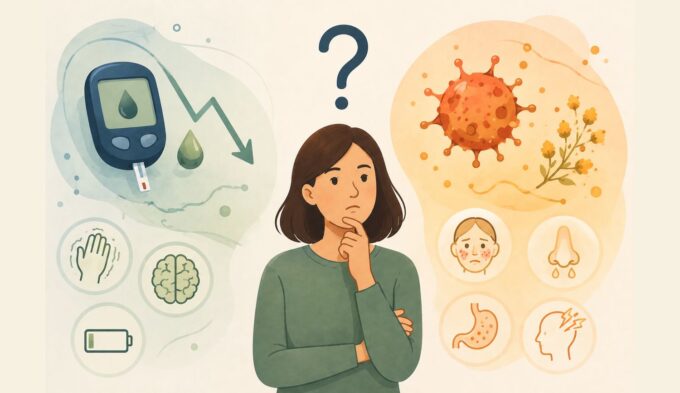
The blood sugar interaction (critical but overlooked)
This is where many people get confused. A high-carb or refined meal can trigger:
- Rapid blood sugar spike
- Followed by a sharp drop
That drop activates:
- adrenaline
- cortisol
Adrenaline stimulates mast cells → releasing more histamine.
So now you have:
- histamine from food
- histamine released internally
This is why the crash feels both:
- physical (histamine)
- and energy-related (blood sugar)
Why lunch is the biggest trigger
Midday symptoms are not just about timing — they’re about how lunch is typically structured.
Several common habits make lunch the most likely point of overload.
Leftovers
This is one of the biggest hidden triggers.
Protein stored in the fridge accumulates histamine over time. A safe dinner becomes a higher-histamine lunch the next day.
Packaged and convenience foods
Lunch often includes:
- crackers
- pre-made meals
- deli items
These may contain:
- preservatives
- vinegar
- additives that reduce DAO activity
Even healthy options can be problematic.
Too many ingredients
Lunch is often the most complex meal:
- sauces
- dressings
- mixed components
Each ingredient adds to the total histamine load.
More ingredients = more variables.
Larger portion size
Lunch is often the biggest meal of the day.
Larger meals:
- increase histamine load
- extend digestion
- prolong symptoms
What actually helps (in the moment)
If the crash has already started, keep it simple. You are not fixing everything. You are reducing the current load.
Do this:
- Stop eating. Adding food increases processing demand.
- Drink water. It supports clearance.
- Move lightly. A 10–15 minute walk helps circulation.
- Reduce cognitive load. Switch to lighter tasks temporarily.
Don’t try to push through. Work with the body — not against it.
How to structure your day to avoid the crash
Prevention is far more effective than recovery.
If you’re unsure which foods are generally safest, the what to eat with histamine intolerance guide gives a clear starting framework.
Use fresh protein at lunch
Avoid leftovers when possible. Freshly cooked protein has significantly lower histamine.
Simplify your meals
Fewer ingredients = lower risk.
Stick to:
- protein
- carbohydrate
- 1–2 vegetables
Balance carbohydrates
Avoid large refined carbohydrate loads.
Instead:
- use simple whole carbs (rice, potatoes)
- avoid sharp spikes
Space your meals properly
Allow 4–5 hours between meals. This gives your system time to process histamine before adding more.
Consider a mid-morning snack
A small snack can:
- prevent overeating at lunch
- reduce spike intensity
The low histamine snacks guide explains this in more detail.
Common mistakes that trigger the crash
These patterns are very common:
- Relying on packaged healthy foods
- Eating large, protein-heavy lunches
- Skipping breakfast
- Drinking coffee after lunch
One mistake stands out: Testing new foods at lunch. Midday is not a stable baseline. If something triggers a reaction:
- it’s harder to identify
- symptoms compound
- recovery is slower
Test new foods earlier in the day.
How the afternoon connects to the evening
The afternoon doesn’t stay isolated. A strong midday crash often leads to:
- lower tolerance at dinner
- more symptoms at night
This is why difficult afternoons often lead to worse evenings. The histamine insomnia article explains how this affects sleep.
The low histamine dinner ideas guide shows how to structure evening meals.
If symptoms escalate, the histamine flare guide provides a short-term recovery approach.
Frequently Asked Questions
These are the most common questions people ask when trying to understand why symptoms appear after lunch and how to manage them more effectively.
Why do I feel worse after lunch even when I eat carefully?
Even careful meals can trigger symptoms if food isn’t fresh or contains hidden additives. Histamine load builds throughout the day, so lunch can push you past your limit
Is this blood sugar or histamine?
Often both. Blood sugar drops can trigger histamine release, creating fatigue and brain fog.
How do I fix an afternoon crash once it starts?
Stop eating, drink water, move lightly, and reduce mental load. The body needs time to clear histamine.
What should I eat for lunch to avoid this?
Fresh protein, simple carbohydrates, and minimal ingredients. Avoid leftovers and complex meals.
Conclusion
The afternoon histamine crash follows a clear pattern. It’s driven by:
- cumulative load
- lunch composition
- blood sugar interaction
Once you understand it, you can predict it. And once you can predict it, you can control it.
Start simple.
- fresher lunch
- fewer ingredients
- better spacing
Small changes here make a noticeable difference within days.
This article is for informational purposes only and does not constitute medical advice. Individual responses vary.