
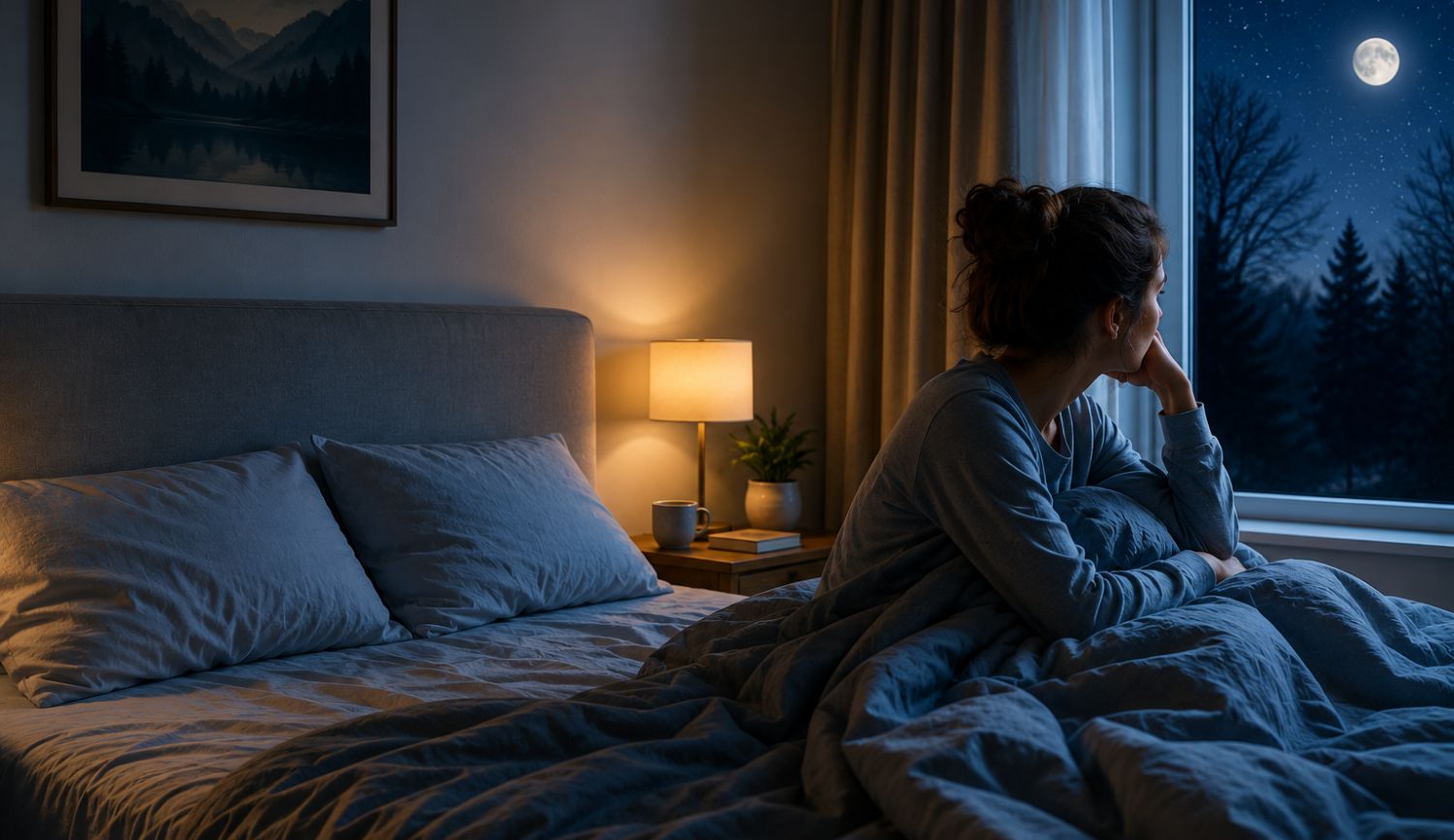
Sleep and histamine symptoms are closely connected for many people, particularly during periods of increased histamine activity, nervous system activation, or cumulative histamine load.
The ability to cope with symptoms calmly, maintain routines, think clearly, or recover from stressful periods becomes harder when rest feels inconsistent or fragile.
Over time, the unpredictability itself can become part of the exhaustion.
For some people, symptoms seem to intensify late in the evening. Others wake suddenly between 2am and 4am feeling alert, overheated, restless, or unusually aware of their heartbeat. Some wake feeling tired but strangely activated at the same time, as though the nervous system never fully settled overnight.
Experiences like these can feel confusing, especially when patterns shift from one night to another.
This guide is designed to help make those patterns feel more understandable.
Not by offering rigid protocols or “quick fixes,” but by exploring how histamine, wakefulness, stress, routines, food timing, and overall nervous system load may interact during histamine-sensitive periods.
The relationship between histamine and sleep is real and biologically meaningful. But it is also more nuanced than many online discussions suggest.
Histamine is not simply a “bad” chemical that ruins sleep. It is one of the body’s normal wakefulness signals. The challenge during histamine-sensitive periods is often less about histamine existing at all and more about timing, accumulation, and the body’s ability to comfortably regulate those signals.
Understanding that distinction often helps the entire picture feel less alarming.
Sleep and Histamine Symptoms: Understanding the Connection
Histamine is commonly discussed in relation to allergies, itching, or food reactions, but it also plays an important role inside the brain.
One of its normal functions is helping regulate wakefulness and alertness during the day.
This is part of why some antihistamines can cause drowsiness. Blocking histamine signaling in the brain reduces stimulation in systems associated with wakefulness.
During healthy sleep, histamine activity naturally quiets down.
But when histamine-related symptoms remain elevated into the evening or overnight, some people notice that sleep feels lighter, more fragile, or more easily interrupted.
In practical terms, this can feel less like traditional insomnia and more like the body becoming unexpectedly alert at the wrong time.
Some people describe:
- waking suddenly in the middle of the night
- feeling mentally “on” despite exhaustion
- overheating or sweating overnight
- restless sleep with frequent awakenings
- vivid dreams or lighter sleep patterns
- waking already tense or overstimulated
Not everyone experiences the same patterns.
For some people, the issue is difficulty falling asleep. For others, sleep begins normally but becomes disrupted later in the night.
That variability matters.
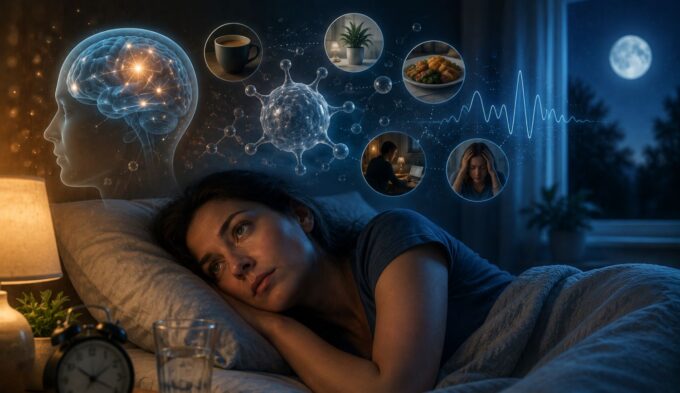
Histamine-sensitive periods rarely follow a perfectly predictable pattern because sleep itself is influenced by many overlapping systems at once:
- stress load
- food timing
- nervous system activation
- hormonal fluctuations
- environmental stimulation
- sleep debt
- cumulative symptom burden
This is one reason symptoms can feel inconsistent from one night to another.
Why symptoms may feel more noticeable at night
Many people notice that symptoms seem quieter during the day and more intense once evening arrives.
There are several possible reasons for this.
First, nighttime naturally removes distraction.
During the day, movement, work, conversation, screens, errands, and environmental stimulation occupy attention. Once the environment becomes quieter, physical sensations often become more noticeable.
But there may also be physiological factors involved.
Histamine interacts closely with circadian rhythms, stress hormones, and nervous system regulation.
For some people, stress accumulation throughout the day appears to increase overall reactivity by evening.
Others notice that:
- late meals
- leftovers
- alcohol
- overstimulation
- poor sleep the night before
- emotionally intense days
can make nighttime symptoms feel more reactive.
Importantly, this does not mean every difficult night has one single identifiable cause.
One of the most frustrating aspects of histamine-sensitive periods is that symptoms often reflect accumulation rather than one isolated trigger.
A difficult night may reflect:
- several days of poor sleep
- elevated stress load
- inconsistent meals
- nervous system exhaustion
- environmental stimulation
- ongoing inflammation
- reduced recovery capacity
rather than one specific food or event.
That broader perspective can help reduce the pressure to constantly search for a single explanation every time symptoms shift.
Why sleep symptoms can vary from night to night
One of the hardest parts of histamine-related sleep disruption is unpredictability.
Some nights feel relatively calm.
Other nights feel unexpectedly intense despite eating similarly or following the same routines.
This inconsistency often creates confusion.
It can also create hypervigilance, where people begin analyzing every meal, sensation, or routine change trying to identify what “went wrong.”
In reality, nighttime symptoms are often influenced by cumulative load rather than one isolated variable.
That load may include:
- emotional stress
- overstimulation
- sleep debt
- hormonal shifts
- environmental exposure
- digestive stress
- irregular routines
- high-reactivity periods
- intense social or work demands
For someone already operating near their limit, even smaller stressors can feel magnified.
This is one reason the same food may feel tolerable one week and difficult another.
Or why symptoms sometimes appear delayed.
Understanding sleep disruption through the lens of overall reactivity and accumulated load often feels more realistic — and less emotionally overwhelming — than viewing every difficult night as a sudden mystery reaction.
Nighttime wakeups and sudden alertness
A very common pattern during histamine-sensitive periods is waking unexpectedly in the middle of the night.
Often this happens during the early morning hours, especially between approximately 2am and 4am.
Some people wake feeling:
- suddenly alert
- mentally active despite exhaustion
- physically restless
- overheated
- aware of their heartbeat
- unable to settle back into sleep easily
For someone experiencing this repeatedly, the result may look less like classic insomnia and more like nighttime overactivation.
The body feels tired.
But the nervous system feels awake.
For some people, these wakeups happen alongside the broader symptom patterns discussed in histamine dump at night symptoms.
Others notice stronger overlap with stress accumulation, overstimulation, inconsistent eating patterns, or reactive periods generally.
Again, there is rarely one universal explanation.
But many people find that understanding these wakeups as part of a broader wakefulness and reactivity pattern helps them feel less alarming and less mysterious.
Light sleep, vivid dreams, and restless nights
Not all sleep disruption looks dramatic.
Sometimes the issue is simply that sleep stops feeling deep or restorative.
People often describe:
- waking frequently without fully realizing it
- vivid or intense dreaming
- lighter sleep than usual
- increased awareness of sounds or movement
- feeling half-awake through the night
- waking exhausted despite technically sleeping enough hours
These patterns can become especially noticeable during periods of higher stress or overall symptom reactivity.
Some people also notice that their nervous system feels unusually sensitive in the evening.
Screens, noise, emotionally intense conversations, busy environments, or mentally demanding work late at night may feel harder to recover from.
This does not necessarily mean the nervous system is permanently damaged or “stuck.”
More often, it reflects a system operating with less buffer capacity during reactive periods.
In practical terms, even ordinary stimulation can feel amplified when the body is already carrying significant physiological load.
Morning symptoms and waking up reactive
For some people, the most difficult part is not nighttime itself but how they feel upon waking.
Sleep may technically happen.
But mornings still feel:
- wired but exhausted
- overstimulated
- mentally foggy
- physically tense
- emotionally overwhelmed
- unusually reactive to stress or food
This distinction is important.
Nighttime symptoms and morning symptoms overlap, but they are not identical.
Nighttime patterns often center around:
- wakefulness
- alertness
- overheating
- sleep interruption
Morning patterns often feel more like:
- nervous system activation
- non-restorative sleep
- exhaustion mixed with overstimulation
- emotional depletion
- difficulty regulating stress early in the day
Some people describe feeling as though they wake already “activated” before the day has even started.
That experience can become emotionally draining very quickly.
Especially when it repeats consistently.
For some people, these patterns overlap with the broader experiences explored in Histamine Symptoms in the Morning.
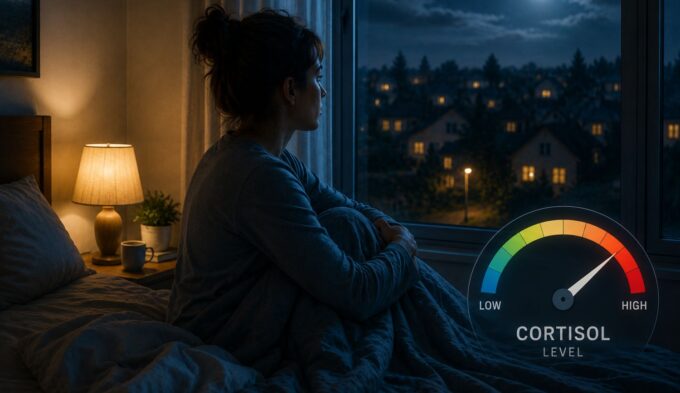
Stress, cortisol, and nighttime reactivity
One reason sleep symptoms can feel difficult to interpret is that histamine and stress physiology overlap closely.
Stress itself influences:
- inflammation
- nervous system activation
- cortisol rhythms
- digestion
- immune signaling
- sleep quality
And poor sleep further increases stress sensitivity the next day.
Over time, this can become cyclical.
The question is often less:
“Is this histamine or stress?”
and more:
“How much overall load is the system carrying right now?”
That distinction matters.
Because for many people, symptoms worsen during periods involving:
- emotional overload
- burnout
- intense work demands
- overstimulation
- travel
- inconsistent routines
- chronic sleep disruption
rather than food alone.
Some people also notice that evenings feel particularly vulnerable after mentally or emotionally intense days.
The nervous system may struggle to shift fully into a calmer nighttime state.
In practical terms, this can feel like exhaustion physically coexisting with heightened alertness mentally.
For readers interested in this overlap specifically, the relationship between cortisol, overstimulation, and histamine-sensitive periods is explored further in Cortisol and Histamine.
Food timing and evening patterns
Food itself is only one part of the picture.
But timing, freshness, and digestive load can sometimes influence nighttime symptom patterns.
Some people notice stronger evening symptoms after:
- large late meals
- leftovers
- restaurant food
- alcohol
- inconsistent eating schedules
- heavily processed meals
Others notice that symptoms become worse when the body is already stressed, exhausted, or under-recovered.
This is one reason highly restrictive food rules often become emotionally exhausting over time.
Many people are not reacting to one isolated variable but to the combination of:
- cumulative stress
- digestive burden
- sleep disruption
- overstimulation
- inflammation
- inconsistent routines
- reduced recovery capacity
Understanding that broader context can help reduce the pressure to obsessively “perfect” every evening meal.
For some readers, the practical food strategies explored in What to Eat Before Bed With Histamine Intolerance may also feel helpful.
Practical ways to support calmer nights
There is rarely one single intervention that resolves histamine-related sleep disruption completely.
But many people find that calmer and more predictable routines help reduce overall overwhelm over time.
Importantly, supportive routines are not about controlling the body perfectly.
They are about reducing unnecessary load where possible.
For some people, supportive patterns may include:
More consistent sleep timing
Going to bed and waking at similar times may help the nervous system feel more stable overall.
Reducing evening overstimulation
Late-night work, emotionally intense conversations, bright screens, noise, or constant stimulation may feel harder to recover from during reactive periods.
Simplifying evening meals
Meals that feel more familiar, predictable, and lower in overall burden may feel easier to tolerate than large or highly variable dinners.
Supporting recovery instead of perfection
Trying to control every variable often increases stress and hypervigilance.
A calmer approach usually focuses more on overall patterns than isolated mistakes.
Creating more predictable evenings
Gentler transitions into nighttime routines can sometimes help reduce the feeling of abrupt nervous system activation later in the night.
These changes are rarely immediate fixes.
But over time, reducing overall physiological and emotional load often matters more than aggressively chasing perfect symptom control.
Where to explore next
If sleep symptoms are one part of a broader pattern, these related guides may also help:
- Histamine Dump at Night Symptoms
- Histamine Symptoms in the Morning
- Histamine Intolerance and Insomnia
- What to Eat Before Bed With Histamine Intolerance
Over time, the Sleep & Histamine Symptoms hub will also expand to include:
- nighttime wakeups
- morning reactivity
- nervous system overstimulation
- flare-related sleep patterns
- evening routines
- stress and histamine overlap
Why Sleep and Histamine Symptoms Often Feel Connected
Sleep disruption during histamine-sensitive periods rarely follows one simple rule.
For many people, difficult nights are not caused by one isolated food or one single “mistake,” but by the gradual accumulation of stress, overstimulation, inconsistent routines, poor recovery, nervous system load, and overall reactivity building faster than the body can comfortably regulate.
That does not make the experience imaginary.
And it does not mean the body is permanently broken.
More often, it means the system is operating with less flexibility and less recovery capacity during reactive periods.
Understanding that broader context can make nighttime symptoms feel less random and less frightening.
Not because every pattern suddenly becomes predictable, but because the body’s responses begin to feel more interpretable over time.
For many people, that shift alone reduces a surprising amount of overwhelm.
And during difficult periods, feeling less confused is sometimes an important form of relief in itself.