

Maybe a recent blood test came back “LOW DAO.” Maybe you’ve been told that low DAO levels could explain symptoms you’ve been trying to understand. Maybe you saw a result under 10 U/mL online and started worrying about what it means.
Interpreting a low DAO result is more complicated than treating one number as a diagnosis. This guide walks through what the number actually represents, what it can reasonably suggest, and where it stops being useful on its own.
What do low DAO levels actually mean?
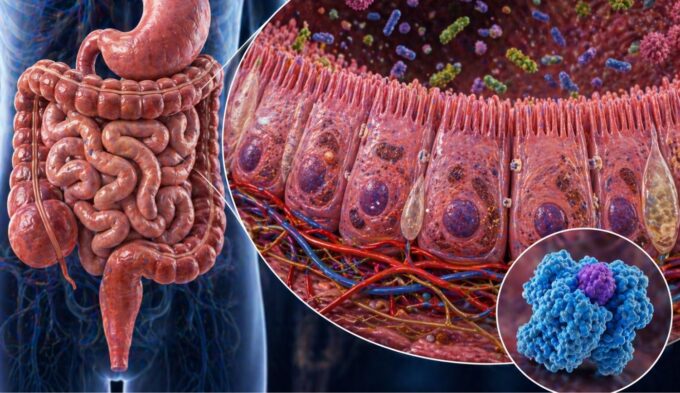
Diamine oxidase (DAO) is an enzyme that helps break down histamine, particularly at the intestinal barrier where it can limit how much dietary histamine reaches the wider body.
If you want the underlying biology first, our guide to how the DAO enzyme works explains diamine oxidase and histamine metabolism in more detail.
Low DAO isn’t one single concept, and the phrase gets used loosely to mean several different things:
- A low measurement in a blood sample, according to a specific assay and its reference range
- Reduced enzyme activity, meaning the enzyme works less efficiently wherever it’s measured
- Reduced local intestinal activity, referring specifically to DAO’s function at the gut lining
These are not necessarily the same thing, and the distinction matters more than it might first appear.
A low measurement is also distinct from the broader concept of DAO deficiency, which includes questions about possible symptoms, contributors and clinical interpretation.
Serum DAO and intestinal DAO are not the same measurement
This is the single most important distinction in this article, and it’s worth sitting with.
Intestinal DAO is what actually helps handle dietary histamine at the gut barrier, where food-derived histamine first enters the body. A blood sample, by contrast, measures DAO circulating in serum, which is a different compartment entirely. A serum DAO test samples circulating DAO; it does not directly measure DAO activity within the intestinal mucosa.
That means a low serum result shouldn’t be taken to mean, ‘my gut has almost no DAO.’ The two are related in a general biological sense, but there’s no established, precise formula for converting one number into the other.
| Feature | Serum DAO | Intestinal DAO |
|---|---|---|
| What is being assessed | DAO circulating in the blood at the time of the draw | DAO activity within the intestinal mucosa itself |
| Where it is being assessed | A venous blood sample | Gut tissue, not something typically sampled in routine practice |
| Why it may be clinically interesting | Easier to obtain; used as an indirect, imperfect proxy | More directly relevant to how the gut handles ingested histamine |
| Main limitation | Doesn’t reliably reflect what’s happening at the intestinal barrier | Not practical to measure routinely outside research settings |
There’s also a technical wrinkle worth knowing about: different assays measure DAO differently, with some reporting activity and others reporting concentration. Always interpret the actual assay, unit, and reference range your lab used, rather than comparing numbers from different laboratory methods as though they’re interchangeable.
Is a DAO level below 10 U/mL really “low”?
Not necessarily, and this is where a lot of unnecessary worry starts.
Commercial and historically used reference ranges often categorize serum DAO into rough bands: below 3 U/mL, between 3 and 10 U/mL, and above 10 U/mL as a proposed “normal” range. These categories are manufacturer-suggested or historically applied thresholds, not validated biological boundary lines confirmed by rigorous outcome data.
A 2023 population-based survey of 1,051 adults illustrates why that distinction matters. In that large, randomly sampled group, 44% had serum DAO below the suggested 10 U/mL cutoff, and fewer than 5% fell below 3 U/mL. Despite how common a “low” result was, DAO values showed no meaningful association with participants’ reported reactions to histamine-rich foods [3].
In other words, a large share of this population-based cohort fell into the “low DAO” category under commonly used cutoffs, even though only a few participants reported reactions to histamine-rich foods and DAO levels were not associated with those reactions [3]. A result under 10 U/mL should not be treated as proof of histamine intolerance.
Why research on serum DAO gives conflicting answers
Not every study on this topic agrees, and pretending otherwise wouldn’t be honest.
Some earlier research found real value in serum DAO. A 2013 study by Mušič and colleagues reported significantly lower DAO activity in patients with suspected histamine intolerance than in healthy controls. In a follow-up subgroup of 20 patients with highly reduced DAO, serum DAO increased alongside symptom improvement after 6–12 months of a histamine-restricted diet [6].
A 2022 retrospective cohort study of 192 symptomatic outpatients similarly reported associations between DAO value ranges and both symptom severity and treatment response [7].
Later studies using different populations and stronger control designs have produced a more cautious picture. The 2023 population survey already mentioned found no link between DAO levels and reported symptoms [3].
A 2023 placebo-controlled challenge study evaluated 59 people with suspected histamine intolerance and found the diagnosis was excluded in 50 of them, with 37 reporting symptoms after receiving placebo rather than histamine; serum DAO in that study was too variable and nonspecific to diagnose the condition on its own [4].
A 2024 crossover study following 18 patients through low-histamine and mixed-diet phases found that symptoms improved on the low-histamine diet, but serum DAO changes didn’t reliably track which diet phase participants were in [5].
A 2021 joint clinical guideline from several European allergy societies also considers serum DAO testing inconclusive as a standalone diagnostic tool [2].
Why the disagreement? Study populations differ, some studies lack proper control groups or blinding, definitions of “histamine intolerance” vary, and different labs use different assays with different reference ranges.
Retrospective associations, however real they look on paper, don’t automatically validate a diagnostic cutoff the way a properly controlled prospective trial would. Taken together, the evidence is mixed: lower serum DAO has shown associations in some clinical cohorts, but current evidence does not support treating it as a standalone diagnostic marker.
What symptoms may occur when histamine degradation is impaired?
Symptoms attributed to impaired histamine handling can show up across several body systems, including:
- Skin: flushing, itching, or hives
- Head and nasal: headache, nasal congestion, or a runny nose
- Digestive: abdominal discomfort, bloating, or diarrhea
- Other: dizziness or heart palpitations
These are worth knowing about, but they are not “symptoms of low DAO” in a diagnostic sense. Every one of them overlaps heavily with other conditions, including food allergy, digestive disorders, migraine, and anxiety-related symptoms, among others.
There’s no fixed, universally accepted timing window (a specific number of minutes or hours after eating) that reliably confirms histamine intolerance, and no individual symptom or symptom cluster proves that DAO is low.
Does low DAO mean you have histamine intolerance?
No.
Reduced DAO activity is one proposed mechanism behind histamine intolerance, but it isn’t the same thing as a diagnosis. A low serum DAO result doesn’t confirm histamine intolerance on its own, and a normal result doesn’t reliably exclude it either because serum DAO has not been validated as a reliable standalone diagnostic test [2–4].
Other explanations for the same symptoms, including food allergy, other digestive conditions, and unrelated causes, need to be considered before landing on a single explanation.
Our guide to DAO deficiency vs histamine intolerance covers this distinction between the two concepts in more depth.
Why might DAO activity be reduced?
This section stays deliberately brief, since a full breakdown belongs elsewhere.
A few plausible contributors have real human evidence behind them:
- Intestinal mucosal disease or injury. Tissue studies in Crohn’s disease have found DAO activity roughly 50% lower in affected intestinal mucosa compared with unaffected tissue from the same patients [8]. Older studies using a different testing method (post-heparin plasma DAO, which measures enzyme released after a heparin injection rather than typical resting serum DAO) found reduced values in patients with celiac disease and villous atrophy, with those values rising as the intestinal lining improved on a gluten-free diet [9].
- Genetic susceptibility. AOC1 variants have been studied in relation to DAO activity, and a 2024 study comparing 100 symptomatic adults with 100 healthy controls found no significant difference in how often any individual studied variant appeared between the groups, though certain homozygous and cumulative risk patterns were more common among symptomatic participants [10].
- Selected medication contexts. Some medications have been proposed to affect DAO or histamine metabolism, but the evidence is drug-specific and often limited to older laboratory studies rather than well-controlled clinical trials [1].
Never stop or change a prescribed medication based on an internet DAO list; any concerns are worth discussing directly with the prescribing clinician.
Our guide to what can cause reduced DAO activity covers this full picture in more detail.
Can low DAO levels improve?
Sometimes, though not predictably for everyone.
In specific acquired mucosal diseases, improvement of the underlying intestinal injury may be accompanied by recovery of DAO-related measures, as seen in the celiac disease research mentioned above. That does not prove that generic “gut healing” protocols restore DAO in everyone, and it doesn’t mean every case of low DAO has an identifiable, fixable cause.
Serum DAO doesn’t necessarily track neatly with either symptoms or diet changes, based on the crossover study discussed earlier. A low-histamine diet reduces dietary histamine exposure and may improve symptoms for some people.
Some earlier studies reported increases in serum DAO, but the 2024 crossover study found no consistent relationship between diet phase and DAO changes, so serum DAO cannot be assumed to rise when symptoms improve [5,6].
Oral DAO supplements work differently again: they’re intended to act locally on histamine already in the gut, not to restore the body’s own DAO production.[1]
Our guide to ways to support DAO covers the separate question of interventions in more depth.
What should you do if a DAO blood test comes back low?
A practical, safe way to approach a low result:
- Check the specific assay, unit, and reference range used by your lab, since these vary between methods and aren’t directly interchangeable.
- Don’t self-diagnose from the number alone. A low serum result is one data point, not a verdict.
- Interpret it alongside your actual symptoms and medical history, ideally with a clinician who can weigh the full picture.
- Consider whether relevant intestinal disease or another explanation deserves proper evaluation, rather than assuming the DAO number explains everything.
- Review medications with your prescribing clinician if you’re concerned about a possible interaction, rather than stopping anything on your own.
- Don’t start high-dose copper, B6, or similar supplements simply because a DAO result was low; there isn’t good evidence these reliably raise DAO activity, and vitamin B6 in particular is not DAO’s direct catalytic cofactor. That role belongs to copper and a cofactor called topaquinone [11].
- Don’t assume that feeling better on a DAO supplement proves you had a deficiency. Symptom improvement can happen for several reasons, and it isn’t the same as biochemical proof.
Our guide to DAO testing covers the practical details of testing itself in more depth than fits here.
What a low DAO result can and cannot tell you
| What the evidence may support | What it cannot prove |
|---|---|
| A serum assay measured low DAO | Your intestinal DAO is equally low |
| Reduced DAO may contribute to impaired dietary histamine degradation | You definitely have histamine intolerance |
| Some studies report associations between lower DAO and symptoms | DAO caused your symptoms |
| Mucosal disease may reduce local DAO activity | Every gut symptom represents DAO deficiency |
| AOC1 genetics may affect susceptibility | A gene variant establishes disease |
| Symptoms may improve when histamine exposure is reduced | Serum DAO necessarily increased |
| Oral DAO may degrade ingested histamine locally | Supplements restore your own DAO production |
Bottom line
A low DAO result deserves context, not panic. It’s one piece of information about a blood sample taken at a specific moment, measured by a specific method, against a reference range that was never designed to function as a definitive diagnostic line.
Reduced DAO is a genuinely plausible contributor to histamine-related symptoms in some people, and the underlying biology is real. But a number on a lab report can’t, by itself, tell you what’s happening in your intestinal lining, confirm a genetic cause, or diagnose histamine intolerance.
If symptoms are persistent or significant, a broader clinical evaluation, one that considers your history, other possible explanations, and the full pattern of your results, will tell you far more than a single serum value ever could.
Frequently asked questions
Direct answers to the questions people most often have about a low DAO result.
What does a low DAO level mean?
It means a blood sample showed a result below whatever reference range your lab used. It doesn’t necessarily mean your intestinal DAO activity is low or that you have histamine intolerance.
Is a DAO level under 10 U/mL abnormal?
Not necessarily. A large population study found 44% of ordinary adults fell below this commonly used cutoff, with no meaningful link to reported symptoms from histamine-rich foods.
Does low DAO mean histamine intolerance?
No. Reduced DAO is one proposed mechanism behind histamine intolerance, but a low serum result alone doesn’t confirm the diagnosis, and other explanations for symptoms need to be considered.
What symptoms are associated with low DAO?
Reported symptoms can include flushing, itching, headache, digestive discomfort, nasal symptoms, dizziness, and palpitations. None of these are specific enough on their own to diagnose low DAO, since they overlap with many other conditions.
Can a blood DAO test show how much DAO is in my gut?
Not directly. A blood test measures DAO circulating in serum, which is a different compartment from the intestinal mucosa, and there’s no established formula for converting one measurement into the other.
Can low DAO levels improve?
In specific mucosal diseases, DAO-related measures may improve as the underlying tissue heals. This doesn’t mean generic gut-healing approaches reliably restore DAO for everyone, and serum DAO doesn’t consistently track with diet or symptom changes.
Is low DAO genetic?
Genetics may contribute to susceptibility. Research comparing symptomatic adults with healthy controls found no significant difference in individual AOC1 variant prevalence, though some risk-allele patterns were more common in the symptomatic group.
Do DAO supplements increase my body’s DAO levels?
No. Oral DAO products are designed to act locally on ingested histamine within the gut, not to increase or restore your body’s own endogenous DAO production.
References
- Comas-Basté O, Sánchez-Pérez S, Veciana-Nogués MT, Latorre-Moratalla ML, Vidal-Carou MC. Histamine Intolerance: The Current State of the Art. Biomolecules. 2020;10(8):1181. doi:10.3390/biom10081181
- Reese I, Ballmer-Weber B, Beyer K, et al. Guideline on management of suspected adverse reactions to ingested histamine. Allergol Select. 2021;5:305-314. doi:10.5414/ALX02269E
- van Odijk J, Weisheit A, Arvidsson M, Miron N, Nwaru B, Ekerljung L. The Use of DAO as a Marker for Histamine Intolerance: Measurements and Determinants in a Large Random Population-Based Survey. Nutrients. 2023;15(13):2887. doi:10.3390/nu15132887
- Bent RK, Kugler C, Faihs V, Darsow U, Biedermann T, Brockow K. Placebo-Controlled Histamine Challenge Disproves Suspicion of Histamine Intolerance. J Allergy Clin Immunol Pract. 2023;11(12):3724-3731.e11. doi:10.1016/j.jaip.2023.08.030
- Rentzos G, Weisheit A, Ekerljung L, van Odijk J. Measurement of diamine oxidase (DAO) during low-histamine or ordinary diet in patients with histamine intolerance. Eur J Clin Nutr. 2024;78(8):726-731. doi:10.1038/s41430-024-01448-2
- Mušič E, Korošec P, Šilar M, Adamič K, Košnik M, Rijavec M. Serum diamine oxidase activity as a diagnostic test for histamine intolerance. Wien Klin Wochenschr. 2013;125(9-10):239-243. doi:10.1007/s00508-013-0354-y
- Cucca V, Ramirez GA, Pignatti P, et al. Basal Serum Diamine Oxidase Levels as a Biomarker of Histamine Intolerance: A Retrospective Cohort Study. Nutrients. 2022;14(7):1513. doi:10.3390/nu14071513
- Schmidt WU, Sattler J, Hesterberg R, et al. Human intestinal diamine oxidase (DAO) activity in Crohn’s disease: a new marker for disease assessment?. Agents Actions. 1990;30(1-2):267-270. doi:10.1007/BF01969057
- D’Agostino L, Daniele B, Pignata S, et al. Postheparin plasma diamine oxidase increases in patients with coeliac disease during gluten free diet. Gut. 1987;28(Suppl):131-134. doi:10.1136/gut.28.suppl.131
- Duelo A, Comas-Basté O, Sánchez-Pérez S, et al. Pilot Study on the Prevalence of Diamine Oxidase Gene Variants in Patients with Symptoms of Histamine Intolerance. Nutrients. 2024;16(8):1142. doi:10.3390/nu16081142
- McGrath AP, Hilmer KM, Collyer CA, et al. The Structure and Inhibition of Human Diamine Oxidase. Biochemistry. 2009;48(41):9810-9822. doi:10.1021/bi9014192