
Several natural compounds have human allergy studies, but there is no proven “the most powerful natural antihistamine.” Quercetin, ginger, curcumin, spirulina and standardized butterbur extracts have some clinical evidence in allergic rhinitis, while stinging nettle and honey have weaker or inconsistent results.
Most of these substances have not been shown to work like H1 antihistamine medicines, and allergic-rhinitis studies do not prove benefit for histamine intolerance, MCAS or hives. Butterbur also has important safety concerns.
What natural antihistamine actually means
Conventional H1 antihistamines reduce histamine signaling at H1 receptors. Medicines such as loratadine and cetirizine have defined pharmacology; most substances marketed as natural antihistamines have not been shown to act the same way.
A natural antihistamine, as people search for it, means something looser. It usually refers to any food, herb or supplement that seems to ease allergy symptoms, whether by reducing inflammation, calming mast cells or some other route. Those are different claims, and mixing them is how weak evidence gets oversold.
So this article separates two questions. Does a substance act like an antihistamine drug? And does it have any human evidence of easing allergy symptoms? For most options the answer to the first is no evidence, and to the second it is “sometimes, in specific conditions.”
What the systematic reviews say
The best overview is a 2024 systematic review and meta-analysis by Lim and colleagues on medicinal plants for allergic rhinitis. It covered 29 randomized controlled trials. Most had low or very low certainty of evidence, and the review found no clear general proof that medicinal plants are equivalent to antihistamines.
A 2020 mixed-methods systematic review by Pellow and colleagues looked at health supplements for allergic rhinitis and reached a similarly cautious picture. Individual trials exist, but they are small, use particular extracts and focus on one condition.
That is the frame for everything below. A positive trial is a reason for interest, not a ranking.
Options with some human allergic-rhinitis evidence
These four have at least one clinical study showing symptom improvement. None shows that the substance works as an H1 blocker.
Quercetin
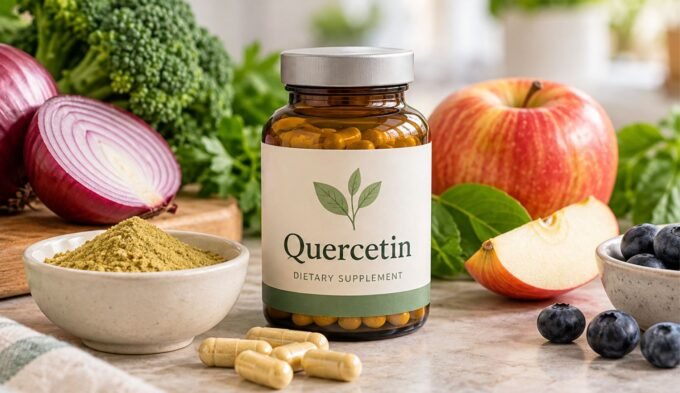
In a 2022 study, Yamada and colleagues gave 200 mg per day of a quercetin phytosome to 66 adults with pollinosis for 4 weeks. Several symptom and quality-of-life scores improved. It was a pollen-allergy trial, not a study of histamine intolerance or MCAS.
Quercetin is the most discussed option in histamine circles, but “most discussed” is not the same as “most powerful.” Our article on quercetin and histamine covers the mast-cell evidence, dose limits and formulation questions in depth.
Ginger
Yamprasert and colleagues (2020) compared 500 mg of ginger extract with 10 mg of loratadine in 80 patients with allergic rhinitis. Both groups improved, and the difference in total nasal symptom score was not significant.
That finding is interesting, but it does not make ginger equivalent to the drug. It was one trial of one extract. Ginger tea or ginger in food is not the studied preparation, and the trial says nothing about it.
Curcumin
Wu and Xiao (2016) studied 241 patients with perennial allergic rhinitis. Curcumin at 500 mg per day for two months improved nasal symptoms and airflow.
It is a single trial, and the preparation was a curcumin supplement. Culinary turmeric is not the same thing, so cooking with the spice should not be treated as equivalent.
Spirulina
Two small human studies exist: Cingi and colleagues (2008) on spirulina in allergic rhinitis, and Nourollahian and colleagues (2020), who compared spirulina with cetirizine. The evidence is limited by small sizes.
Spirulina can also cause allergic reactions in rare case reports, including anaphylaxis, which is worth knowing before choosing it as an “anti-allergy” supplement.
Options with weaker or inconsistent evidence
Not every popular option has results that hold up. These show how mixed the picture can be.
Stinging nettle
In a 2017 trial of supportive therapy for allergic rhinitis by Bakhshaee and colleagues, symptoms improved in both groups, but the difference between them was not significant. That does not show nettle works beyond what the comparison group achieved, and nettle cannot be called proven.
Honey
Two trials point in different directions. Rajan and colleagues (2002) found no benefit beyond placebo. Asha’ari and colleagues (2013) found that high-dose honey as an add-on to loratadine showed benefit later in the study.
With results that conflict, honey is not a reliable natural antihistamine. Eating it will not substitute for allergy treatment.
Apple polyphenols
Enomoto and colleagues (2006) tested standardized apple polyphenols in persistent allergic rhinitis, and some outcomes improved. That was a concentrated, standardized product. It does not make ordinary apples an antihistamine, and the same holds for other foods rich in plant compounds.
Vitamin C
Small human studies show changes in blood histamine, but vitamin C is not an H1 or H2 antihistamine, and direct evidence in histamine intolerance is lacking. See our page on vitamin C and histamine intolerance for the detail.
Butterbur: the option with real safety concerns
Butterbur has more allergic-rhinitis trial data than several other options on this list, and it also carries the most serious safety caution. In a randomized trial of 125 people with seasonal allergic rhinitis, Schapowal (2002) found that a standardized butterbur extract (ZE 339) and cetirizine gave similar outcomes.
The safety side matters more here. According to the National Center for Complementary and Integrative Health, raw butterbur contains toxic pyrrolizidine alkaloids. Only products that are free of them should even be considered. Rare liver injury has still been reported, and long-term safety is uncertain.
So butterbur should not be described as the best choice or the safest one. Natural does not mean safe.
Natural antihistamine claims at a glance
The table below compares the main options by human evidence, the condition studied, key limitations and safety concerns.
| Option | Human evidence | Best-studied context | Evidence limit | Main safety note |
|---|---|---|---|---|
| Quercetin | Pollinosis trial, 66 adults, 200 mg/day phytosome for 4 weeks | Pollen allergy | Not HIT or MCAS; one formulation | Interactions and long-term high-dose data are limited |
| Ginger extract | 80 patients, 500 mg extract vs 10 mg loratadine | Allergic rhinitis | Single trial; no drug equivalence shown | Studied extract is not ginger tea or food |
| Curcumin | 241 patients, 500 mg/day for 2 months | Perennial allergic rhinitis | One trial; supplement, not culinary turmeric | Check with a clinician if taking medicines |
| Spirulina | Small trials, including one against cetirizine | Allergic rhinitis | Small studies | Can rarely cause allergic reactions, including anaphylaxis |
| Stinging nettle | Symptoms improved in both groups | Allergic rhinitis | Between-group difference was not significant | Discuss use with a clinician when medicines or health conditions are relevant |
| Butterbur | Standardized ZE 339 vs cetirizine in 125 people | Seasonal allergic rhinitis | Similar outcomes in one trial; long-term data uncertain | Raw plant is toxic; rare liver injury reported |
| Vitamin C | Small blood-histamine studies | Blood histamine, not symptoms | Not an H1/H2 antihistamine; no direct HIT trial | High doses can cause gastrointestinal effects |
| Honey | Two conflicting trials | Allergic rhinitis | No benefit beyond placebo in one; later benefit as add-on in another | Not a reliable antihistamine |
| Apple polyphenols | Standardized product improved some outcomes | Persistent allergic rhinitis | Concentrated product, not whole apples | Not established as an H1 antihistamine |
Do any of these help with hives or itching?
Allergic-rhinitis trials do not establish treatment for hives. The 2022 international urticaria guideline by Zuberbier and colleagues names second-generation, nonsedating H1 antihistamines as standard first-line therapy.
If you have recurring hives or itching, that deserves proper assessment rather than a supplement trial. Our page on histamine skin reactions explains how those patterns are approached.
What about histamine intolerance or MCAS?
Allergic-rhinitis evidence does not carry over. A herb that improves sneezing in pollen allergy has not been shown to help histamine intolerance, MCAS or hives.
The conditions work differently. Allergy is immune-mediated, while suspected reactions to ingested histamine are a separate and less well-defined problem. Our comparison of histamine intolerance and food allergies explains the distinction.
What about sinus symptoms?
Most of the human evidence in this article is for allergic rhinitis, where congestion, sneezing, itching and nasal discharge are common. That is not the same as showing that an herb or supplement treats a sinus infection or chronic rhinosinusitis.
If the main problem is persistent facial pain, fever, thick discharge, recurrent infections or symptoms that do not fit a typical allergy pattern, the evidence here should not be used as a substitute for diagnosis.
Severe allergic reactions are not a place for natural remedies
Natural remedies are not treatment for anaphylaxis. As the 2023 anaphylaxis practice parameter by Golden and colleagues states, epinephrine is first-line treatment. Trouble breathing, throat or tongue swelling, collapse, or a rapidly worsening reaction needs emergency care, not a supplement.
Foods and everyday sources
Some foods contain compounds that are being studied, such as quercetin. But ordinary apples, onions or capers do not act like antihistamine drugs, and the amounts in food differ from the doses in trials.
This article does not give a food list. Food choices for histamine problems depend on your tolerance, and a high-quercetin food is not automatically a good choice for histamine intolerance.
How to think about trying one
If you are considering a supplement, a few questions keep it grounded:
- What specific condition is it for, and was it studied in that condition?
- Is the product the same as the studied extract or only similar in name?
- Could it interact with a medicine you take, or affect an existing condition?
- Am I using it alongside, not instead of, treatment that is working?
A clinician or pharmacist can check interactions. Do not stop or replace a prescribed medicine because of an online claim.
Frequently asked questions
These are the short answers to the questions people search most.
What is the most powerful natural antihistamine?
No evidence-based ranking exists. Different substances were studied in different conditions with different methods, so none can be called most powerful.
Is ginger a natural antihistamine?
A ginger extract improved allergic rhinitis symptoms in one trial compared with loratadine, but that does not show it acts like the drug. Ginger tea or cooking ginger was not the studied preparation.
Is turmeric a natural antihistamine?
Curcumin supplements improved symptoms in one allergic-rhinitis trial. Turmeric spice is not the same preparation, and neither is shown to block histamine receptors.
Is honey a natural antihistamine?
The trials conflict, so it is not a reliable one.
What is a natural antihistamine tea?
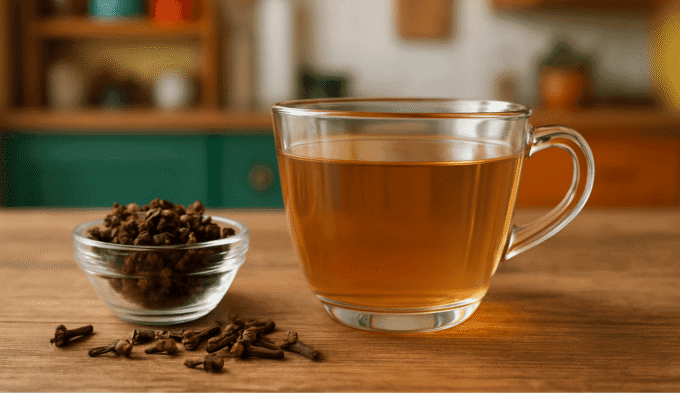
No tea has strong evidence that it works as an H1 antihistamine. The ginger trial discussed above used a standardized extract, so ginger tea should not be assumed to produce the same effect.
Can natural antihistamines help hives, or replace allergy medicine?
Not on current evidence. Second-generation H1 antihistamines remain first-line for hives, and the trials here do not show that a natural option can replace standard treatment.
The bottom line
Natural antihistamine covers very different things. A few compounds, including quercetin, ginger extract, curcumin, spirulina and standardized butterbur, have human allergic-rhinitis studies, but the evidence is mostly low certainty and does not show they work like H1 antihistamine drugs.
None is proven for histamine intolerance, MCAS or hives, and butterbur carries real safety concerns. Use the evidence to set expectations, and keep standard treatment in place for anything that matters.
References
- Lim XY, Lau MS, Zolkifli NA, et al. Medicinal plants for allergic rhinitis: A systematic review and meta-analysis. PLoS One. 2024;19(4):e0297839. doi:10.1371/journal.pone.0297839. PMID:38603736.
- Pellow J, Nolte A, Temane A, Solomon EM. Health supplements for allergic rhinitis: A mixed-methods systematic review. Complement Ther Med. 2020;51:102425. doi:10.1016/j.ctim.2020.102425. PMID:32507438.
- Yamada S, Shirai M, Inaba Y, Takara T. Effects of repeated oral intake of a quercetin-containing supplement on allergic reaction: a randomized, placebo-controlled, double-blind parallel-group study. Eur Rev Med Pharmacol Sci. 2022;26(12):4331–4345. doi:10.26355/eurrev_202206_29072. PMID:35776034.
- Yamprasert R, Chanvimalueng W, Mukkasombut N, Itharat A. Ginger extract versus Loratadine in the treatment of allergic rhinitis: a randomized controlled trial. BMC Complement Med Ther. 2020;20(1):119. doi:10.1186/s12906-020-2875-z. PMID:32312261.
- Wu S, Xiao D. Effect of curcumin on nasal symptoms and airflow in patients with perennial allergic rhinitis. Ann Allergy Asthma Immunol. 2016;117(6):697–702.e1. doi:10.1016/j.anai.2016.09.427. PMID:27789120.
- Cingi C, Conk-Dalay M, Cakli H, Bal C. The effects of spirulina on allergic rhinitis. Eur Arch Otorhinolaryngol. 2008;265(10):1219–1223. doi:10.1007/s00405-008-0642-8. PMID:18343939.
- Nourollahian M, Rasoulian B, Gafari A, et al. Clinical comparison of the efficacy of Spirulina platensis and cetirizine for treatment of allergic rhinitis. Acta Otorhinolaryngol Ital. 2020;40(3):224–229. doi:10.14639/0392-100X-N0139. PMID:32773785.
- Bakhshaee M, Mohammadpour AH, Esmaeili M, et al. Efficacy of supportive therapy of allergic rhinitis by stinging nettle (Urtica dioica) root extract: a randomized, double-blind, placebo-controlled clinical trial. Iran J Pharm Res. 2017;16(Suppl):112–118. PMID:29844782.
- Schapowal A; Petasites Study Group. Randomised controlled trial of butterbur and cetirizine for treating seasonal allergic rhinitis. BMJ. 2002;324(7330):144–146. doi:10.1136/bmj.324.7330.144. PMID:11799030.
- National Center for Complementary and Integrative Health. Butterbur: Usefulness and Safety. National Institutes of Health. Updated November 2024. Accessed October 15, 2026.
- Rajan TV, Tennen H, Lindquist RL, Cohen L, Clive J. Effect of ingestion of honey on symptoms of rhinoconjunctivitis. Ann Allergy Asthma Immunol. 2002;88(2):198–203. doi:10.1016/S1081-1206(10)61996-5. PMID:11868925.
- Asha’ari ZA, Ahmad MZ, Jihan WS, Che CM, Leman I. Ingestion of honey improves the symptoms of allergic rhinitis: evidence from a randomized placebo-controlled trial in the East coast of Peninsular Malaysia. Ann Saudi Med. 2013;33(5):469–475. doi:10.5144/0256-4947.2013.469. PMID:24188941.
- Enomoto T, Nagasako-Akazome Y, Kanda T, Ikeda M, Dake Y. Clinical effects of apple polyphenols on persistent allergic rhinitis: a randomized double-blind placebo-controlled parallel arm study. J Investig Allergol Clin Immunol. 2006;16(5):283–289. PMID:17039666.
- Zuberbier T, Abdul Latiff AH, Abuzakouk M, et al. The international EAACI/GA²LEN/EuroGuiDerm/APAAACI guideline for the definition, classification, diagnosis, and management of urticaria. Allergy. 2022;77(3):734–766. doi:10.1111/all.15090. PMID:34536239.
- Golden DBK, Wang J, Waserman S, et al. Anaphylaxis: A 2023 practice parameter update. Ann Allergy Asthma Immunol. 2024;132(2):124–176. doi:10.1016/j.anai.2023.09.015. PMID:38108678.
- Le TM, Knulst AC, Röckmann H. Anaphylaxis to Spirulina confirmed by skin prick test with ingredients of Spirulina tablets. Food Chem Toxicol. 2014;74:309–310. doi:10.1016/j.fct.2014.10.024. PMID:25445756.