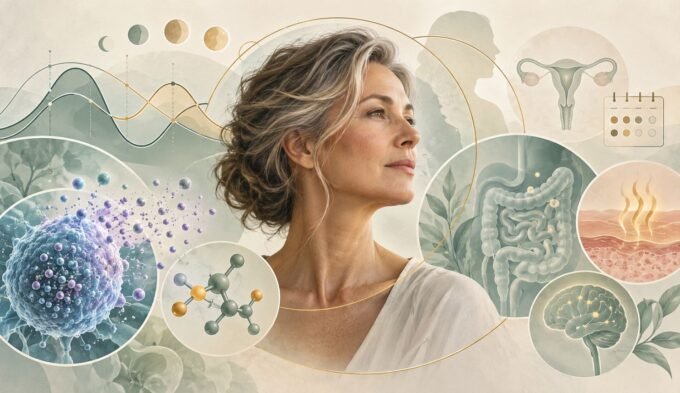

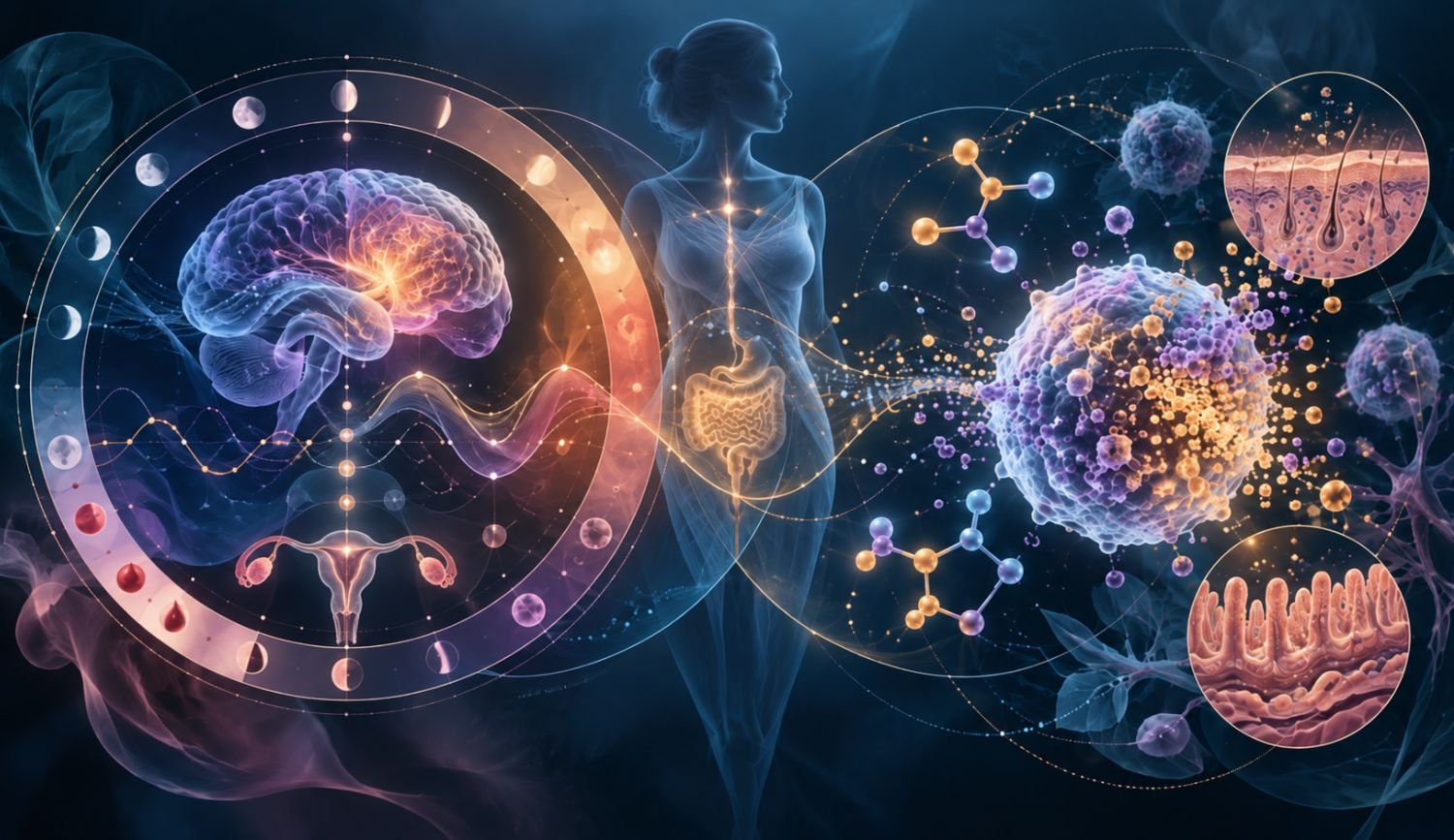
PMDD and histamine are often linked online, but current evidence is much more limited than those claims suggest. PMDD is not established as a histamine-excess or histamine-intolerance disorder. The strongest evidence points to abnormal brain sensitivity to normal ovarian-hormone fluctuations, especially the effects of neuroactive steroids such as allopregnanolone on GABA-A signaling, with serotonin and stress-response systems also involved.
Cycle hormones can influence allergic and mast-cell biology, but that indirect overlap does not prove histamine causes PMDD. Antihistamines and low-histamine diets are not established PMDD treatments.
What PMDD actually is
Premenstrual dysphoric disorder is a severe, cyclical mood disorder. Symptoms such as marked irritability, depressed mood, anxiety or feeling overwhelmed typically emerge in the luteal phase, improve around or soon after menstruation begins, and cause substantial distress or impairment in daily life.
Diagnosis depends on that recurring pattern rather than on a single symptom or laboratory test. A 2025 clinical review notes that prospective daily symptom recording across at least two cycles helps confirm the timing and distinguish PMDD from milder PMS and from premenstrual exacerbation, where another condition is present through the month but worsens premenstrually.
If symptoms do not follow a clear cyclical pattern, other psychiatric, endocrine, reproductive or medication-related explanations may need to be considered. A clinician can assess the full pattern rather than assuming every severe premenstrual symptom is PMDD.
What the strongest biology points to
PMDD symptoms follow normal cycle hormone fluctuations. As Hantsoo and Payne described in a 2023 review, current biology emphasizes altered central nervous system sensitivity to those fluctuations, along with genetics, GABA and serotonin, rather than simply abnormal hormone concentrations.
The best-developed model involves allopregnanolone, a progesterone-derived neuroactive steroid that acts on GABA-A receptors. Hantsoo and Epperson reviewed evidence in 2020 for dysregulated sensitivity to GABA-A receptor-modulating neuroactive steroids across the menstrual cycle.
In plain terms, the working model is that the brain responds differently to normal hormone-related neurosteroid changes. None of this research identifies histamine as the established driver of PMDD.
Where histamine could still overlap
There is a real biological reason the idea keeps surfacing. Menstrual-cycle hormones can influence mast cells and allergic responses in experimental settings, and our article on estrogen and histamine explains that evidence and its limits.
Human data on cycle timing are small and mixed. Kalogeromitros and colleagues reported larger skin-prick responses to histamine, morphine and allergens around mid-cycle in a small 1995 study. Kirmaz and colleagues found stronger allergen skin-test responses at mid-cycle in 2004, but histamine skin-test reactivity itself did not vary. Neither study investigated PMDD.
The careful conclusion is limited: cycle phase may influence allergic or skin-test responses in some settings. That does not show that PMDD is an allergic disorder or that histamine drives its mood symptoms.
A 2024 study by Barone and colleagues also examined inflammation in PMDD. It found no main effects of PMDD status or cycle phase on the measured inflammatory markers. CXCL-8 was associated with symptom severity in an exploratory analysis, so inflammation remains worth studying, but these findings do not establish histamine or mast cells as the PMDD mechanism.
Why PMDD and allergy symptoms can seem to track together
Two symptom patterns can occur within the same menstrual cycle without sharing one underlying mechanism. Flushing, headaches, itching, bloating, poor sleep and anxiety are nonspecific and can occur for several reasons, as our guide to histamine intolerance symptoms explains.
Having symptoms in both categories does not make PMDD a form of histamine intolerance, and it does not make it a mast-cell disorder. Cycle-related symptoms alone cannot diagnose either condition.
Can PMDD coexist with an allergy or histamine condition?
Yes. A person with PMDD can also have a separate allergy, urticaria, suspected histamine intolerance or mast-cell condition. One diagnosis does not automatically explain the other.
If you have hives, wheezing, swelling or reproducible food-linked reactions, those deserve their own evaluation. The histamine intolerance test guide explains the limits of testing, and the overview of what causes histamine intolerance covers the better-supported explanations.
Do antihistamines help PMDD?
Not as an established treatment. Antihistamines have established uses for allergic conditions and urticaria, while H2 blockers such as famotidine have established acid-suppressing uses. Treating a coexisting allergic or gastrointestinal condition can be appropriate, but that does not mean the medicine treats PMDD itself.
The small trial often cited in this discussion is a 2005 study by Bunevicius and colleagues. Twelve women with prospectively confirmed PMDD received clonidine or loratadine 10 mg/day in a double-blind crossover design, with loratadine used as the active placebo. There was no significant difference in mood or premenstrual symptom ratings between the two treatment periods.
That trial was designed to test clonidine, not loratadine as a PMDD therapy. It therefore provides no positive basis for recommending loratadine for PMDD and, because of its design and sample size, should not be used to claim that loratadine has been definitively tested and disproven as a PMDD treatment.
An older 1980 study also appears in some discussions. It examined premenstrual syndrome and atopy using an injected gamma-globulin/histamine complex. This was historical PMS research, not modern PMDD research, and the intervention was not a standard oral H1 or H2 antihistamine. Its results cannot be generalized to cetirizine, fexofenadine, diphenhydramine, loratadine or famotidine as PMDD treatments.
Current PMDD guidelines and treatment reviews do not establish antihistamines as PMDD therapy. If you are considering an antihistamine or H2 blocker, the decision should be based on an appropriate indication and advice from a clinician or pharmacist, not on the assumption that blocking histamine treats PMDD.
Does a low-histamine diet help PMDD?
No clinical evidence currently establishes a low-histamine diet as a treatment for PMDD, and this article does not recommend one for that purpose. Broad, long-term food restriction aimed at mood symptoms can narrow the diet without addressing the established PMDD pathway.
If you have a separate, reproducible food-linked pattern, that can be evaluated on its own terms. Feeling better after cutting particular foods would not diagnose PMDD or show that histamine caused it.
The professional guideline by Reese and colleagues also notes that suspected reactions to ingested histamine can be difficult to confirm, serum DAO is inconclusive on its own, and unnecessarily strict blanket restriction should be avoided.
What has stronger evidence for PMDD
Evidence-based PMDD care is multimodal. The 2023 American College of Obstetricians and Gynecologists guideline addresses assessment and established treatment options for premenstrual disorders rather than replacing them with unproven histamine protocols.
A 2024 scoping review found the strongest treatment evidence for selective serotonin reuptake inhibitors (SSRIs) and combined oral contraceptives, with additional options for selected or refractory cases. Which approach is appropriate depends on your symptoms, medical history, other conditions, pregnancy plans and preferences, so treatment should be individualized with a clinician.
What to do if this sounds like you
Start with a record. Track symptoms daily across at least two cycles, noting when they begin, how severe they are, when they ease and what they stop you from doing. Alongside that, record medications, sleep, alcohol and any allergic or food-linked reactions that seem reproducible.
Keeping the PMDD pattern and any allergy or food-reaction pattern side by side can help avoid forcing two different problems into one explanation. Bring the record to a primary care clinician, gynecologist or mental-health clinician who can assess whether the pattern fits PMDD, PMS or premenstrual exacerbation and consider other causes.
If you are also dealing with perimenopause, our guide to histamine and menopause covers that stage separately.
PMDD can involve severe depression, hopelessness and suicidal thoughts. If you have suicidal thoughts, urges to harm yourself or cannot keep yourself safe, contact your local emergency services or a crisis service immediately rather than waiting for the next cycle or routine appointment.
What the evidence means for PMDD and histamine
PMDD is not currently established as a histamine disorder. Menstrual hormones can influence allergic and mast-cell responses, but the PMDD evidence is much stronger for altered brain sensitivity to normal hormone and neuroactive-steroid fluctuations.
If histamine-related or allergic symptoms coexist, assess them on their own merits rather than replacing evidence-based PMDD diagnosis and treatment with antihistamine or low-histamine-diet protocols.
References
- Hantsoo L, Payne JL. Towards understanding the biology of premenstrual dysphoric disorder: From genes to GABA. Neurosci Biobehav Rev. 2023;149:105168.
- Hantsoo L, Epperson CN. Allopregnanolone in premenstrual dysphoric disorder (PMDD): Evidence for dysregulated sensitivity to GABA-A receptor modulating neuroactive steroids across the menstrual cycle. Neurobiol Stress. 2020;12:100213.
- American College of Obstetricians and Gynecologists. Management of Premenstrual Disorders. Clinical Practice Guideline No. 7. 2023.
- Carlini SV, Lanza di Scalea T, Trentacoste McNally S, Lester J, Deligiannidis KM. Management of Premenstrual Dysphoric Disorder: A Scoping Review. Focus (Am Psychiatr Publ). 2024;22(1):81-96.
- Bunevicius R, Hinderliter AL, Light KC, Pedersen CA, Girdler SS. Lack of beneficial effects of clonidine in the treatment of premenstrual dysphoric disorder: results of a double-blind, randomized study. Hum Psychopharmacol. 2005;20(1):33-39.
- Atton-Chamla A, Favre G, Goudard JR, et al. Premenstrual syndrome and atopy: a double-blind clinical evaluation of treatment with a gamma-globulin/histamine complex. Pharmatherapeutica. 1980;2(7):481-486.
- Barone JC, Ho A, Osborne LM, et al. Luteal phase sertraline treatment of premenstrual dysphoric disorder (PMDD): Effects on markers of hypothalamic pituitary adrenal (HPA) axis activation and inflammation. Psychoneuroendocrinology. 2024;169:107145.
- Kalogeromitros D, Katsarou A, Armenaka M, et al. Influence of the menstrual cycle on skin-prick test reactions to histamine, morphine and allergen. Clin Exp Allergy. 1995;25(5):461-466.
- Kirmaz C, Yuksel H, Mete N, Bayrak P, Baytur YB. Is the menstrual cycle affecting the skin prick test reactivity? Asian Pac J Allergy Immunol. 2004;22(4):197-203.
- Biggs WS, Romeu JM, Gaudard T. Premenstrual Syndrome and Premenstrual Dysphoric Disorder: Common Questions and Answers. Am Fam Physician. 2025;111(4):345-350.
- Reese I, Ballmer-Weber B, Beyer K, et al. Guideline on management of suspected adverse reactions to ingested histamine. Allergol Select. 2021;5:305-314.