
Many people exploring histamine intolerance focus first on food. That makes sense. Meals, leftovers, alcohol, and certain ingredients are well-known triggers.
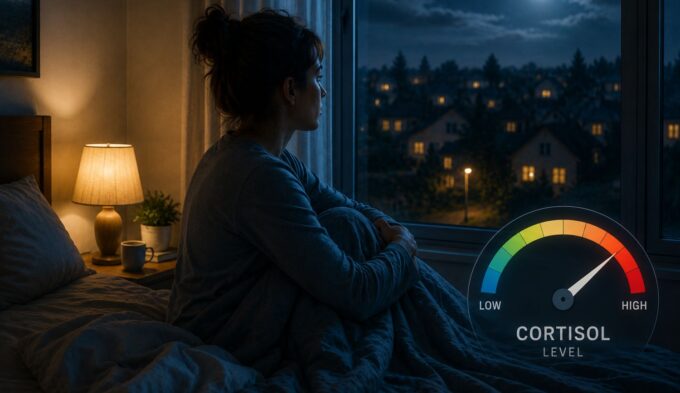
Yet some people continue to experience nighttime symptoms even after making significant dietary changes. They wake up feeling flushed, itchy, wired, congested, or unusually alert without understanding why.
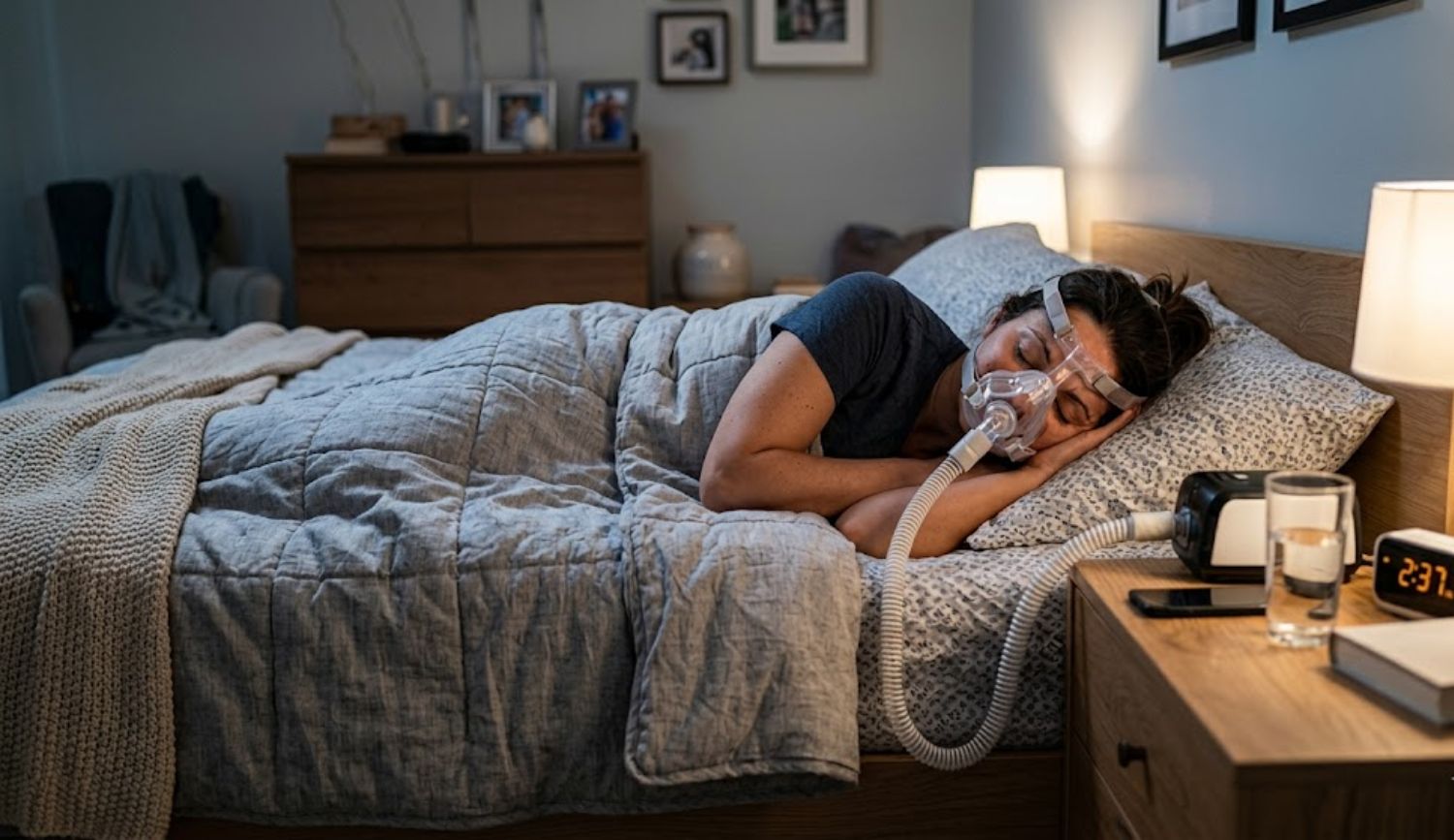
In some cases, the missing piece may have little to do with what was eaten and more to do with what happens during sleep. Repeated breathing disruptions, drops in oxygen levels, and the body’s response to those events may contribute to nighttime mast cell activation in ways that are often overlooked.
Sleep Apnea and Histamine in 30 Seconds
Discussions about histamine and sleep apnea often focus on how allergies, nasal congestion, and airway inflammation can worsen breathing during sleep.
That relationship matters. But there is another side to the conversation that receives less attention: repeated breathing disruptions may also influence mast cell activity and nighttime histamine release.
A growing body of research suggests something different: the oxygen drops caused by sleep apnea may themselves act as a trigger for histamine release.
Here’s the short version. Your body has special immune cells called mast cells. When something triggers them, they release histamine. Repeated drops in oxygen during sleep, known as intermittent hypoxia, appear to make these cells more reactive. They also switch on stress and inflammation pathways that can lead to histamine release on their own.
If you’ve already cleaned up your diet and you’re still waking up flushed, itchy, or with a racing heart, this may be a piece of the puzzle you haven’t considered yet.
These experiences are discussed more broadly in our Sleep & Histamine Symptoms guide, which explores the many ways histamine can affect sleep quality.
Why Some Nighttime Histamine Flares Persist Despite Dietary Changes
There is a particular kind of frustration that shows up after weeks of careful eating. The dinner was simple. Nothing fermented, nothing aged, nothing obviously histamine-rich.
And yet 2 a.m. arrives the same way it always has: a jolt awake, a racing pulse, skin that feels hot to the touch.
Readers experiencing recurring overnight symptom surges may also find our guide to Histamine Dump at Night Symptoms helpful.
When food stops explaining the pattern, most people assume they missed something on a label. Or that their histamine bucket filled up from some daytime exposure they can’t quite trace.
That explanation is sometimes correct. But it isn’t the only one, and it isn’t always the right one.
Your histamine load is shaped by more than what you eat. It’s also shaped by what happens to your airway after the lights go out. For a meaningful share of the population, what happens at night is that the airway briefly collapses, again and again.
To be clear, this is not a claim that sleep apnea causes histamine intolerance. It isn’t a claim that everyone with nighttime flares has an undiagnosed breathing disorder, either.
The idea is narrower than that. Interrupted breathing during sleep may add its own bit of histamine load, on top of whatever load already comes from food. If your symptoms haven’t fully responded to dietary changes, this is worth understanding.
The Missing Link: Oxygen Deprivation as a Mast Cell Stressor
Many people are already familiar with the idea that histamine-related inflammation can affect the airway. Nasal congestion, swelling, and post-nasal drip can make breathing during sleep more difficult.
The reverse possibility is discussed less often. What happens when disrupted breathing itself becomes a source of physiological stress capable of influencing mast cells and histamine signaling?
The reverse relationship gets far less attention, and the science behind it is older than most people realize.
Mast cells work a bit like tiny sacs filled with histamine and other chemicals. Normally, they “pop open” and release that histamine when they detect a threat, such as an allergen. This popping-open process has a name: degranulation.
Back in 1972, researchers studying blood vessels in the lungs found something surprising. Low oxygen alone, with no allergen involved, caused mast cells in lung tissue to pop open and release histamine [1]. As more histamine was released, blood pressure in the lungs rose right along with it.
That early study was done in animal lung tissue, not in people with sleep apnea. But it proved something important. Mast cells don’t need an allergy trigger to release histamine. A drop in oxygen can be enough, at least in some tissues.
More recent research has added detail to that picture, and a few new questions too, which is part of why this remains an active, still-unsettled area of study.
What Happens During Intermittent Hypoxia
Before going further into the mast cell mechanism, it helps to understand exactly what happens to your body during a typical night of sleep apnea.
Sleep apnea is common. Researchers believe it affects roughly one in four adults between the ages of 30 and 70, and many cases are never diagnosed [9].
Snoring and gasping tend to get the most attention. But the real story is what’s happening underneath: the upper airway briefly collapses, again and again, all night long.
Each time it collapses, the amount of oxygen in the blood drops. Then it recovers. Then it drops again. This can happen dozens of times an hour.
Doctors have a name for this pattern: intermittent hypoxia.
It’s different from the steady low oxygen a person might experience at high altitude. Intermittent hypoxia is cyclical. Oxygen drops. The brain briefly wakes the body up to restart breathing. Oxygen comes back. Then the cycle starts over.
That “coming back” part matters too. Each time oxygen rushes back into tissue that was just deprived of it, it creates a small burst of cell stress called oxidative stress. So both halves of the cycle, the drop and the recovery, place a demand on the body.
How often this happens matters as much as how severe each drop is.
In mild cases, this cycle might repeat five to fifteen times an hour. In more severe cases, it can happen dozens of times an hour, every night, often for years before anyone gets diagnosed.
Each individual drop is brief, usually under a minute. That’s part of why it’s so easy to sleep right through it without noticing.
But the body doesn’t need a long exposure to register stress. What matters here is the repetition: night after night, year after year. That repetition is what sets intermittent hypoxia apart from a single, one-time drop in oxygen.
Here’s why this matters for histamine. Hypoxia and reoxygenation are not harmless, neutral events for the body.
Each cycle switches on the body’s stress response, the same system behind the “fight or flight” feeling. It releases stress hormones and turns on inflammation that can stay active well after normal breathing resumes [2].
You probably wouldn’t notice any single cycle as stressful. But repeated dozens of times in one night, it adds up to something the body takes seriously.
How Low Oxygen May Influence Mast Cell Activation and Histamine Release
So does low oxygen actually make mast cells release histamine? Lab research gives a more complicated answer than a simple yes or no.
When scientists grew human mast cells in a dish and lowered the oxygen around them, the cells did not pop open the way they would with a classic allergy trigger.
But something else happened. The low-oxygen mast cells survived longer than normal. They also released more of a chemical called interleukin-6, which fuels inflammation elsewhere in the body [3].
In other words, low oxygen alone didn’t pull the trigger. But it kept the gun loaded, and it added fuel to the surrounding fire.
A different study looked at something closer to what actually happens during sleep apnea: cycles of low oxygen followed by a return to normal oxygen, over and over.
Researchers exposed mast cells to this on-and-off pattern. The cells changed at a genetic level. The instructions inside them shifted in ways tied to how they detect and react to triggers.
Then came the key test. When these “primed” mast cells were exposed to a normal trigger, they reacted harder than mast cells that hadn’t been through the on-and-off oxygen cycle. They released more histamine and more inflammatory chemicals [4].
This particular study wasn’t about sleep apnea. It was cancer research, looking at how tumors affect nearby cells. But the mechanism it uncovered, on-and-off oxygen exposure making mast cells more reactive, lines up closely with what happens to the body during a night of broken breathing.
Older research adds a note of caution here too. Not every study agrees.
One study in rats found that low oxygen, whether brief or long-term, did not clearly increase how much mast cells degranulated. Interestingly, the number of mast cells in the lungs still rose over time [5].
So here’s the honest summary. The link between low oxygen and mast cells is real. It shows up across multiple, independent studies. But it isn’t a simple on-off switch.
Low oxygen seems to act more like a dial that turns up sensitivity, rather than a button that fires mast cells off directly.
There’s also a second, more indirect route worth knowing about.
Intermittent hypoxia strongly activates the body’s stress response. Each time an apnea episode ends, the body releases a burst of stress hormones to restart breathing [2].
For some people, these nighttime stress responses show up as a racing heartbeat. We explore that symptom in more detail in Histamine Intolerance Heart Palpitations.
These stress hormones, called catecholamines, aren’t just background noise where mast cells are concerned. One of them, norepinephrine, can attach directly to receptors on mast cells and trigger them to release histamine [6].
So a night of broken breathing is, from the body’s point of view, a night full of small stress events. Each one gives mast cells a small nudge toward releasing histamine.
The Hypoxia–Histamine Cycle
Put all of this together, and a pattern starts to emerge. It isn’t a single straight line of cause and effect. It’s more like a loop that can feed itself.
Here’s roughly how it goes:
- The airway collapses, and oxygen drops.
- The oxygen drop triggers a stress response and primes mast cells to be more reactive.
- Primed mast cells release more histamine and other inflammatory chemicals.
- That release can cause tissue swelling and airway irritation. This may make the airway slightly more likely to collapse again later in the night.
Fragmented sleep adds another layer on top of this cycle. Sleep loss on its own affects the immune system and how the brain manages histamine. Animal research shows that chronic intermittent hypoxia changes how the brain regulates histamine, in ways tied to disrupted sleep-wake patterns [7].
None of this has to be dramatic to matter. A small, nightly increase in mast cell reactivity, repeated across hundreds of nights, adds up to something very different than a single bad night.
This may be part of why symptoms tied to this pattern often don’t feel like one sharp reaction. They tend to feel more like a stubborn, low-grade problem that never fully goes away, no matter how clean the diet gets.
Recovery from these patterns is not always linear. Our Histamine Flare Recovery Guide explains why symptoms often improve in waves rather than all at once.
Signs That Airway Restriction May Be Contributing to Nighttime Histamine Symptoms
So how would you know if this might apply to you? No single symptom proves it. The only way to know for sure is a proper sleep evaluation.
Histamine-related reactions can affect multiple body systems simultaneously, as discussed in our Histamine Intolerance Symptoms guide.
That said, a few patterns tend to show up more often when airway restriction is part of the picture, not just diet:
- Nighttime symptoms that show up even after a very clean, low-trigger day of eating.
- A bed partner who has noticed snoring, gasping, or pauses in breathing.
- Waking with a dry mouth, sore throat, or headache, even when there’s no flare in your skin or digestion.
- Daytime sleepiness or fatigue that feels like too much for how many hours you actually slept.
- A higher body weight, a recessed jaw, or a family history of sleep apnea.
- Nighttime flushing or a racing heart that shows up in the second half of the night, rather than right after eating.
This list isn’t a diagnostic tool, and it shouldn’t be used to self-diagnose sleep apnea. Its only job is to help you decide whether your next conversation with a healthcare provider should include sleep, not just food.
For some people, discovering that breathing disruptions may be contributing to symptoms can feel unexpectedly reassuring. It shifts the question from “What did I eat wrong?” to “What else might be affecting my system at night?”
The answer is not always food. Understanding that can reduce some of the frustration that often accompanies persistent nighttime symptoms. Many of these experiences overlap with the broader patterns discussed in our Sleep & Histamine Symptoms guide.
Why Histamine-Focused Strategies May Not Fully Resolve Nighttime Symptoms
This raises an obvious question. If breathing can add its own histamine load, why does diet still matter so much in most advice?
Many readers already know the histamine bucket theory: the idea that your total histamine exposure, weighed against your body’s ability to break it down, determines whether symptoms show up.
Diet is one input into that bucket. But it has never been the only one.
This idea is explored further in the Histamine Bucket Theory, where symptoms often emerge when multiple sources of load combine rather than from a single trigger alone.
Stress, hormonal shifts, and sleep quality all add their own load. A strict elimination diet does nothing to address the inputs that have nothing to do with food.
This is exactly why some people do everything right at the dinner table and still wake up reacting.
If airway restriction is repeatedly nudging the stress response and priming mast cells every night, no amount of dietary discipline will fully cancel that out.
The food changes aren’t wrong. They’re simply addressing one stream feeding the bucket, while a second stream keeps flowing in the background.
There’s also a timing problem worth mentioning.
Most people tackle nighttime symptoms by tightening their diet first. That makes sense. Food feels like the most controllable variable.
But weeks or months can pass this way, with smaller and smaller food restrictions, and sleep never entering the conversation at all.
If breathing is part of what’s driving the symptoms, this approach guarantees frustration. Diet changes alone will only get a person partway there.
Bringing airway restriction into the conversation earlier, rather than treating it as a last resort after every food has already been cut out, can spare months of unnecessary, increasingly restrictive eating.
So the next useful step isn’t always stricter food avoidance. Sometimes it’s a broader look at everything else happening overnight, including, for some readers, a conversation about breathing.
Sleep Apnea, Histamine, and Systemic Inflammation
By this point, the discussion extends beyond a single night of disrupted sleep.
Repeated oxygen deprivation, fragmented sleep, and ongoing mast cell activation may influence broader inflammatory processes throughout the body, helping explain why the effects of sleep-disordered breathing are not always limited to nighttime symptoms alone.
Zoom out a little, and the mast cell story turns out to be just one piece of a much bigger inflammation picture.
Researchers have been mapping this picture in people with sleep apnea for over a decade. Intermittent hypoxia switches on a kind of cellular alarm system called the inflammasome. Once it’s triggered, it releases inflammatory chemicals throughout the body [8]. This is part of why sleep apnea has been linked to wider health problems, including issues with the heart and brain.
This broader inflammation also shows up in the official diagnostic criteria for mast cell activation syndrome, or MCAS. Sleep apnea is listed as a finding that can go along with MCAS. This holds true no matter a person’s body weight [10].
That doesn’t mean sleep apnea causes MCAS. It simply means researchers and doctors have noticed the two showing up together often enough to track it.
Treatment research adds one more useful, if imperfect, piece of evidence.
A 2025 review pooled fifteen clinical trials. It found that consistent CPAP use was linked to lower levels of several blood markers of inflammation [11]. These markers, things like CRP and IL-6, are blood tests doctors use to measure how much inflammation is in the body.
The effect wasn’t the same in every study, though. One well-designed trial looked at patients with milder, “non-sleepy” sleep apnea. It found no real improvement in these markers after a year of CPAP use [12].
Here’s the fair takeaway. Treating the underlying breathing problem can lower inflammation in at least some people. It isn’t guaranteed for everyone. And nobody has studied this specifically for histamine yet.
When Medical Evaluation May Be Appropriate
So where does this leave you?
Nothing here is meant to suggest sleep apnea explains every case of nighttime histamine symptoms. It doesn’t mean everyone with these symptoms needs a sleep study.
Most people with ongoing nighttime flares will find the explanation somewhere else. It might be an unidentified food trigger. It might be a hormonal pattern. Sometimes it’s stress that has nothing to do with breathing at all.
That said, a sleep evaluation is worth raising with a doctor in one specific case. That’s when nighttime symptoms have stuck around despite real, sustained dietary changes. It’s worth raising even more strongly if any of the signs described earlier also apply to you.
A primary care doctor or sleep specialist can help you figure out whether further testing makes sense.
This article isn’t a substitute for that conversation. If you’re experiencing serious or worsening nighttime symptoms, trouble breathing, or chest discomfort, please see a doctor. Don’t try to figure it out on your own.
Here’s the bigger point. You’ve tried food-based strategies. You’ve been consistent. And your nighttime symptoms are still unexplained. If that’s you, oxygen may be a piece of the puzzle worth bringing into the conversation.
Frequently Asked Questions
If you’re wondering whether breathing disruptions during sleep could be contributing to nighttime histamine symptoms, these are some of the most common questions people ask after learning about the connection.
Can sleep apnea trigger histamine release?
It may contribute to it indirectly. Sleep apnea causes repeated drops in oxygen, called intermittent hypoxia. Research shows this can prime mast cells to react more strongly. It can also activate the body’s stress response in ways linked to histamine release. So it’s more accurate to say sleep apnea may influence histamine release, not that it directly causes it in every case.
Why do I wake up flushed or itchy at night?
There are several possible explanations. Dietary histamine, hormonal shifts, and room temperature are common ones. For some people, repeated airway restriction during sleep may be an additional factor, especially when these symptoms persist despite careful eating.
Can low oxygen levels affect mast cells?
Usually, low oxygen alone doesn’t make mast cells release histamine the way a classic allergy trigger does. But it does seem to help mast cells survive longer. It also increases inflammation nearby and makes the cells react more strongly to whatever trigger comes next. The repeated, on-and-off pattern seen in sleep apnea seems to have a stronger effect than steady, continuous low oxygen.
Why do nighttime symptoms persist despite dietary changes?
Histamine symptoms are shaped by total load from many sources, not diet alone. Airway restriction during sleep may be one of those other sources. If it’s adding to your nightly histamine load, dietary changes alone will only address part of the picture.
Can treating sleep apnea improve nighttime symptoms?
Some research shows that treating sleep apnea lowers certain inflammatory markers in the blood. But results vary between studies, and the effect isn’t universal. Nobody has directly studied whether treatment improves histamine-related symptoms specifically. So this remains a reasonable, but unproven, possibility worth raising with a healthcare provider.
Does this mean everyone with nighttime histamine symptoms has sleep apnea?
No. Most nighttime histamine symptoms have nothing to do with breathing. They usually come from diet, hormones, or other physical factors. This is just one possible contributing factor among several. It’s worth considering when symptoms persist despite genuine dietary effort.
What is intermittent hypoxia?
It means repeated cycles of falling and recovering blood oxygen levels. It’s usually caused by episodes of airway blockage during sleep. It’s different from steady, ongoing low oxygen, and it carries its own inflammatory and cell-stress effects.
Should I get tested for sleep apnea if I have histamine intolerance?
That decision is best made with a healthcare provider. They can weigh your specific symptoms, risk factors, and history. If your nighttime symptoms persist despite consistent dietary management, especially alongside snoring, witnessed breathing pauses, or unexplained daytime fatigue, it’s a reasonable topic to raise at your next appointment.
References
- Haas F, Bergofsky EH. Role of the mast cell in the pulmonary pressor response to hypoxia. J Clin Invest. 1972;51(12):3154–3162. https://pmc.ncbi.nlm.nih.gov/articles/PMC332997/
- Cetin-Atalay R, Meliton AY, Wu D, et al. Intermittent hypoxia-induced activation of endothelial cells is mediated via sympathetic activation-dependent catecholamine release. Front Physiol. 2021;12:701995. https://www.ncbi.nlm.nih.gov/pmc/articles/PMC8311436/
- Gulliksson M, Palmberg L, Nilsson G, Ahlstedt S, Kumlin M. Mast cell survival and mediator secretion in response to hypoxia. PLoS One. 2010;5(8):e12360. https://pubmed.ncbi.nlm.nih.gov/20808808/
- Segura-Villalobos D, Lamas M, González-Espinosa C. Cyclic hypoxia induces transcriptomic changes in mast cells leading to a hyperresponsive phenotype after FcεRI cross-linking. Cells. 2022;11(14):2239. https://pmc.ncbi.nlm.nih.gov/articles/PMC9319477/
- Mungall IP. Hypoxia and lung mast cells: influence of disodium cromoglycate. Thorax. 1976;31(1):94–100. https://pmc.ncbi.nlm.nih.gov/articles/PMC470368/
- Chrousos GP. Stress, chronic inflammation, and emotional and physical well-being: concurrent effects and chronic sequelae. J Allergy Clin Immunol. 2000;106(5 Suppl):S275–S291. https://www.jacionline.org/article/S0091-6749(00)72508-5/fulltext
- Xie L, et al. Neuroregulation of histamine of circadian rhythm disorder induced by chronic intermittent hypoxia. Eur J Pharmacol. 2025;999:177662. https://www.sciencedirect.com/science/article/pii/S0014299925004169
- Wei M, Teske JA, Mashaqi S, Combs D. Obstructive sleep apnea, the NLRP3 inflammasome and the potential effects of incretin therapies. Front Sleep. 2025;3:1524593. https://www.ncbi.nlm.nih.gov/pmc/articles/PMC12713997/
- American Academy of Sleep Medicine. Rising prevalence of sleep apnea in U.S. threatens public health. AASM; 2024. https://aasm.org/rising-prevalence-of-sleep-apnea-in-u-s-threatens-public-health/
- Valent P, Akin C, Bonadonna P, et al. Diagnosis of mast cell activation syndrome: a global consensus-2. Diagnosis (Berl). 2020;8(2):137–152. https://pmc.ncbi.nlm.nih.gov/articles/PMC7115848/
- Zhu Q, Luo Q, Wang Z, Chen S, Chen G, Huang S. Effects of continuous positive airway pressure therapy on inflammatory markers in patients with obstructive sleep apnea: a meta-analysis of randomized controlled trials. Sleep Breath. 2025;29(2):182. https://pmc.ncbi.nlm.nih.gov/articles/PMC12064446/
- Thunström E, Glantz H, Yucel-Lindberg T, Lindberg K, Saygin M, Peker Y. CPAP does not reduce inflammatory biomarkers in patients with coronary artery disease and nonsleepy obstructive sleep apnea: a randomized controlled trial. Sleep. 2017;40(11):zsx157. https://academic.oup.com/sleep/article/40/11/zsx157/4345662