
A low-histamine lunch can be a warm bowl, soup, sandwich or simple plate. Start with a filling base, add a protein and vegetables, then choose a seasoning that works for you. If you’re taking lunch to work, plan how to keep perishable foods safely cold.
You don’t need an elaborate recipe or a longer list of forbidden foods. The ideas below are flexible combinations, not meals proven to be low in histamine or tolerated by everyone.
What makes a practical low-histamine lunch?
Think in components: a starch or grain, a protein, vegetables and a little flavor. Rice, potatoes or bread might be possible starting points, depending on your own needs. The components can change without changing the whole meal.
Food lists often disagree, and labels such as gluten-free or vegan don’t tell you a food’s histamine content. Our low histamine food list can help you compare ingredients without treating any list as a guarantee.
Easy low histamine lunch ideas for home
These five ideas work as starting points when you have access to a kitchen. Choose ingredients you already know how to prepare and adjust the examples to your own tolerances.
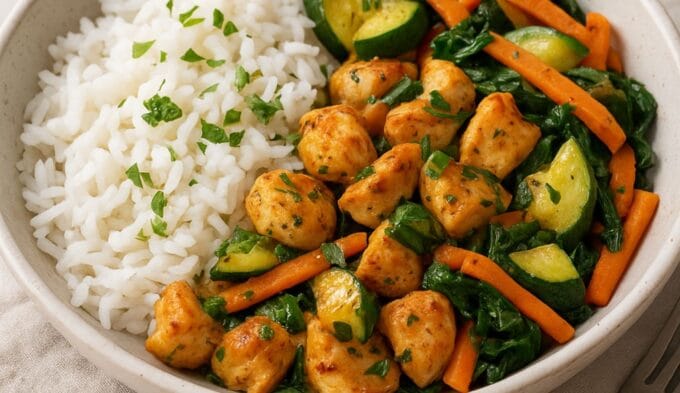
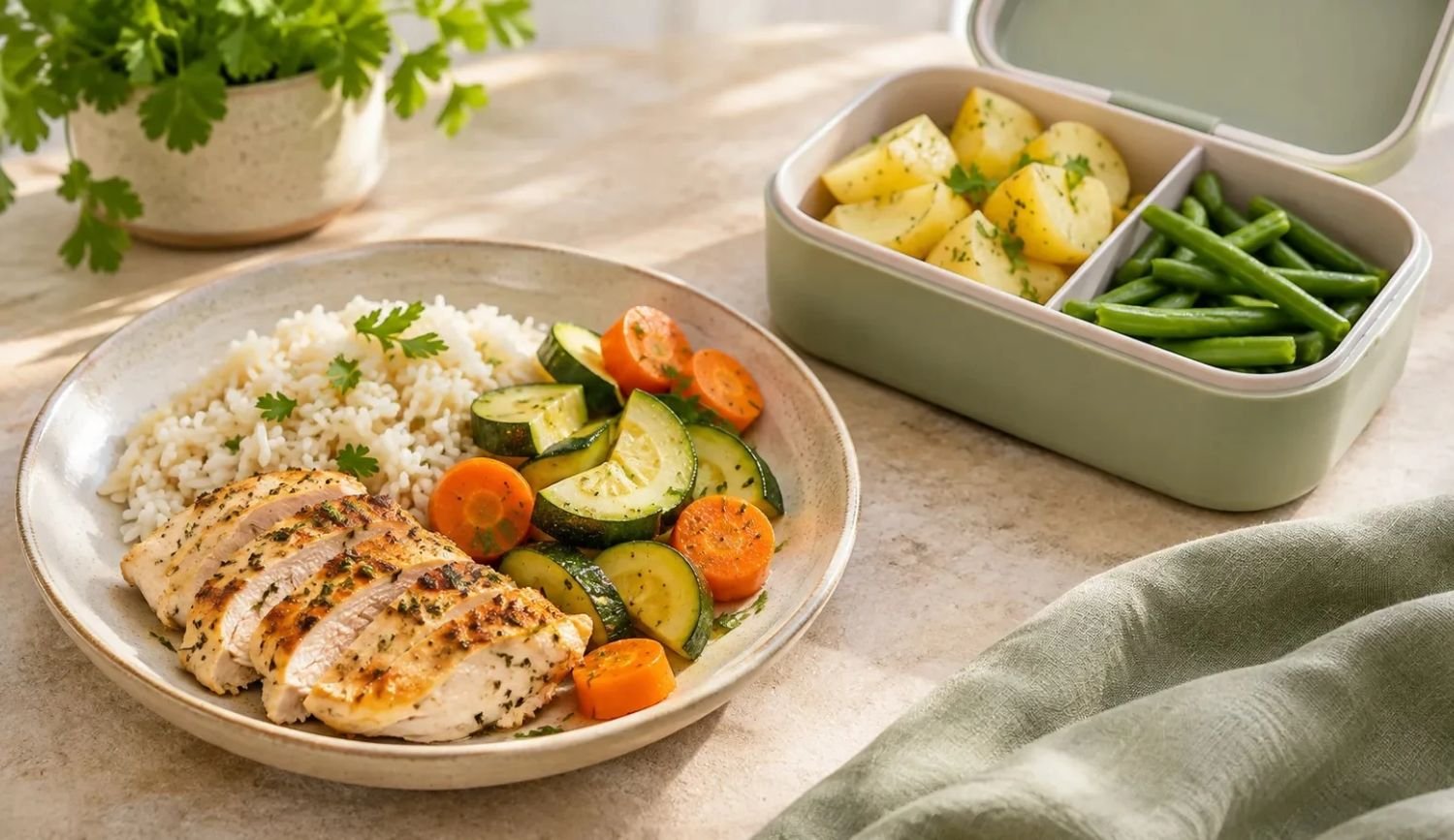
- Warm rice and vegetable bowl. Combine cooked rice, steamed zucchini or carrots, and a protein of your choice. Finish with herbs or a simple seasoning you use comfortably.
- Baked potato lunch plate. Serve a baked or boiled potato with cooked green beans and a protein on the side. Change the vegetables to keep the meal interesting.
- Chicken and vegetable soup. Combine properly cooked chicken, vegetables and rice or noodles in a lightly seasoned broth. Keep it simple rather than trying to reproduce a heavily flavored packaged soup.
- Egg, toast and vegetables. Pair thoroughly cooked eggs with toast and a cooked vegetable if eggs suit you. This is a quick option that doesn’t require an extensive ingredient list.
- Chickpea and quinoa bowl. Add cooked chickpeas and vegetables to quinoa, then choose a mild dressing. If legumes don’t work for you, use another protein instead.
These are meal assemblies, not kitchen-tested recipes with exact quantities or verified histamine measurements.
Low histamine packed lunch ideas for work
A packed lunch should be useful and practical to transport. The following options need proper temperature control when they contain cooked grains, eggs, meat or other perishable ingredients.
- Chilled quinoa and vegetable bowl. Pack cooked, promptly chilled quinoa with vegetables and a chosen protein. Keep the dressing in a separate container until you’re ready to eat.
- Potato and green bean lunchbox. Combine cooked, promptly chilled potatoes and green beans with a protein you tolerate. Use divided containers if you prefer the components separate.
- Sandwich or wrap with a simple filling. Choose bread or a wrap that works for you, then add a suitable cooked filling and vegetables. Keep perishable fillings cold until lunch.
- Soup or rice bowl to reheat at work. Transport a properly cooled meal under refrigeration and heat it thoroughly before eating. For an existing meal example, see our chicken rice bowl meal prep.
For more small sides, explore our low histamine snacks. Our meal prep guide for histamine intolerance covers planning and food handling in more detail.
What about sandwiches and wraps?
Sandwiches can be an option when their individual ingredients suit you. Think of the bread, filling and spread as three separate choices, rather than judging the whole sandwich by its name.
Cooked vegetables, properly prepared chicken or thoroughly cooked egg may be useful fillings for some people. Deli meats and packaged spreads vary by formulation and handling, so ingredient labels and your own food needs still matter.
For help selecting the base and spread, see our guides to low histamine bread and low histamine sauces.
How should you store and transport lunch?
Keep perishable lunches cold. Use an insulated lunch bag with two cold sources, such as frozen gel packs or frozen water bottles. FoodSafety.gov recommends keeping perishable food at or below 40°F (4°C) and refrigerating it when possible.
Cool cooked food promptly in shallow containers before packing it. If you reheat a cooked leftover, FoodSafety.gov recommends an internal temperature of 165°F (74°C). Reheating does not make food safe if it was previously handled or stored improperly.
For general foodborne-illness prevention, perishable food should not sit unrefrigerated for more than two hours, or one hour when temperatures exceed 90°F (32°C). These are microbial food-safety rules, not proven histamine-reaction timelines. Refrigeration also does not remove histamine already present.
If you cannot keep a perishable lunch safely cold, choose an appropriate shelf-stable option or arrange access to a refrigerator instead of leaving a cooked meal in an ordinary bag.
How can lunch stay filling without too many food rules?
A satisfying lunch usually includes an energy source, some protein and vegetables, with a fat or dressing if it fits your needs. Changing one component is often easier than eliminating an entire meal.
Research on dietary management of suspected histamine intolerance remains limited, and food histamine levels are variable. If your tolerated-food list is shrinking, you’re losing weight unintentionally or food allergies are involved, a clinician or registered dietitian can help you keep meals varied and nutritionally adequate.
A simple plan for tomorrow’s lunch
Use this short sequence rather than starting with a completely new recipe:
- Choose where you’ll eat. At home, at work or while traveling?
- Pick a familiar base. Try a grain, potato, bread or another starch that suits you.
- Add protein and vegetables. Use combinations you can prepare and handle safely.
- Choose your flavoring. A little oil, herbs or a simple sauce may be enough.
- Plan the transport. If food is perishable, keep it cold with suitable equipment or use a refrigerator.
Our low histamine grocery list can make the shopping part easier. Start with one workable lunch and change it gradually as you learn what suits you.
References
- Reese I, et al. Guideline on management of suspected adverse reactions to ingested histamine. Allergol Select. 2021;5:305–314.
- Jackson K, Busse W, Gálvez-Martín P, Terradillos A, Martínez-Puig D. Evidence for Dietary Management of Histamine Intolerance. Int J Mol Sci. 2025;26(18):9198. doi:10.3390/ijms26189198.
- FoodSafety.gov. Back to School Meal Prep as Easy as 1, 2, 3, 4.
- FoodSafety.gov. 4 Steps to Food Safety.
- FoodSafety.gov. Get an A+ in Food Safety This School Year.