
Diamine oxidase (DAO) is central to how the body handles histamine from food, but a low blood DAO result does not, by itself, diagnose histamine intolerance.
You may have come across DAO through a low-histamine diet, a blood test result, a supplement bottle, or a gene report mentioning AOC1. Maybe a practitioner mentioned “low DAO” as an explanation for symptoms that have been hard to pin down.
DAO is a real, well-studied enzyme, and much of what circulates online about “DAO deficiency” goes further than the evidence currently supports. That gap between solid biology and overstated clinical claims is exactly what tends to get lost in casual explanations.
Our broader DAO deficiency guide covers the symptoms, possible contributors, and clinical questions that fall outside this biology-focused pillar.
This guide separates the two. It explains what DAO actually is and does, then draws a clear line around what a low DAO reading, a genetic variant, or a supplement response can and cannot tell you.
What is the DAO enzyme?
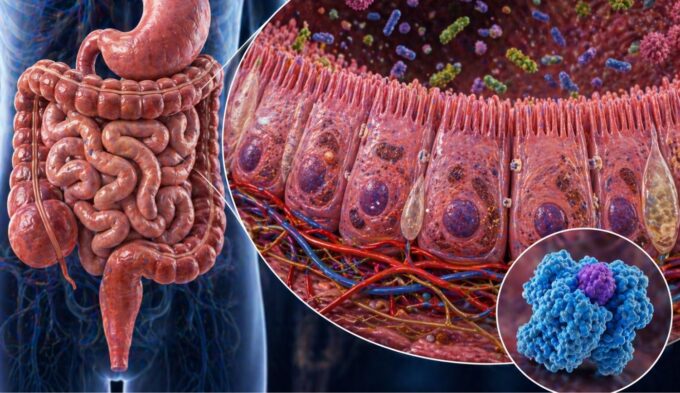
Diamine oxidase (DAO) is a copper-containing enzyme encoded by the AOC1 gene [1,12]. DAO is generally described as a secretory enzyme involved in extracellular histamine degradation, and it is especially relevant at the intestinal barrier, where it can help limit exposure to histamine from food [1].
DAO isn’t a single mysterious “histamine switch.” It’s one enzyme in a broader metabolic system, and its activity is only one piece of a much larger picture.
What does DAO actually do to histamine?
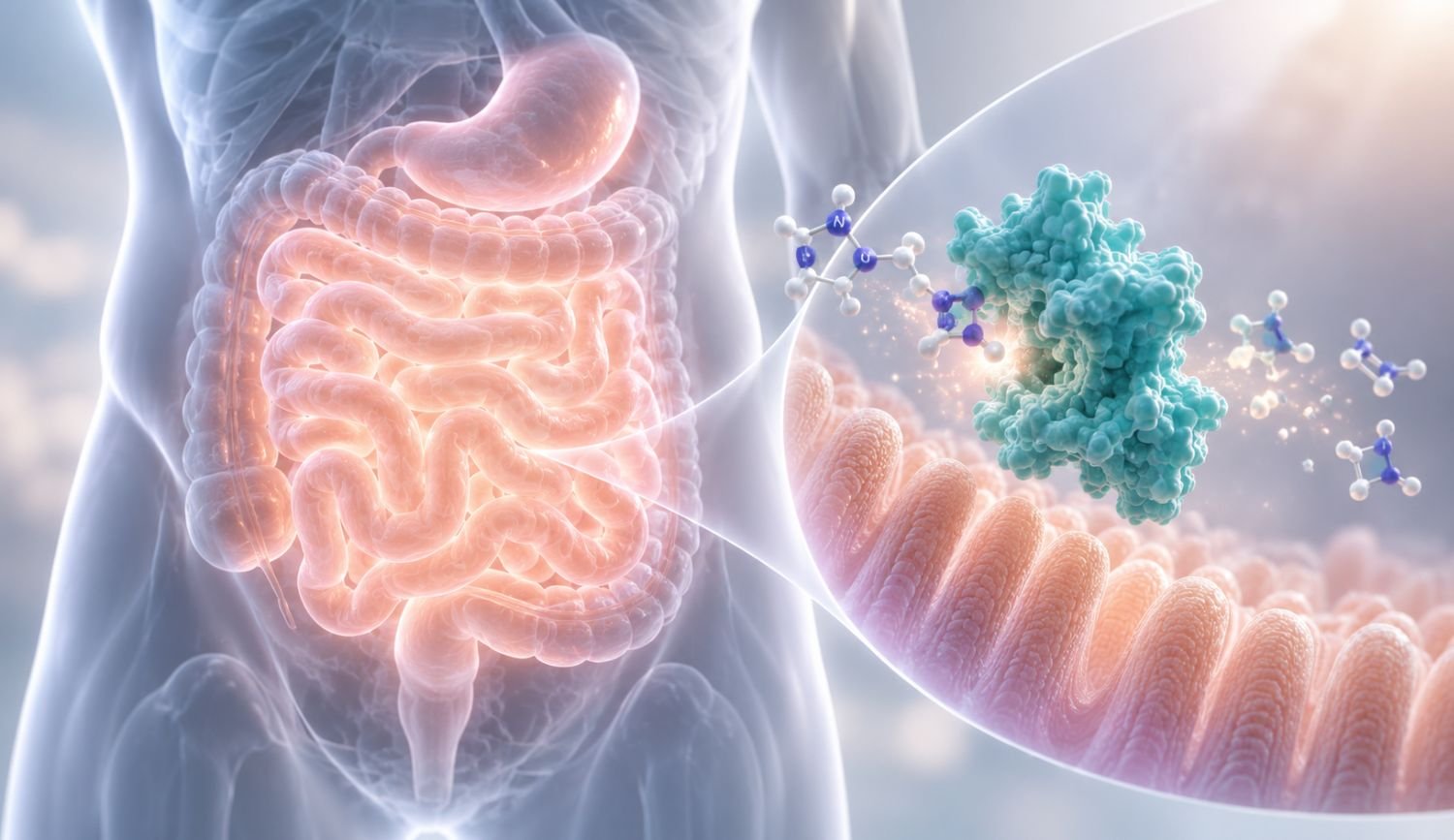
DAO breaks histamine down through a process called oxidative deamination. In plain terms, the enzyme removes an amine group from the histamine molecule, converting it into a compound called imidazole acetaldehyde, while also generating ammonia and hydrogen peroxide as byproducts [1,2]. That aldehyde is then further processed by other enzymes before it eventually leaves the body.
This reaction depends on copper bound within the enzyme, along with a cofactor called topaquinone (TPQ), which DAO generates from one of its own amino acids [1].
Think of DAO as a small, specialized machine: histamine goes in one end, gets chemically taken apart, and comes out the other side as something the body can clear more easily.
Where is DAO found in the body?
DAO activity is associated with mature cells lining the small and large intestine, which is why the gut is where DAO’s role in dietary histamine gets the most attention [1,3]. Meaningful DAO activity has also been described in the kidney and, notably, the placenta [1,2].
The intestinal location matters because it puts DAO in a strategic position: histamine from food passes through the gut before it reaches general circulation, so DAO at that barrier has a real opportunity to reduce exposure before it becomes a wider issue.
DAO during pregnancy
Placental DAO production is well-documented human physiology, and serum DAO is known to rise during pregnancy. A 2025 exploratory study followed 30 women with histamine intolerance symptoms and found that 27 reported symptom improvement during pregnancy, alongside a substantial rise in serum DAO activity from baseline [11]. Symptoms tended to return by the postpartum follow-up as DAO levels fell.
This was a small, observational study, and it needs replication before broader conclusions are drawn. It’s a genuine physiological pattern worth knowing about, not a promise that pregnancy resolves histamine intolerance for everyone.
DAO vs HNMT: two different histamine breakdown pathways
Histamine is metabolized through two main enzymatic routes, and they aren’t neatly divided into “food histamine” versus “body histamine.” The clearer distinction is where each enzyme actually works: DAO functions mainly outside cells, while histamine-N-methyltransferase (HNMT) works inside them [1,2].
| Feature | DAO | HNMT |
|---|---|---|
| Gene | AOC1 | HNMT |
| Main cellular location | Principally extracellular | Intracellular |
| Histamine pathway | Oxidative deamination | Methylation |
| Important tissues/context | Intestinal mucosa, kidney, placenta; especially relevant to ingested histamine at the gut barrier | Widely distributed intracellularly, including tissues where local histamine clearance matters |
| Main reaction | Converts histamine to imidazole acetaldehyde, ammonia, and hydrogen peroxide | Converts histamine to N-methylhistamine |
| Why it matters | Positioned to limit histamine absorption from the gut | Handles histamine clearance within cells across many tissues |
This distinction matters because it explains why DAO gets so much attention in discussions of dietary histamine specifically. Its extracellular, gut-adjacent position gives it a plausible role in handling histamine that arrives through food, while HNMT’s intracellular role means it isn’t positioned the same way at that specific barrier.
That doesn’t mean HNMT is irrelevant to someone thinking about histamine intolerance broadly. It handles histamine clearance inside cells across a wide range of tissues, which matters for histamine generated within the body rather than histamine encountered through the gut.
The two pathways work in parallel rather than one simply picking up where the other leaves off, and reducing the whole system to “DAO for food, HNMT for everything else” oversimplifies a genuinely more layered picture.
Why intestinal DAO matters for dietary histamine
Dietary histamine enters the gastrointestinal tract along with everything else you eat, and intestinal DAO has the opportunity to metabolize some of it before it’s absorbed and can exert wider effects [1,3].
How much histamine a food contains varies considerably depending on preparation, freshness, fermentation, and storage, which is part of why some people notice patterns with certain foods and not others. Other biogenic amines may also complicate histamine degradation. In vitro experiments using DAO found that putrescine and cadaverine slowed histamine degradation, while effects from other amines depended heavily on concentration [13].
Whether these interactions meaningfully change symptoms in humans remains uncertain.
That interaction adds a layer of complexity worth acknowledging: a meal isn’t just delivering histamine in isolation, it’s often delivering a mix of related compounds that share overlapping metabolic pathways.
This article isn’t the place for a full breakdown of which specific foods carry more or less histamine; that belongs to Nourishly’s dedicated food guides. The relevant point here is mechanistic: intestinal DAO sits at a genuinely important checkpoint for histamine coming from what you eat, even if the full picture involves more than one compound at a time.
Does low DAO mean you have histamine intolerance?
No. DAO biology and a clinical diagnosis of histamine intolerance are not the same thing.
Reduced DAO activity is one proposed mechanism behind histamine intolerance, but a measured low serum DAO result does not automatically prove that intestinal DAO activity is also low [1,4]. Histamine intolerance itself remains genuinely difficult to define and diagnose, with no single standardized clinical approach agreed upon across specialists [9].
This isn’t a reason to dismiss the condition. It’s a reason to be careful about what any single number can and can’t establish, and to avoid diagnosing yourself from symptoms alone.
If you’re specifically trying to understand what a low measurement may mean, see our guide to low DAO levels.
Our guide to DAO deficiency vs histamine intolerance explains why these related concepts should not be treated as interchangeable.
Why a DAO blood test cannot diagnose histamine intolerance on its own
A joint clinical guideline from DGAKI, GPA, AeDA, SGAI, and ÖGAI considers serum DAO testing inconclusive as a standalone way to diagnose adverse reactions to ingested histamine [4].
A large population-based survey of 1,051 adults found that 44% had serum DAO levels below the previously suggested “normal” cutoff of 10 U/mL, yet DAO levels showed no meaningful association with reported reactions to histamine-rich foods [5]. That’s a striking gap between a common commercial threshold and what actually predicted symptoms in a real population.
A separate 2023 placebo-controlled study evaluated 59 people referred for suspected histamine intolerance. The diagnosis was excluded in 50 of the 59 participants, and 37 reported symptoms after receiving placebo rather than histamine. Four were classified as having plausible histamine intolerance, and another five were considered possible cases after individual assessment. Serum DAO in this study showed substantial variability and wasn’t specific enough to diagnose histamine intolerance on its own [6].
None of this means histamine intolerance is fake or that reactions were imaginary; it means neither symptoms nor a single lab value should be interpreted in isolation.
A 2024 crossover study following 18 patients through low-histamine and mixed-diet phases found that symptoms improved during the low-histamine phase, but serum DAO changes didn’t track reliably with which diet participants were following [7].
Symptom response and serum DAO values, in other words, aren’t interchangeable measurements of the same thing.
Taken together, this doesn’t mean serum DAO is entirely useless under all circumstances. The more accurate framing is that serum DAO may offer research or contextual information, but current evidence does not support using it as a standalone diagnostic test for histamine intolerance.
Can genetics affect DAO activity?
Genetic susceptibility is not the same thing as a diagnosis.
AOC1 variants have been studied for their relationship to DAO activity and histamine intolerance-like symptoms. A 2024 pilot study compared 100 adults with histamine intolerance-like symptoms with 100 healthy controls and found no statistically significant difference in how often any individual studied variant appeared between the two groups [8].
It did find differences in homozygous risk-allele burden and cumulative genetic-risk patterns, which were more common among symptomatic participants.
That’s a nuanced finding, not a clean genetic explanation for histamine intolerance. A specific AOC1 variant may contribute to susceptibility in some people, particularly when several risk-associated variants are present together, but carrying one doesn’t diagnose the condition.
Consumer genetic testing for a single AOC1 variant isn’t a validated way to confirm DAO deficiency, and a report that flags one variant shouldn’t be treated as a conclusive answer on its own. Our guide to what can cause DAO deficiency covers genetic and other contributors in more detail than fits here.
Can gut disease affect DAO activity?
Because DAO activity is associated with mature intestinal mucosa, conditions that damage that tissue offer a biologically coherent pathway to reduced local DAO activity [1,3]. Direct human tissue evidence supports this in at least one condition: a study examining resected intestinal tissue from patients with Crohn’s disease found DAO activity roughly 50% lower in diseased mucosa compared with macroscopically normal tissue from the same patients [3].
This is meaningful evidence for a specific, diagnosed disease process, not a general claim that every gut symptom reflects DAO deficiency. Having Crohn’s disease doesn’t automatically mean a person has histamine intolerance, and this single tissue study doesn’t establish how the two conditions relate for every patient.
It does not establish that SIBO, IBS, or vaguely defined “leaky gut” independently destroy DAO-producing cells, and healing the gut in a general sense does not automatically restore DAO function.
Our guide to the DAO and gut health connection explores this relationship more thoroughly, including what mucosal recovery can and can’t be expected to change.
What about medications, alcohol and nutrients?
These three get lumped together constantly in online discussions of DAO, and each deserves a brief, disciplined answer rather than a sprawling list.
Medications
Some medications have been proposed to interfere with DAO or histamine metabolism, but the evidence for many of these effects is inconsistent, and effects that do exist appear to be drug-specific rather than universal [4].
This isn’t the place for a long list of suspected “DAO blockers,” since many circulating lists rely on older in-vitro or animal evidence that hasn’t been clinically validated. If you take regular medications and have concerns, a review with your prescribing clinician is the right next step. Never stop or change a prescribed medication because it appears on an internet list.
Alcohol
Alcohol can act as a histamine-load factor or a metabolic modifier, depending on the beverage and the individual [4]. Claims that alcohol directly and universally shuts down DAO, or that it definitively causes clinical histamine intolerance through competition with related enzymes, go beyond what current human evidence establishes.
A conservative interpretation treats alcohol as a plausible contributing factor rather than a proven independent cause.
Vitamins and minerals
This is worth correcting directly: vitamin B6 is not DAO’s direct catalytic cofactor, despite how often that claim circulates online. DAO’s relevant cofactors are copper and topaquinone [1].
Copper has genuine biochemical relevance to DAO’s structure and catalytic activity, but biochemical involvement should not be confused with evidence that taking extra copper raises DAO activity in a copper-sufficient person. Likewise, vitamin B6, vitamin C, and zinc should not be described as direct DAO cofactors or established DAO-boosting treatments simply because they participate in other metabolic or nutritional processes [1].
What do oral DAO supplements actually do?
Oral DAO products are designed to act locally within the gastrointestinal tract on ingested histamine, rather than to restore the body’s own endogenous DAO production. The idea is meal-associated: the supplement is intended to help degrade dietary histamine while it’s still in the gut.
One open-label pilot study of 28 participants reported a reduction in histamine intolerance-related symptoms following DAO supplementation [10]. That study has real limitations worth stating plainly: it wasn’t placebo-controlled, the sample size was small, and one of the study’s authors was affiliated with a company that manufactures diamine oxidase products.
This doesn’t mean the finding is wrong, but it does mean the evidence base is limited rather than definitive.
The 2021 clinical guideline also judged the available evidence for DAO supplementation insufficient for a treatment recommendation and noted manufacturer involvement in the small studies available at the time [4].
There is no good evidence that taking oral DAO increases the body’s own AOC1 gene expression, restores intestinal DAO-producing cells, or permanently raises endogenous DAO activity.
The available clinical research is small in scale and often short in duration, which limits how confidently anyone can generalize from it, and independently funded, placebo-controlled trials would help clarify how meaningful the effect actually is across a broader population.
Our guide to when to take a DAO enzyme supplement covers timing considerations for readers exploring this option.
What DAO can and cannot tell you about histamine intolerance
| What DAO evidence can support | What it cannot prove |
|---|---|
| DAO participates in extracellular histamine metabolism | A serum DAO value alone diagnoses histamine intolerance |
| Intestinal DAO contributes to handling dietary histamine | A low serum DAO result proves low intestinal DAO activity |
| AOC1 variation may affect individual susceptibility | A gene variant establishes disease |
| Mucosal disease may reduce local DAO activity | Every gut symptom is caused by DAO deficiency |
| Oral DAO may help degrade ingested histamine locally | DAO supplements restore the body’s own endogenous DAO production |
This table is meant to be a quick, accurate reference point. If you take one idea from this article, it’s the gap between the left and right columns: real biology on one side, and claims the evidence doesn’t yet support on the other.
Bottom line
DAO is a genuinely important enzyme, and its extracellular role at the intestinal barrier gives it real relevance to how the body handles histamine from food. That biology is well established.
What isn’t established is treating DAO as a universal explanation for every histamine-related symptom. Serum DAO results, AOC1 gene variants, and how someone responds to a supplement are each pieces of a larger, still-uncertain picture, not standalone proof of histamine intolerance.
If symptoms are significant or persistent, a structured clinical evaluation, rather than a single blood test or gene report, is the more reliable path forward. What causes histamine intolerance places DAO within that broader picture of possible contributors.
Frequently asked questions
A few direct answers to the questions people most often bring to DAO.
What does the DAO enzyme do?
DAO helps break down extracellular histamine and related diamines through a process called oxidative deamination. It’s especially relevant at the intestinal barrier, where it can help limit how much histamine from food reaches wider circulation.
Where is DAO produced in the body?
DAO activity is mainly associated with mature cells lining the small and large intestine. Meaningful activity has also been described in the kidney and, notably, the placenta during pregnancy.
What is the difference between DAO and HNMT?
DAO works mainly outside cells, while HNMT works inside them. Both break down histamine, but they operate in different cellular compartments and tissue contexts rather than splitting neatly into “food histamine” versus “body histamine.”
Does low DAO mean histamine intolerance?
Not automatically. Reduced DAO is one proposed mechanism behind histamine intolerance, but a low serum DAO result doesn’t confirm the diagnosis, since serum values don’t reliably reflect intestinal DAO activity.
Can a blood test measure DAO accurately?
A blood test can measure serum DAO activity, but current evidence doesn’t support using that result alone to diagnose histamine intolerance. Population studies have found no meaningful link between serum DAO levels and reported reactions to histamine-rich foods.
Is DAO deficiency genetic?
Genetics may contribute to susceptibility. Research comparing symptomatic adults with healthy controls found no significant difference in individual AOC1 variant prevalence, though patterns in homozygous risk alleles were more common in the symptomatic group.
Does vitamin B6 increase DAO?
No, this is a common misconception. DAO’s relevant biochemical cofactors are copper and topaquinone, not vitamin B6, and there’s no good evidence that B6 supplementation increases DAO activity.
Do DAO supplements increase your body’s DAO levels?
No. Oral DAO products are designed to act locally in the gut on ingested histamine, not to restore or permanently raise the body’s own endogenous DAO production. Clinical evidence for symptom benefit remains limited.
References
- Comas-Basté O, Sánchez-Pérez S, Veciana-Nogués MT, Latorre-Moratalla ML, Vidal-Carou MC. Histamine intolerance: the current state of the art. Biomolecules. 2020;10(8):1181. doi:10.3390/biom10081181
- Maintz L, Novak N. Histamine and histamine intolerance. Am J Clin Nutr. 2007;85(5):1185-1196. doi:10.1093/ajcn/85.5.1185
- Schmidt WU, Sattler J, Hesterberg R, et al. Human intestinal diamine oxidase (DAO) activity in Crohn’s disease: a new marker for disease assessment?. Agents Actions. 1990;30(1-2):267-270. doi:10.1007/BF01969057
- Reese I, Ballmer-Weber B, Beyer K, et al. Guideline on management of suspected adverse reactions to ingested histamine. Allergol Select. 2021;5:305-314. doi:10.5414/ALX02269E
- van Odijk J, Weisheit A, Arvidsson M, Miron N, Nwaru B, Ekerljung L. The use of DAO as a marker for histamine intolerance: measurements and determinants in a large random population-based survey. Nutrients. 2023;15(13):2887. doi:10.3390/nu15132887
- Bent RK, Kugler C, Faihs V, Darsow U, Biedermann T, Brockow K. Placebo-controlled histamine challenge disproves suspicion of histamine intolerance. J Allergy Clin Immunol Pract. 2023;11(12):3724-3731.e11. doi:10.1016/j.jaip.2023.08.030
- Rentzos G, Weisheit A, Ekerljung L, van Odijk J. Measurement of diamine oxidase (DAO) during low-histamine or ordinary diet in patients with histamine intolerance. Eur J Clin Nutr. 2024;78(8):726-731. doi:10.1038/s41430-024-01448-2
- Duelo A, Comas-Basté O, Sánchez-Pérez S, et al. Pilot study on the prevalence of diamine oxidase gene variants in patients with symptoms of histamine intolerance. Nutrients. 2024;16(8):1142. doi:10.3390/nu16081142
- Hrubisko M, Danis R, Huorka M, Wawruch M. Histamine intolerance—the more we know the less we know. A review. Nutrients. 2021;13(7):2228. doi:10.3390/nu13072228
- Schnedl WJ, Schenk M, Lackner S, Enko D, Mangge H, Forster F. Diamine oxidase supplementation improves symptoms in patients with histamine intolerance. Food Sci Biotechnol. 2019;28(6):1779-1784. doi:10.1007/s10068-019-00627-3
- Duelo A, Sánchez-Pérez S, Pellicer-Roca S, et al. Improvement of histamine intolerance symptoms in pregnant women with diamine oxidase deficiency: an exploratory study. J Clin Med. 2025;14(13):4573. doi:10.3390/jcm14134573
- National Center for Biotechnology Information. AOC1 amine oxidase copper containing 1 [Homo sapiens]. NCBI Gene. Gene ID: 26.
- Sánchez-Pérez S, Comas-Basté O, Costa-Catala J, et al. The rate of histamine degradation by diamine oxidase is compromised by other biogenic amines. Front Nutr. 2022;9:897028. doi:10.3389/fnut.2022.897028