
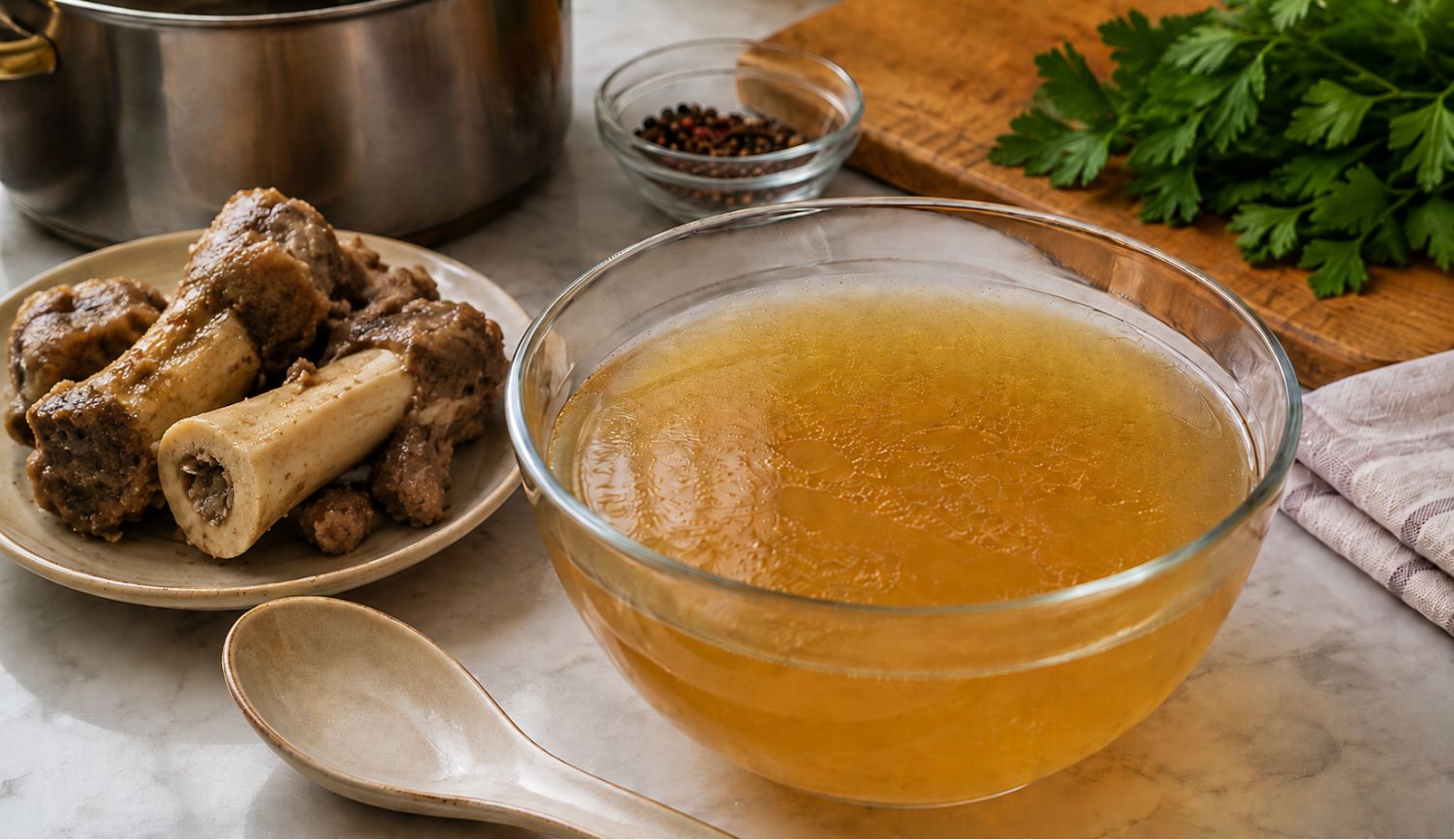
Bone broth is often promoted as gentle, healing, and easy to digest. But for some histamine-sensitive people, it can do the opposite.
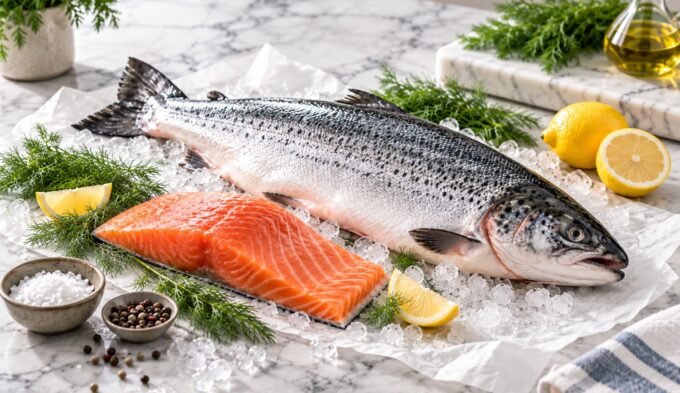
Most formal food-safety guidance on histamine focuses on fish, but the broader biogenic amine principle also matters for protein-rich foods that spend a long time warm, cooling, or stored. That’s a different risk profile than most people expect from a food marketed as soothing, and it echoes the same biogenic amine principles seen in other slow-processed, protein-rich foods [1].
This isn’t about bone broth being bad. It’s about understanding what happens during those many hours on the stove, and what to do instead if it keeps triggering symptoms.
In this article, “mast cell flare” is used as a practical symptom-pattern phrase, not a diagnosis of MCAS or mast cell disease.
Why bone broth and histamine can overlap
Bone broth is made from bones, skin, cartilage, connective tissue, and sometimes leftover meat scraps, simmered in water for a long stretch of time. Most recipes call for 8 to 24 hours on the stove or in a slow cooker.
That long cooking window, plus the storage that usually follows, gives more opportunity for biogenic amine buildup than a quickly cooked meal [5].
A reaction to bone broth isn’t necessarily about the broth “being bad.” It’s more often about time, handling, storage conditions, and your own histamine threshold that day all lining up at once, since histamine intolerance symptoms depend on total load rather than any single food alone [4][6].
Is bone broth high in histamine?
Not every batch carries the same histamine level. Homemade broth, restaurant broth, boxed broth, shelf-stable broth, and slow-cooker broth can all vary widely depending on ingredients, cooking time, and how they were handled afterward.
As a general pattern, long-simmered broth tends to carry more risk than freshly cooked meat, since the extended cooking and holding time gives more room for biogenic amines to accumulate [5].
Labels almost never disclose actual histamine content, so there’s rarely a way to know a specific product’s real number.
Why long simmering matters
Long simmering is one of the biggest issues, but it is not the only one. The real risk comes from the full timeline: raw material handling, cooking duration, cooling speed, storage, and reheating. Bones, skin, and connective tissue are rich in protein and amino acids, including histidine.
Bacteria and naturally occurring enzymes can convert amino acids like histidine into biogenic amines, and this process is driven mainly by time, temperature, and microbial activity rather than heat alone [5].
Poor handling before cooking, slow cooling afterward, and extended storage all add to that same risk.
It’s worth being precise here: heat doesn’t reliably destroy histamine once it has already formed. Cooking, reheating, or even freezing a broth after amines have built up won’t remove them [2][3].
Why bone broth can feel worse than fresh meat
Fresh meat, cooked quickly and eaten soon after, carries fewer time-related variables than a broth that simmered all day. There’s simply less window for amine buildup.
Bone broth also concentrates liquid pulled from many hours of cooking, and people often drink a full mug at once. That serving size can deliver a larger amine load in one sitting than a similar portion of freshly cooked meat would.
Reactions may be dose-dependent, meaning a small cup and a large mug of the same broth won’t necessarily produce the same response.
| Broth factor | Why it matters for histamine-sensitive people | Lower-variable approach |
|---|---|---|
| Long simmering | A longer cooking window usually means more time for handling, holding, cooling, and storage variables to matter. | Use short-cooked fresh meat broth instead of 12–24 hour bone broth. |
| Slow cooling | Warm, protein-rich liquid that cools slowly can create more opportunity for microbial activity. | Cool quickly in shallow containers and freeze portions promptly. |
| Large servings | A full mug may deliver more of the same broth compounds at once than a small test portion. | Test with a small amount only when symptoms are stable. |
| Added ingredients | Vinegar, yeast extract, onion, garlic, spices, flavors, and preservatives can cause separate reactions. | Choose simple ingredients and avoid multi-ingredient store-bought broths while testing. |
Common symptoms after a bone broth flare
People describe a range of reactions after bone broth, and they don’t all point to the same underlying cause. Common reports include flushing, headache or migraine-like pressure, itching or hives, congestion, nausea, diarrhea or gut urgency, a racing heart or palpitations, an anxious or wired feeling, and insomnia or nighttime waking.
These symptoms can overlap with allergy, MCAS, food poisoning, or other medical issues, so they aren’t proof of any single cause on their own. If a pattern repeats or feels severe, that’s worth bringing to a clinician rather than self-diagnosing from symptoms alone.
Bone broth vs meat broth: why short-cooked broth may be different
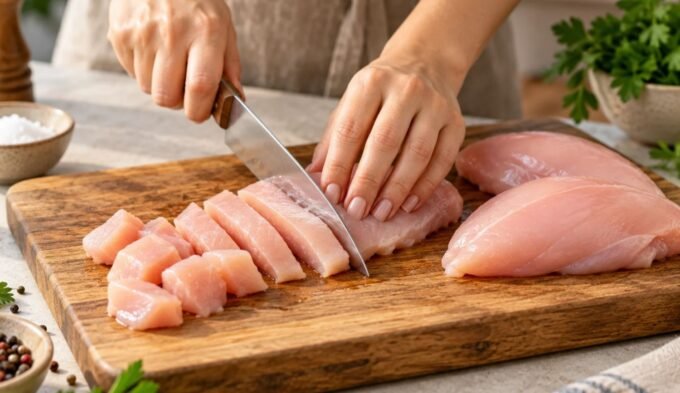
Meat broth is usually made from fresh meat and cooked for a much shorter time than bone broth, often 30 to 60 minutes rather than a full day. That shorter window reduces some of the time-related variables that make long-simmered broth riskier.
Pressure cooking can shrink the total cooking time even further while still extracting flavor and some nutrients. Short-cooked fresh meat broth isn’t a guaranteed-safe food, but it’s often a more reasonable starting point for sensitive people than a 12 to 24 hour bone broth.
What about store-bought bone broth?
Store-bought products bring their own variables on top of the cooking question. Production time, storage duration, transport conditions, and added ingredients like preservatives, flavorings, yeast extract, onion, garlic, vinegar, or spice blends can each contribute to a reaction separate from the broth itself.
Shelf-stable broth is convenient, but convenience doesn’t make it lower-risk for histamine-sensitive people. Refrigerated or frozen store-bought broth isn’t automatically safer either. Ingredient simplicity and how recently the product was made both matter more than the packaging format.
Why bone broth is not the same as collagen powder
Bone broth and collagen powder often get lumped together since both are marketed for joints, gut health, and skin. They behave quite differently, though.
Bone broth is a cooked liquid made over many hours, with simmering time, cooling, and storage as its main variables. Collagen powder is a processed supplement, where sourcing, manufacturing conditions, additives, and dose size matter more than simmering time.
Collagen Supplements and Histamine covers the supplement side of this picture in depth. A full side-by-side comparison of the two deserves its own dedicated article.
What to use instead of bone broth
If bone broth keeps causing symptoms, there are practical substitutes. Short-cooked fresh meat broth, quick pressure-cooked broth, or a simple fresh soup made and eaten promptly can provide warmth, fluid, minerals, and gentle protein support with fewer time-related variables.
Tolerated fresh protein meals are another straightforward option. For the collagen-support angle specifically, fresh tolerated protein, glycine, proline, vitamin C, and minerals can support collagen production without relying on a long-simmered liquid. Low Histamine Collagen Alternatives covers these options in more detail.
How to test broth more safely
A careful approach works better than guessing. Test broth only when you’re relatively stable, not in the middle of a flare, and change one variable at a time rather than switching several things at once.
Start with a small amount rather than a full mug. Use fresh ingredients, cook briefly, cool the broth quickly, and freeze portions promptly in glass freezer containers rather than letting it sit in the fridge for days.
Track symptoms for 24 to 48 hours afterward, since reactions aren’t always immediate. Stop testing that batch or method if symptoms repeat.
When to avoid bone broth completely
Some situations call for skipping bone broth altogether rather than continuing to test it. Repeated severe reactions, throat tightness, breathing symptoms, swelling, rapidly spreading hives, faintness, or severe vomiting all belong in this category.
Suspected allergy, unstable MCAS-type symptoms, and anything resembling food poisoning also warrant stepping back rather than pushing through. Pregnancy, kidney disease, immune compromise, or another complex medical history are reasons to check with a clinician before making major dietary changes either way.
If you ever experience throat swelling, trouble breathing, wheezing, facial, lip, or tongue swelling, fainting, severe chest tightness, rapidly spreading hives, or other signs of a serious allergic reaction, treat that as an emergency and seek urgent medical care right away.
The bottom line
Bone broth can be harder for histamine-sensitive people to tolerate because it combines several higher-risk variables: animal protein, long simmering, extended time warm, cooling, storage, and often large serving sizes.
Short-cooked fresh meat broth may be a lower-variable alternative for some people, though it is not automatically safe for everyone.
There’s no need to force bone broth into your routine just because it’s marketed as gut-healing. Plenty of other ways exist to support the same goals.
Frequently asked questions
Is bone broth high in histamine?
Not automatically, but it carries more risk factors than fresh, quickly cooked meat. Long simmering time and storage afterward both give more opportunity for biogenic amines to build up.
Why does bone broth trigger histamine symptoms?
The long cooking time, combined with handling, cooling, and storage conditions, can allow biogenic amines including histamine to accumulate in the broth. Reactions also depend on your personal histamine threshold that day.
Is meat broth lower histamine than bone broth?
It’s often a lower-variable option since it’s cooked for a much shorter time, but it isn’t guaranteed to be low histamine. Freshness and how quickly it’s cooled and stored still matter.
Does cooking destroy histamine in broth?
No. Once histamine has formed in a food, heat doesn’t reliably break it down, so cooking, reheating, or freezing won’t remove it after the fact.
Is store-bought bone broth safe for histamine intolerance?
It depends on the product. Added ingredients, production and storage time, and packaging format all matter more than whether it’s shelf-stable, refrigerated, or frozen.
What can I drink instead of bone broth?
Short-cooked fresh meat broth, a quick pressure-cooked broth, or a simple fresh soup are common substitutes with fewer time-related variables.
Is chicken broth low histamine?
It depends on freshness, how long it was cooked, how it was stored, and what else was added to it. There’s no absolute yes or no answer that applies to every batch.
Can bone broth cause a mast cell flare?
It can coincide with mast-cell-type symptoms in some sensitive people, such as flushing, itching, hives, congestion, gut urgency, or a wired feeling. That pattern does not prove MCAS or any specific diagnosis on its own.
Is bone broth different from collagen powder?
Yes. Bone broth is a cooked liquid shaped mainly by simmering time and storage, while collagen powder is a processed supplement shaped by sourcing, manufacturing, additives, and dose.
Should I avoid bone broth during a histamine flare?
Many people find it easier to skip higher-variable foods like bone broth while symptoms are already active. Testing tolerance is usually more informative when you’re relatively stable rather than mid-flare.
References
- Joint FAO/WHO Expert Meeting on the Public Health Risks of Histamine and Other Biogenic Amines from Fish and Fishery Products: Meeting Report. World Health Organization / FAO. https://www.who.int/publications/i/item/9789240691919
- Fish and Fishery Products Hazards and Controls Guidance, Chapter 7: Scombrotoxin (Histamine) Formation. U.S. Food and Drug Administration. https://www.fda.gov/files/food/published/Fish-and-Fishery-Products-Hazards-and-Controls-Guidance-Chapter-7-Download.pdf
- Food Poisoning from Marine Toxins: Scombroid (Histamine) Fish Poisoning. CDC Yellow Book. https://www.cdc.gov/yellow-book/hcp/environmental-hazards-risks/food-poisoning-from-marine-toxins.html
- Maintz L, Novak N. Histamine and histamine intolerance. American Journal of Clinical Nutrition. 2007;85(5):1185–1196. https://doi.org/10.1093/ajcn/85.5.1185
- Gardini F, Özogul Y, Suzzi G, Tabanelli G, Özogul F. Technological Factors Affecting Biogenic Amine Content in Foods: A Review. Frontiers in Microbiology. 2016;7:1218. https://pmc.ncbi.nlm.nih.gov/articles/PMC4982241/
- Comas-Basté O, Sánchez-Pérez S, Veciana-Nogués MT, Latorre-Moratalla M, Vidal-Carou MC. Histamine Intolerance: The Current State of the Art. Biomolecules. 2020;10(8):1181. https://pmc.ncbi.nlm.nih.gov/articles/PMC7464760/
Reviewed for scientific accuracy and editorial clarity under Nourishly standards.