
If collagen powder makes you flush, itch, bloat, or feel wired, the answer is not always to hunt for a “cleaner” collagen. Sometimes the better move is to step back from powders entirely for a while.
Low histamine collagen alternatives are really about supporting collagen production without adding another high-variable powder. That can mean tolerated protein, targeted amino acids, and a few key nutrients, rather than a different tub on the same shelf.
This article covers what to use instead, not another deep dive into why collagen reacts in the first place. Collagen Supplements and Histamine already covers that ground.
Why low histamine collagen alternatives may be safer than forcing collagen powder
Reacting to collagen doesn’t mean your body has stopped needing collagen support. It usually means something about that specific product, source, dose, or your histamine threshold that day didn’t line up, since histamine intolerance symptoms depend on how much histamine load the body is handling overall, not on any single food in isolation [7][8].
Forcing a different collagen brand can work for some people, but it isn’t the only path. Alternatives can support the same underlying goal, building and maintaining connective tissue, without repeating the same variables that caused trouble the first time.
What your body actually needs to build collagen
Collagen production isn’t mysterious. It depends on a handful of raw materials and conditions coming together.
The body needs specific amino acids, vitamin C as a cofactor, and minerals like zinc, copper, and manganese to assemble and stabilize collagen properly [1][2]. It also needs enough total protein and calories overall, since collagen synthesis competes with every other repair process happening in the body.
Stable digestion matters too. If digestion is inflamed or disrupted, absorbing any of these building blocks becomes harder, regardless of what supplement you add on top.
| Possible issue | Why marine collagen matters | What to watch for |
|---|---|---|
| Histamine-type reaction | Fish-derived raw material can be more sensitive to handling, chilling, and storage before processing. | Flushing, headache, itching, congestion, faster heartbeat, or digestive upset, often when other triggers are already stacked. |
| Fish allergy | Marine collagen comes from fish material and may not be appropriate for people with known fish allergy. | Rapid hives, swelling, wheezing, throat tightness, breathing symptoms, faintness, or spreading rash. |
| Additive reaction | Marine collagen beauty formulas often include flavors, sweeteners, gums, vitamins, probiotics, or “superfood” blends. | Symptoms only with flavored or blended products, but not with simpler formulas or other fish foods. |
| Dose sensitivity | A full scoop may be more than a sensitive system can process at once. | Symptoms that track serving size and timing more than the source itself. |
Fresh tolerated protein: the first collagen alternative
Before reaching for any supplement, fresh protein you already tolerate is worth building a routine around. Poultry, unaged lamb, or other tolerated meats cooked fresh and eaten soon after cooking tend to carry a lower histamine load than aged or leftover versions of the same food.
Fresh fish may work for some people who already tolerate it, but it should be approached more cautiously than poultry or other fresh proteins because fish tissue can form histamine when handling or chilling is delayed. Eggs are another option if they’re already part of your safe list.
Freezing extra portions quickly after cooking, rather than letting them sit in the fridge for days, helps limit histamine buildup in whatever protein you choose.
Glycine and proline: targeted amino acid support
Collagen itself is unusually rich in two amino acids: glycine and proline [1]. That’s part of why some people look at single amino acid supplements instead of a full collagen peptide blend.
Using an isolated amino acid removes some of the variables that come with a full collagen product, since there’s no animal-source processing chain or blend of additives involved. That doesn’t make it automatically better tolerated. Amino acids are still supplements, and starting cautiously with a small amount makes sense before assuming they’ll sit fine.
Some people explore pure glycine powder or pure proline powder as a starting point, though neither is guaranteed to suit everyone.
Vitamin C: the collagen cofactor sensitive people often forget
Vitamin C isn’t just a general wellness nutrient here. It’s a required cofactor for the enzymes that stabilize the collagen molecule during synthesis, meaning the body genuinely cannot build normal collagen without it [1][3].
Getting vitamin C from tolerated food is often easier on a sensitive system than jumping to a high-dose supplement, since supplement forms and fillers can matter for reactive individuals. Depending on personal tolerance, options like bell pepper, fresh herbs, or small amounts of tolerated fruit can contribute meaningfully.
Citrus is a common vitamin C source for most people, but it isn’t universally safe for histamine-sensitive individuals, so treat it as something to test rather than assume.
Minerals that support connective tissue
A few minerals play a supporting role in collagen and connective tissue health. Zinc and copper both matter for normal tissue repair and enzyme systems, while magnesium supports broader physiological processes involved in stress regulation and recovery [4][5][6].
None of this means more is automatically better. Excess mineral intake can cause its own problems, and these nutrients work best as part of a varied, tolerated diet rather than stacked together as a supplement regimen.
Low histamine food options that support collagen production
Putting this into practice usually looks simpler than it sounds. Fresh chicken or turkey, eggs if tolerated, and unaged lamb or other freshly cooked meats provide the amino acids collagen synthesis relies on.
Tolerated seeds, safe leafy greens, and fresh herbs can round out mineral and vitamin C intake. Don’t overlook adequate carbohydrate intake either, since consistent calories keep the body from prioritizing basic energy needs over tissue repair.
What to use instead of bone broth
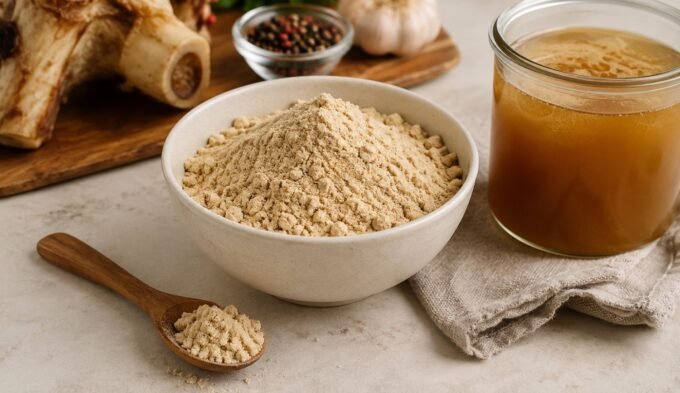
Bone broth’s long simmering time is exactly what makes it a bigger histamine concern for sensitive people. A short-cooked fresh meat broth, made in under an hour rather than simmered for a day, is one practical swap.
Simple fresh-cooked soups, quick pressure-cooked meat stock, or a protein-rich meal with targeted amino acid support can cover some of the same practical goals without relying on long simmering. Bone Broth and Histamine covers the chemistry behind why bone broth behaves differently in more detail.
What to use instead of marine collagen
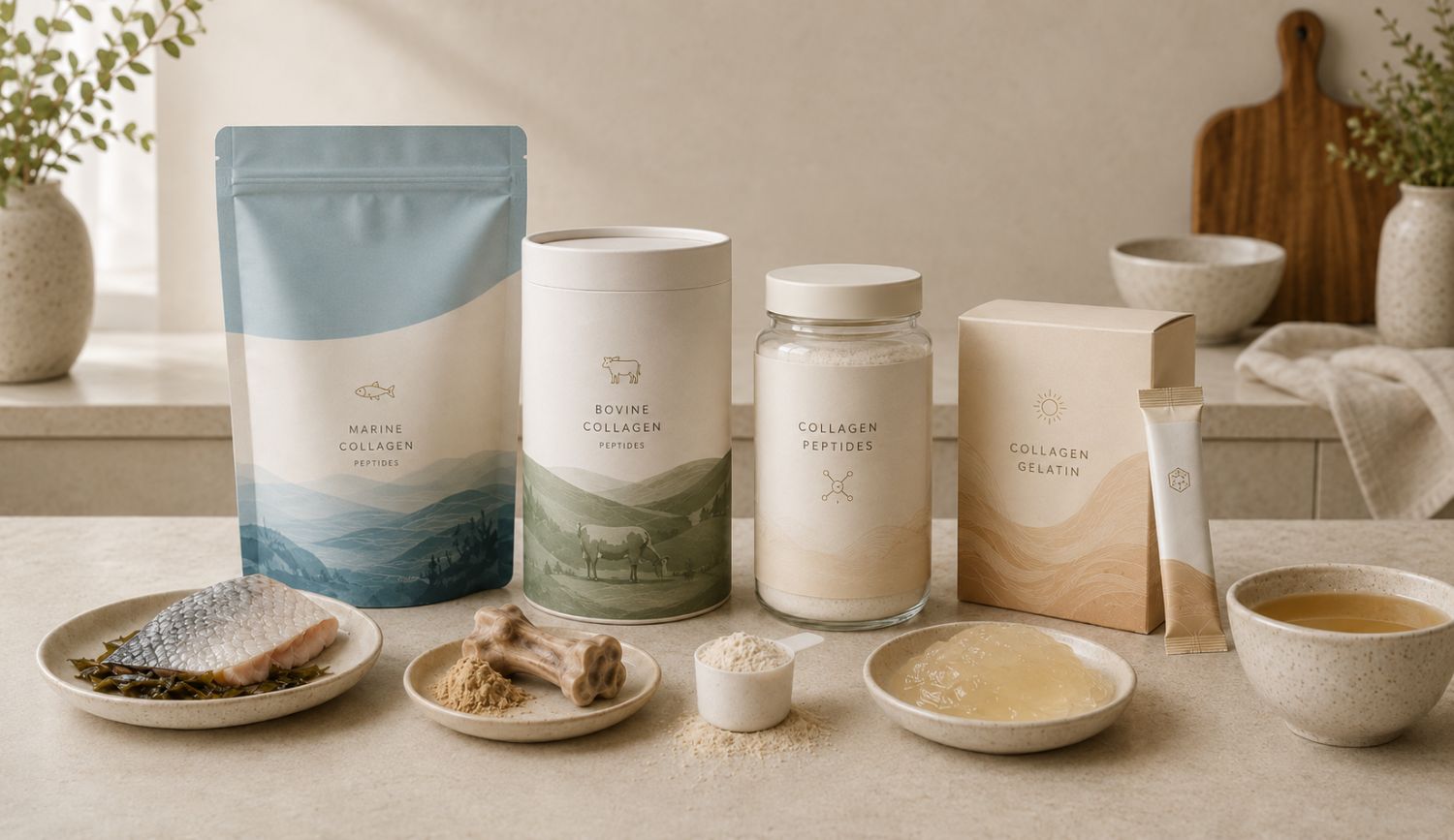
Marine collagen carries its own set of variables tied to fish sourcing and fish allergy risk. Plain, single-ingredient bovine collagen may be easier for some people to test as a substitute, though it isn’t automatically tolerated just because it avoids fish.
Food-first collagen support, built from tolerated protein and the cofactors above, may be the safer route for others, especially anyone still troubleshooting reactions. A known fish allergy changes this decision entirely and isn’t something to work around with a different collagen source. Marine Collagen and Histamine covers the fish-specific details.
What to avoid when choosing collagen alternatives
A few product categories tend to add complexity rather than remove it. Flavored beauty blends, probiotic-added collagen products, fermented “superfood” powders, high-dose vitamin blends, and niacin-containing formulas each bring their own reaction risks separate from collagen itself.
Gums and sweeteners can be individual triggers for sensitive people, and any multi-ingredient formula makes it harder to know what actually caused a reaction if one happens.
When plain bovine collagen may still be worth testing
If you want to try collagen again, a single-ingredient, unflavored bovine product gives you the cleanest test. Starting with a small dose, and only when you’re relatively stable rather than mid-flare, gives you room to notice a reaction early.
Skip retesting if you’ve had a previous severe reaction. And if you’re managing allergies, MCAS-type symptoms, pregnancy, kidney disease, or another complex medical situation, loop in a clinician before testing anything new, including a plain, single-ingredient bovine collagen product.
When to avoid collagen powders entirely
Some situations call for skipping collagen powders altogether rather than experimenting further. A history of severe reactions, throat tightness, breathing symptoms, swelling, or repeated hives after any collagen product all belong in this category.
Unstable MCAS-type symptoms, a known fish allergy paired with marine collagen, medically restricted protein intake, and pregnancy or breastfeeding without a clinician’s guidance are additional reasons to hold off.
If you ever experience throat swelling, trouble breathing, wheezing, rapidly spreading hives, facial or tongue swelling, fainting, severe chest tightness, or severe vomiting after any supplement, treat that as an emergency and seek urgent medical care right away.
The bottom line
Choosing alternatives to collagen powder doesn’t mean giving up on collagen support altogether. It means supporting the same underlying process through tolerated protein, key cofactors like vitamin C and minerals, and simpler food-first strategies.
Forcing a collagen powder that keeps triggering symptoms isn’t necessary. There are enough practical substitutes to keep supporting your body without repeating the same reaction.
Frequently asked questions
What is the best low histamine collagen alternative?
There isn’t one universal answer, since tolerance is individual. Fresh tolerated protein combined with vitamin C and mineral cofactors is a common starting point, with glycine or proline as an optional next step.
Can I build collagen without collagen powder?
Yes. The body builds its own collagen using amino acids, vitamin C, and minerals from food, so a collagen supplement isn’t strictly required to support that process.
Are glycine and proline better than collagen for histamine intolerance?
They may carry fewer variables since they’re single ingredients rather than a processed animal product with a longer supply chain. That doesn’t guarantee tolerance, and they’re still supplements worth introducing cautiously.
Is bovine collagen a good alternative to marine collagen?
It can be an easier starting point for some people since it avoids fish-handling and fish-allergy variables, but it isn’t automatically safe or guaranteed to be tolerated.
What can I use instead of bone broth?
Short-cooked fresh meat broth, quick pressure-cooked stock, or a simple protein-rich meal with amino acid support can fill a similar role without the long-simmer histamine concern.
Are collagen beauty powders safe for histamine intolerance?
Not necessarily. These formulas often include added vitamins, probiotics, or niacin that can cause symptoms separate from the collagen itself, so they carry more variables than a plain product.
What protein powder is best if collagen triggers me?
Fresh whole food is often the safest starting point rather than jumping straight to another powder. If you do test a protein powder, choose a simple, single-ingredient formula when stable, and avoid flavored blends, gums, sweeteners, probiotics, and vitamin stacks.
Should I stop collagen if it causes flushing?
Stopping the product and noting what happened is a reasonable first step. Whether to retest, switch products, or avoid collagen longer term depends on the severity of the reaction and is worth discussing with a clinician if symptoms are repeated or concerning.
References
- Biochemistry, Collagen Synthesis. StatPearls [Internet]. NCBI Bookshelf. https://www.ncbi.nlm.nih.gov/books/NBK507709/
- Physiology, Connective Tissue. StatPearls [Internet]. NCBI Bookshelf. https://www.ncbi.nlm.nih.gov/books/NBK542226/
- Vitamin C: Fact Sheet for Health Professionals. National Institutes of Health, Office of Dietary Supplements. https://ods.od.nih.gov/factsheets/VitaminC-HealthProfessional/
- Zinc: Fact Sheet for Health Professionals. National Institutes of Health, Office of Dietary Supplements. https://ods.od.nih.gov/factsheets/Zinc-HealthProfessional/
- Copper: Fact Sheet for Health Professionals. National Institutes of Health, Office of Dietary Supplements. https://ods.od.nih.gov/factsheets/Copper-HealthProfessional/
- Magnesium: Fact Sheet for Health Professionals. National Institutes of Health, Office of Dietary Supplements. https://ods.od.nih.gov/factsheets/Magnesium-HealthProfessional/
- Maintz L, Novak N. Histamine and histamine intolerance. American Journal of Clinical Nutrition. 2007;85(5):1185–1196. https://doi.org/10.1093/ajcn/85.5.1185
- Comas-Basté O, Sánchez-Pérez S, Veciana-Nogués MT, Latorre-Moratalla M, Vidal-Carou MC. Histamine Intolerance: The Current State of the Art. Biomolecules. 2020;10(8):1181. https://pmc.ncbi.nlm.nih.gov/articles/PMC7464760/
Reviewed for scientific accuracy and editorial clarity under Nourishly standards.