
Ordinary pasta isn’t inherently high in histamine, but no pasta variety is guaranteed histamine-free or suitable for everyone. In limited laboratory tests, histamine was not detected in some wheat-pasta samples and was measurable in certain others, so the results can’t predict a brand or your own reaction.
What you can control is the choice of pasta, the other ingredients on the plate and how you handle leftovers. Celiac disease and wheat allergy are separate questions, and they’re treated that way below.
Is pasta low histamine?
There is no reliable blanket classification for every pasta product. The available testing is limited, and results vary by the specific samples examined. Measured histamine, other biogenic amines and individual reactions are different questions, so a food-list label cannot answer them all.
In one Spanish analysis, seven wheat-pasta samples had no detectable histamine. “Not detected” means the amount was below what the method could measure, which isn’t the same as zero.
A separate report on a selected durum-wheat pasta from the Senatore Cappelli variety found about 36 mg/kg of histamine. That is a finding from a specifically studied pasta product, not an average for supermarket wheat pasta or a symptom threshold.
A later paper on the same named wheat reports a similar figure, but sharing a variety and source limits how independent the two results are.
Neither tells you what a typical supermarket box contains. Histamine limits set for fishery products don’t apply to pasta, so don’t use them as a yardstick.
Which pasta types can you consider?
Histamine measurements do not establish a universal ranking of these pasta types. Known allergies and diagnosed celiac disease still impose separate, non-negotiable ingredient restrictions.
- Wheat, semolina or durum pasta. It contains wheat and gluten, and the ingredients and the particular product both matter.
- Rice, corn or gluten-free blends. These can suit a medically necessary gluten-free diet when properly labeled. “Gluten-free” is not a histamine measurement, so check the mixed ingredients and the sauce too.
- Chickpea, lentil or other legume pasta. These bring different proteins and fiber, and sometimes different digestion. No validated histamine ranking exists for them, and no proven “liberator” effect either.
- Fresh, egg, stuffed or filled pasta. Check the label for egg, milk, wheat and other ingredients, and keep refrigerated products cold.
If you have celiac disease, wheat, durum and semolina pasta are not gluten-free, and you need products that are labeled gluten-free.
If you have a known allergy, or a food has caused a severe reaction before, don’t experiment with it. Labels declare major allergens, and that’s a different job from measuring histamine.
Why do sauces and toppings matter?
Because pasta is rarely eaten alone. The whole plate includes vegetables, protein, herbs, fats and a sauce, and each part has its own ingredients.
A label lets you check the ingredient list, allergens such as wheat, egg, milk, soy, sesame and tree nuts, and the storage instructions. It can’t tell you the histamine in the finished food.
For tomato sauces, one small Greek assay found 1.8 mg/kg of histamine in a single sample of salsa Napoletana, and 2.7 to 10.6 mg/kg across four tomato pastes.
That shows products vary, and it doesn’t set a rule for tomato sauce or a safe amount. Our tomatoes and histamine guide covers those measurements properly.
Claims that tomato, cheese, pesto, vinegar, citrus or garlic reliably release histamine in everyone are not supported by robust clinical evidence.
That does not mean every person tolerates them; aged or fermented ingredients and other components may still matter. A tomato-free sauce is not automatically histamine-free. For broader ingredient and condiment choices, see our low histamine sauces guide.
Practical pasta meal ideas
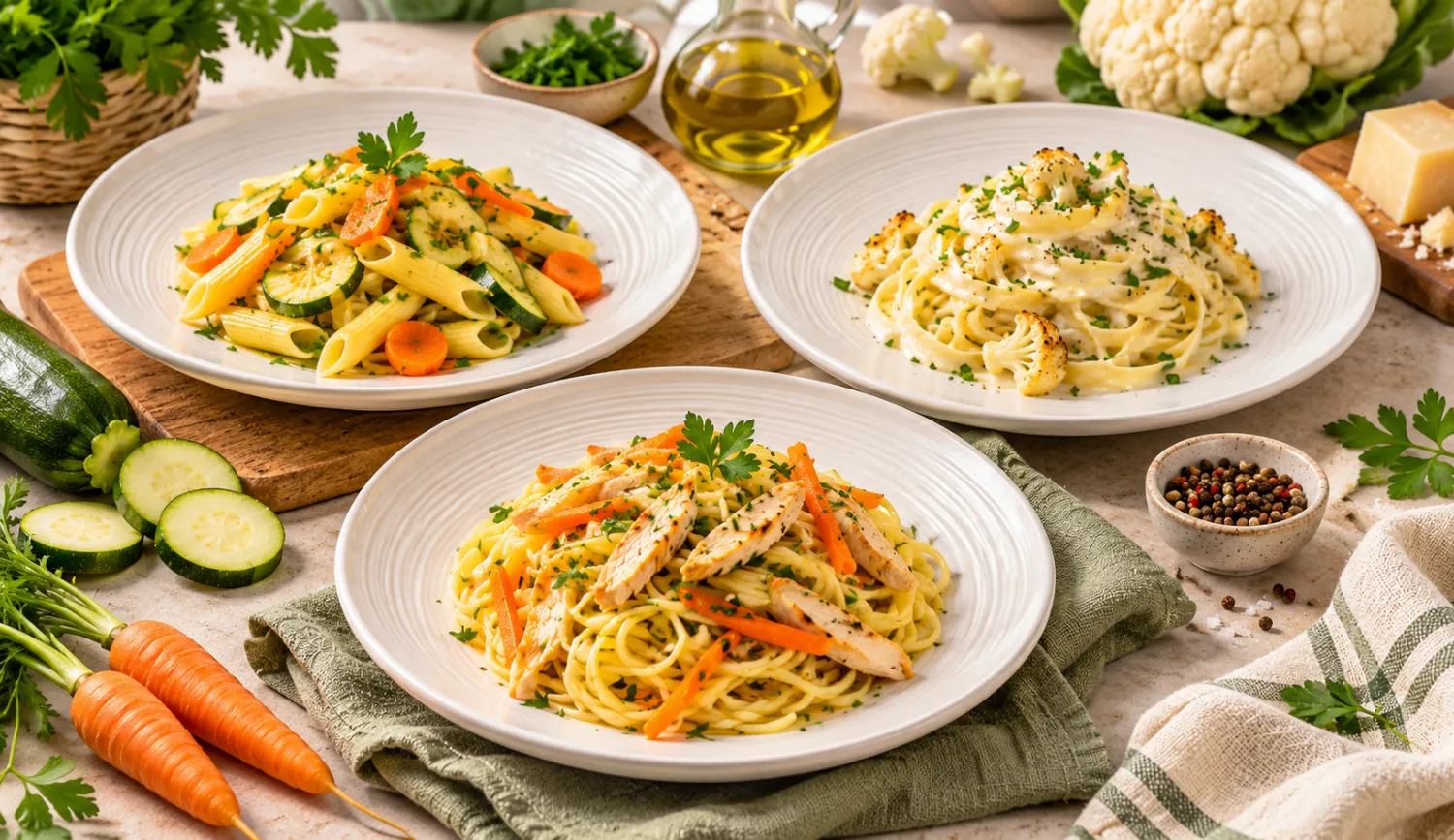
These three preparation ideas show how to build a pasta meal from familiar ingredients. They are not kitchen-tested recipes or assurances of individual tolerance. Use ingredients appropriate to your allergies and dietary needs.
Zucchini, parsley and olive oil. Sauté sliced zucchini in olive oil until tender. Toss it with freshly cooked pasta and a little reserved pasta water to coat the strands, then add chopped parsley.
For a more substantial meal, consider a freshly prepared protein that fits your dietary needs. This version is flexible because it does not depend on a packaged sauce, but its ingredients are not guaranteed to suit everyone.
Chicken, carrot and pasta. Prepare the pasta and cook the carrots until tender. Keep raw chicken separate from ready-to-eat ingredients, then cook it to 165°F (74°C) measured with a food thermometer.
Toss the cooked ingredients with a little olive oil and pasta water. Refrigerate any leftovers promptly. Proper refrigeration helps limit microbial growth, but it cannot guarantee a meal is histamine-free or tolerated by every person.
A mild, creamy vegetable pasta. Blend thoroughly cooked butternut squash with olive oil and enough reserved pasta water to make a smooth sauce. Toss it through cooked pasta and finish with herbs you normally use.
Adjust the consistency with small additions of water rather than assuming a specific cream substitute is necessary. Dairy-free or egg-free describes ingredients and allergens, not measured histamine content.
For more complete meals, see our low histamine dinner ideas.
What about pasta salad or store-bought pasta sauce?
Pasta salad is simply a cold pasta meal. Choose a dressing you tolerate, and our low histamine salad dressing guide covers the options. Keep it cold until you eat it.
For jarred sauce, compare the full ingredients and allergen declarations rather than relying on the product name. Look for aged or fermented components if they are relevant to your own food history, and follow the maker’s storage instructions, including those after opening.
A “low histamine” claim on a label is not a chemical test result, and this article does not assign a safety ranking to any brand.
How should you store and reheat cooked pasta?
Treat this as ordinary food safety, separate from histamine. Cook and serve promptly. Put leftovers in shallow containers, cool them quickly and refrigerate within two hours, or within one hour if the air is above 90°F (32°C). Keep the refrigerator at 40°F (4°C) or colder.
Cooked starchy foods such as pasta and rice can support Bacillus cereus if they sit at the wrong temperature, and some toxins it produces aren’t destroyed by reheating. So don’t try to rescue pasta that was left out by boiling it again.
Standard refrigeration advice cannot predict an individual histamine reaction, and there is no validated 12-, 24- or 48-hour tolerance window that applies to everyone. Reheating or freezing does not reliably remove histamine already present in food. Our meal prep guide for histamine intolerance covers planning more broadly.
A simple way to choose your next pasta meal
- Pick a pasta that fits your allergies and any celiac needs, and read the label for what’s in it.
- Use toppings and ingredients you already know, and change one thing at a time.
- Follow sound cooking and cold-storage rules, so food safety isn’t mistaken for a histamine fix.
If reactions keep happening, or your list of foods keeps getting shorter, a clinician or dietitian can help. Our low histamine food list is a broader ingredient reference.
References
- Sánchez-Pérez S, et al. Biogenic amines in plant-origin foods: are they frequently underestimated in low-histamine diets? Foods. 2018;7(12):205.
- Gobbi L, et al. Evaluation of biogenic amines, phenolic and antioxidant compounds in “Senatore Cappelli” durum wheat products. Int J Health Sci. 2022;6(S6):7774–7784.
- Armeli F, et al. Bioactive molecules in wheat “Senatore Cappelli” food chain: extraction, analysis, processing, and beneficial properties. Food Chem Toxicol. 2025;201:115475.
- Reese I, et al. Guideline on management of suspected adverse reactions to ingested histamine. Allergol Select. 2021;5:305–314.
- Jackson K, Busse W, Gálvez-Martín P, Terradillos A, Martínez-Puig D. Evidence for dietary management of histamine intolerance. Int J Mol Sci. 2025;26(18):9198. doi:10.3390/ijms26189198.
- Tsiasioti A, Tzanavaras PD. Simple and reliable determination of the histamine content of selected Greek vegetables and related products in the frame of “low histamine diet”. Foods. 2022;11(20):3234. doi:10.3390/foods11203234.
- Food Standards Australia New Zealand. Bacillus cereus in food.
- U.S. Food and Drug Administration. Safe food handling.
- NHS. Coeliac disease: treatment.
- U.S. Food and Drug Administration. Food allergies.