

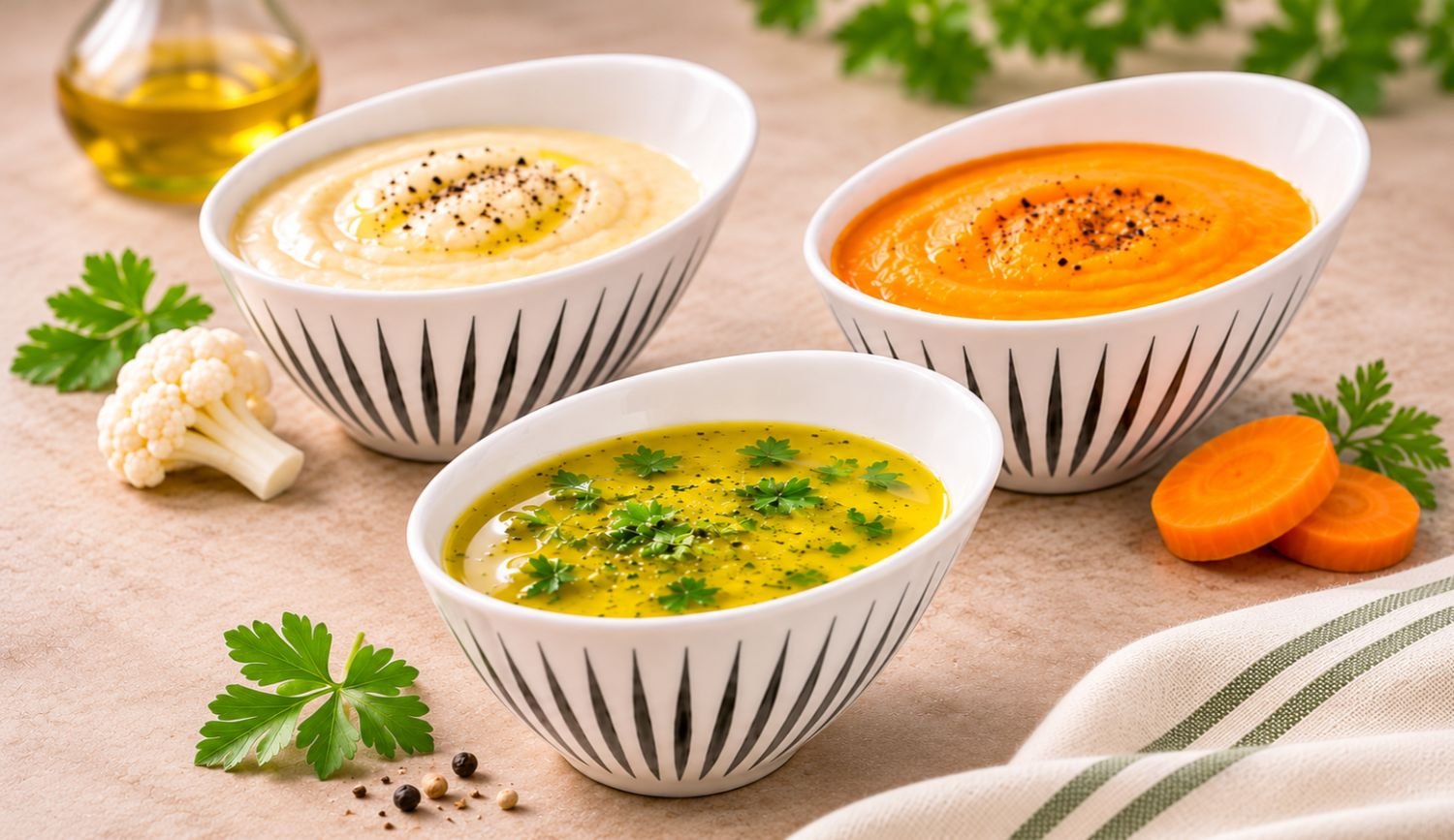
If you’re looking for a low histamine salad dressing, you can experiment with simple ones built from ingredients you already tolerate. Ingredients, processing, quantities, allergens and storage all matter, and no named dressing is guaranteed to be low in measured histamine or suitable for everyone.
Below are three homemade ideas to adapt, a way to read bottled labels, straight answers on vinegar, lemon, mustard and mayonnaise, and clear storage rules.
Can you use salad dressing on a low-histamine diet?
Often, yes, but there’s no single approved list. A dressing is a handful of ingredients, and each one can be chosen separately. That gives you more control than a vague category like “dressing.”
The evidence is also thinner than most food lists suggest. A professional guideline notes poor diagnostic validation for histamine intolerance and no reliable basis for broad “histamine liberator” food categories. So you don’t need a long exclusion list to make a dressing. You need ingredients you tolerate and some care with allergens and storage.
Homemade dressing ideas you can adapt
These are three untested dressing ideas built around comparatively well-tolerated ingredients, not laboratory-verified low-histamine recipes. Measurements are starting points; individual tolerance, allergies, ingredient forms and storage still matter. Each dressing is perishable. Make only what you need for the meal, and serve promptly.
Thin herb dressing for crisp greens
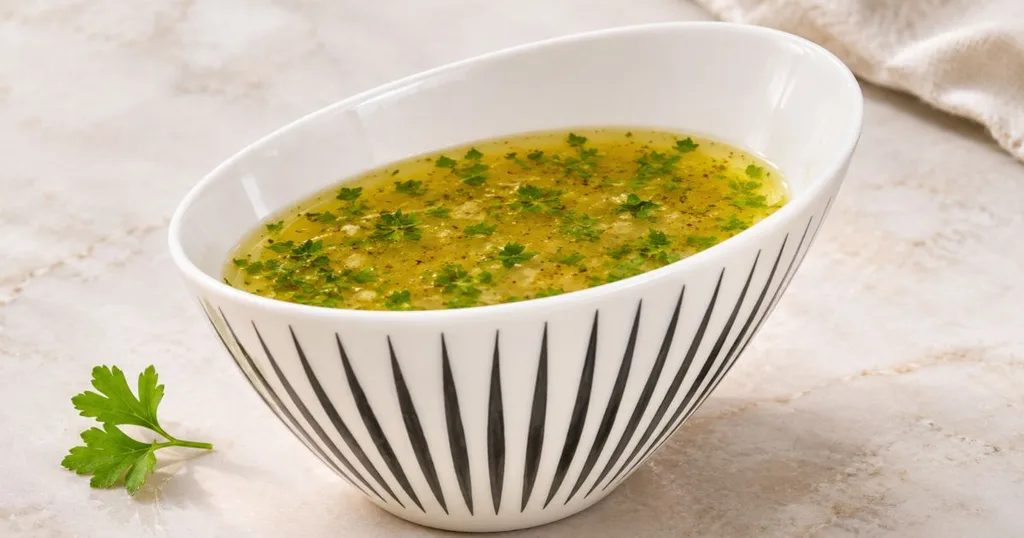
Ingredients:
- 1/4 cup olive oil
- 1 tablespoon water
- 2 tablespoons finely chopped fresh parsley
- A small pinch of salt
- Optional: up to 1 teaspoon plain distilled white vinegar if already tolerated, or a little extra water instead
- Optional: chives only if previously tolerated
Method:
- Whisk or shake the oil, water, salt and optional vinegar immediately before serving.
- Add the freshly chopped parsley (and optional chives) only when ready to eat.
- Toss with salad and serve immediately; do not prepare herb-in-oil mixtures for storage.
Ingredient caution:
Parsley is a reasonable starting herb; chives may be less well tolerated by some people. Plain distilled white vinegar is listed favorably in some compatibility guides, but this is not a finished-food histamine test. Lemon juice is not a default ingredient here; if you already tolerate it, a small optional addition can be considered. Do not trial any ingredient that has caused a serious reaction.
Creamy egg-free cauliflower dressing
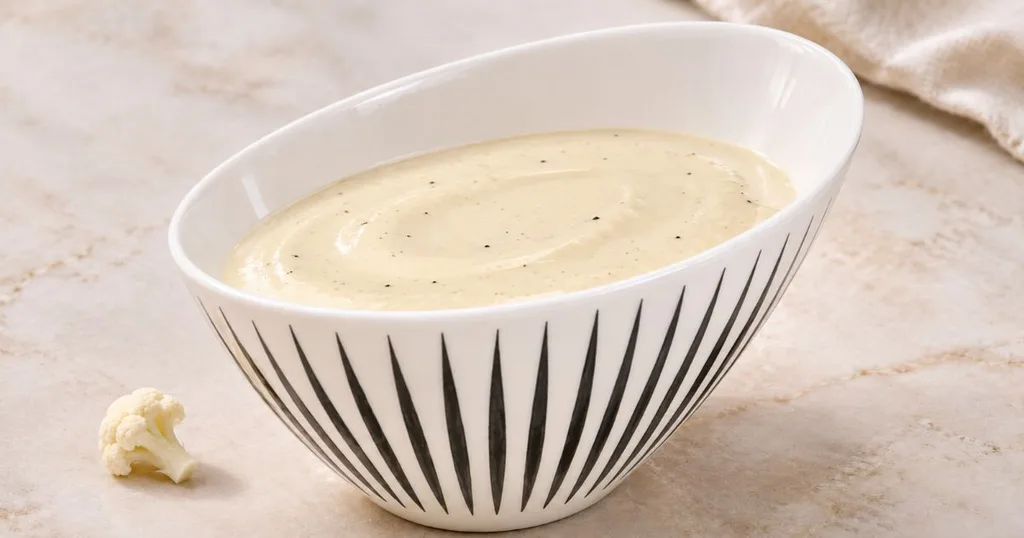
Ingredients:
- 1/2 cup freshly cooked cauliflower, cooled promptly using safe food-handling practices
- 2 tablespoons olive oil
- 2 to 3 tablespoons water
- A small pinch of salt
- Optional: up to 1 teaspoon plain distilled white vinegar only if previously tolerated
Method:
- Blend the cauliflower, oil, 2 tablespoons of water and salt until smooth. Add the optional vinegar only if suitable for you.
- Add a little more water until the mixture has a pourable consistency.
- Serve promptly; do not treat the blended vegetable mixture as shelf-stable.
Ingredient caution:
Cauliflower and olive oil are reasonable low-histamine-oriented choices, but this preparation has not been tested for histamine, flavor, texture or storage life. Vinegar is optional. Omit it if you are unsure about your tolerance; lemon juice is not needed.
Mild carrot dressing for slaw and vegetables
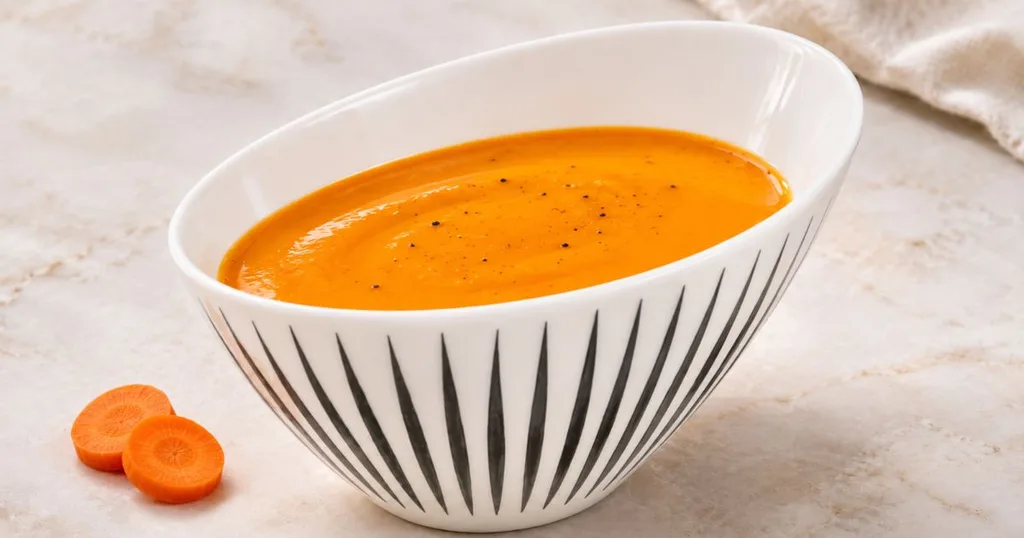
Ingredients:
- 1/2 cup freshly cooked carrot, cooled promptly using safe food-handling practices
- 2 tablespoons olive oil
- 2 to 3 tablespoons water
- A small pinch of salt
- Optional: up to 1 teaspoon plain distilled white vinegar only if previously tolerated
Method:
- Blend the cooked carrot, oil, water and salt until smooth.
- Adjust the water for texture. Add a little optional vinegar only if you already know you tolerate it.
- Serve promptly; this low-acid vegetable blend is not shelf-stable.
Ingredient caution:
Carrot is a reasonable starting ingredient, and the dressing does not need lemon or vinegar. A small amount of a personally tolerated acid is a flavor option, not a requirement for low-histamine eating or a validated preservation method.
Our low histamine spices guide covers herb and seasoning choices if you want to vary the flavor.
Which dressing fits your salad?
Match the dressing to the salad. The thin herb dressing coats tender leaves lightly and doesn’t weigh them down, so it suits a simple green salad. The creamy one clings better to sturdy ingredients such as chopped vegetables, cooked grains and roasted vegetables, and it can double as a dip.
The carrot dressing has a gentle sweetness and works on raw vegetables and slaw. It is an option if you prefer little or no acidity, since you control whether to add any. Use a tablespoon or two at a time and toss just before eating, so greens stay crisp.
How do you choose dressing ingredients?
Think in parts. A dressing can combine an oil, something to loosen it, a little seasoning and, for a creamy one, a smooth base. Tang is optional: lemon juice and vinegars are not interchangeable from a personal-tolerance perspective, and a little acid does not make an untested recipe shelf-stable.
A label describes ingredients, not histamine. “Vegan,” “gluten-free,” “low FODMAP” and “fresh” are not measurements of histamine, so none of them means a dressing is histamine-free. Our low histamine food list shows how lists treat common ingredients, with the caveat that lists disagree.
How do you read store-bought dressing labels?
Use the label for what it shows, which is ingredients and allergens. Standard retail labels generally don’t quantify histamine in the finished dressing, so this article doesn’t call any brand safe or tested.
- Check the ingredient list and formulation. Look at the whole list, not just the front of the bottle, and remember that recipes change.
- Look for fermented or aged components. Vinegars, aged cheeses, fermented sauces and similar ingredients are worth noticing, though they aren’t proven triggers for everyone.
- Check the major allergens. Egg, milk, soy, sesame and tree nuts are common in dressings.
- Follow the cold-storage directions. Some dressings need refrigeration, before or after opening, and the label says which.
- Think about the serving. A tablespoon is a different exposure from a generous pour, and restaurant dressings often have no ingredient list at all.
Our low histamine grocery list covers label-checking more broadly.
Is vinegar, lemon, mustard or mayonnaise okay in a dressing?
Each one has a different answer, and none calls for a blanket ban or a blanket approval.
Vinegar
It depends on the type and the product. Some food-compatibility lists rate plain distilled white vinegar more favorably than wine vinegars, but those rankings are not finished-food histamine measurements.
One laboratory study analyzed 22 fermented grape-derived beverages, including just four wine-vinegar samples from a single Hungarian region. That cannot establish the histamine level or tolerance of every vinegar.
If you use vinegar, check the actual product and consider a small amount only when you have already tolerated it.
Lemon
Some food-compatibility guides classify lemon juice as less suitable for a strict low-histamine approach, so it is optional rather than a default in these dressings. This does not prove that lemon juice is histamine-rich or a scientifically established “histamine liberator.”
People vary; avoid it if you know it causes symptoms, and do not test it at home if you have previously had a severe reaction.
Mustard
Prepared mustard is a formulated product, often made with vinegar and spices and sometimes other ingredients or allergens. Check the label for what a particular brand contains, instead of treating mustard as one thing.
Mayonnaise
Commercial mayonnaise isn’t necessarily a problem, so read its ingredients like any other product. Homemade mayonnaise made with raw shell eggs carries a Salmonella risk, which is a food-safety issue and not a histamine one. FDA advises using pasteurized egg products for recipes that stay uncooked.
For wider condiment choices, see our low histamine sauces guide.
How do you store homemade dressing safely?
Treat all three dressings as perishable and prepare small amounts for immediate serving. Do not store the fresh herb-and-oil mixture for later use. For the cauliflower and carrot dressings, refrigerate any leftovers promptly at or below 40°F (4°C); their safe storage duration has not been established.
As general food-safety guidance, perishable food shouldn’t stay at room temperature for more than two hours, or one hour above 90°F (32°C).
Fresh herbs, like garlic, in homemade oil can carry a botulism risk if mishandled, and oil alone doesn’t preserve food. Do not leave fresh herb-and-oil dressing standing or store it for later use. A splash of lemon juice or vinegar doesn’t make it safe to keep, either, since that amount hasn’t been shown to acidify the mixture reliably.
There are no validated shelf-life estimates for these particular formulations. Those are general food-safety rules. They don’t speak to how any dressing affects your symptoms. Our low histamine lunch ideas show how to pack dressing separately and keep it cold.
A simple way to choose your dressing
Choosing a dressing can be straightforward. Focus on familiar ingredients, clear labels and practical food safety.
- Start with ingredients you already tolerate. Make a small amount for immediate use. Avoid ingredients linked to a known allergy or previous severe reaction unless a healthcare professional advises otherwise.
- Check bottled dressings carefully. Read the ingredients and allergen information, and follow the storage directions.
- Change one thing at a time. This may help you notice patterns, but it cannot prove which ingredient caused a reaction or establish a diagnosis.
Persistent reactions or a shrinking list of tolerated foods are good reasons to consult a clinician or dietitian before restricting your diet further.
Tried one of these ideas? Share the ingredients you used and how the flavor and texture turned out. Reader feedback can improve these preparation tips, but it cannot establish histamine content or safety for others.
References
- Reese I, et al. Guideline on management of suspected adverse reactions to ingested histamine. Allergol Select. 2021;5:305–314.
- Jackson K, Busse W, Gálvez-Martín P, Terradillos A, Martínez-Puig D. Evidence for dietary management of histamine intolerance. Int J Mol Sci. 2025;26(18):9198. doi:10.3390/ijms26189198.
- Nokhoijav E, Guba A, Vadadokhau U, Tőzsér J, Győri Z, Kalló G, et al. Comparative analysis of amino acid and biogenic amine compositions of fermented grape beverages. Metabolites. 2023;13(8):892. doi:10.3390/metabo13080892.
- U.S. Food and Drug Administration. Assuring the safety of eggs and menu and deli items made from raw, shell eggs.
- Centers for Disease Control and Prevention. Botulism prevention.
- U.S. Food and Drug Administration. Are you storing food safely?
- Swiss Interest Group Histamine Intolerance (SIGHI). Dietary change and food-compatibility guidance. Compatibility recommendations; not laboratory assays or universally validated clinical thresholds.