
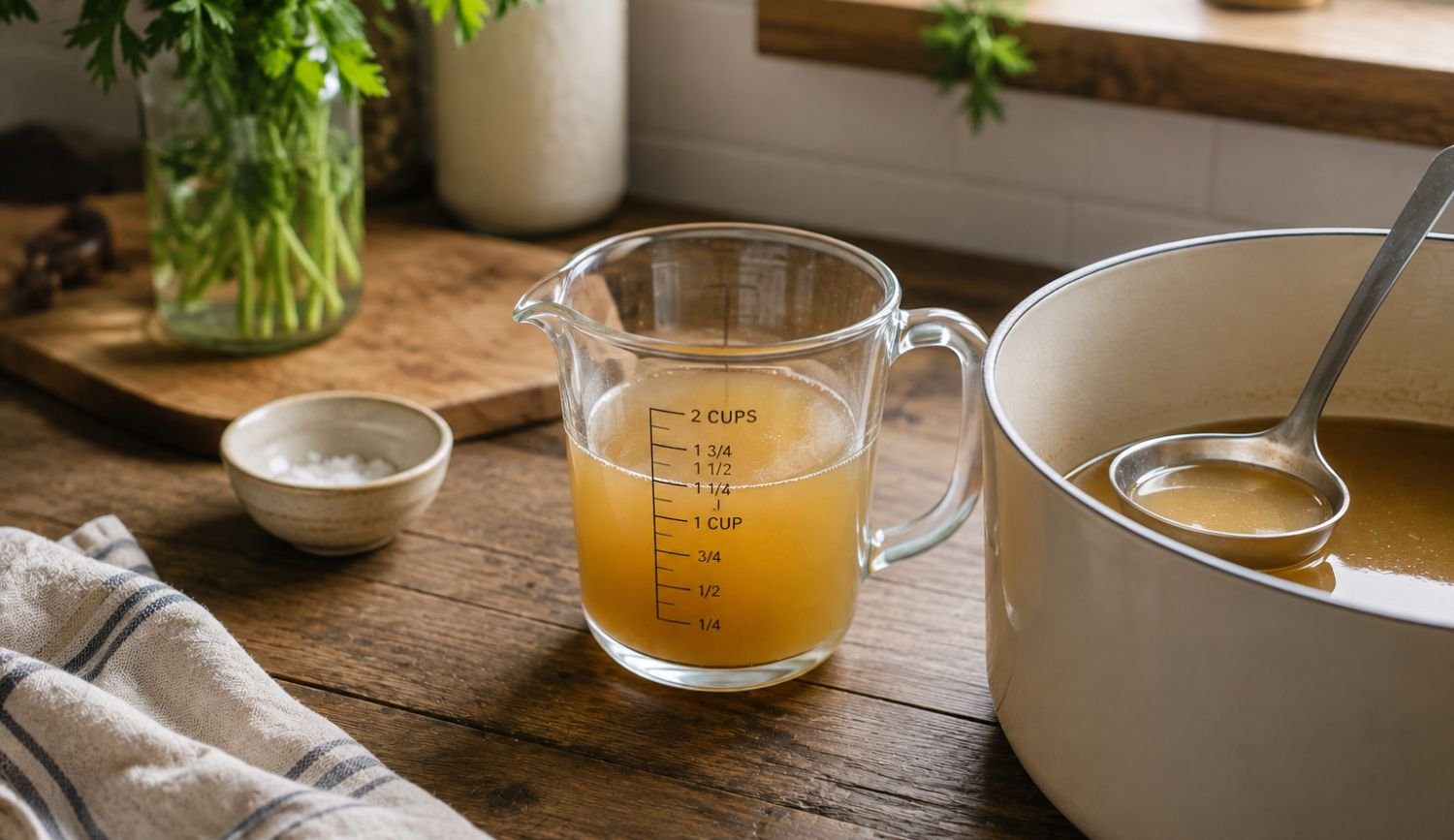
A pot of bone broth can look like a collagen project. It simmers for hours, and sometimes the whole batch turns into a firm gel once it hits the fridge.
That gel makes it tempting to assume every cup delivers a reliable dose. How much collagen is in bone broth actually depends on the bones you used, the water you added, and how long everything simmered.
Many online estimates cite around 6 to 12 grams per cup for richer broths. That range describes some batches well.
It isn’t a guarantee for the carton in your fridge or the pot on your stove.
Bone broth is variable by nature. Collagen powder, by contrast, is built to be measurable.
So, how much collagen is in bone broth?
Most bone broth does not have one fixed collagen number. Rich, gelatin-heavy homemade broth is often estimated around 6 to 12 grams of collagen-derived protein per cup, but that range is an estimate, not a lab-backed guarantee for every batch.
Thinner homemade broths, mixed-bone batches, and store-bought cartons may contain much less. The amount depends on connective tissue, joints, skin, cartilage, water volume, simmer time, evaporation, straining, and serving size.
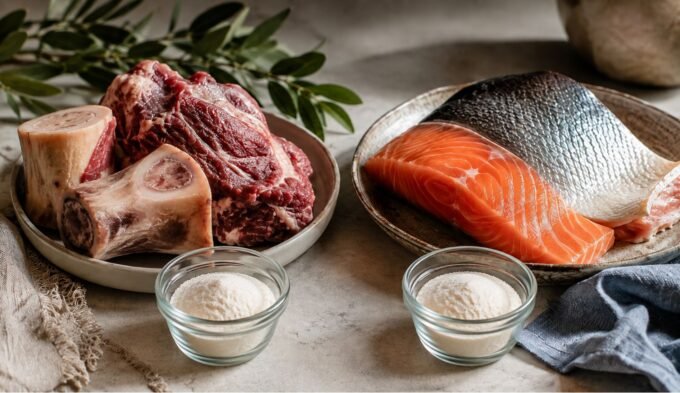
A broth made mostly from joints, feet, skin, cartilage, knuckles, or tendons is more likely to contain meaningful gelatin-forming material. A broth made mostly from clean marrow bones or diluted with a lot of water is usually less reliable as a collagen source.
Research comparing bone broth with measured collagen hydrolysate found that bone broth delivered lower and less consistent concentrations of key collagen precursor amino acids than standardized collagen supplements used in research settings [1].
Bone broth can contain collagen-derived gelatin, but it is not a standardized collagen dose the way a labeled supplement is. Collagen powder is more reliable when you need a measured amount.
Here’s a quick way to think about what you’re actually working with.
| Broth or product type | Collagen reliability | Practical meaning |
|---|---|---|
| Thin store-bought broth or stock | Low and inconsistent | Often lighter on connective tissue; treat any collagen claim skeptically |
| Homemade broth with mixed bones | Moderate, batch-dependent | Some collagen-derived content, but amount shifts with recipe |
| Gelatin-rich broth: joints, feet, skin, cartilage, knuckles, tendons | Higher, still variable | More likely to approach common online estimates, but still not a measured dose |
| Collagen powder | Measured and consistent | Manufactured dose per scoop, the clearest number available |
This is why the best answer is not a single number. Bone broth can be collagen-rich, but it behaves like a recipe, not a supplement label.
Why the number varies so much
A handful of practical factors explain most of the swing from batch to batch.
Bone selection matters most. Joints, feet, knuckles, skin, and cartilage release far more gelatin than bones alone.
Water volume changes the math directly. Double the water for the same bones and you’ve diluted whatever gelatin came out.
Simmer time, straining, and evaporation all shift the final concentration too. So does serving size, since a small mug and a large bowl of the same broth aren’t the same dose.
Homemade and commercial versions add one more layer of inconsistency. A café-style batch, a slow-cooker recipe, and a shelf-stable carton can all wear the same “bone broth” label while containing genuinely different amounts of collagen-derived material [1].
Which bones give bone broth more collagen?
This is the part most recipes skip, and it matters more than the animal you choose.
Chicken feet, wings, backs, skin, and cartilage are dense with connective tissue and tend to produce a strongly gelling broth. Chicken breast bones alone, without feet or skin, usually produce much less.
Beef knuckles, oxtail, tendons, and joints work the same way. They’re loaded with the connective tissue that becomes gelatin.
Marrow bones are worth a specific callout, since they get requested constantly for “the best bone broth.” Marrow adds rich flavor and fat, but it isn’t usually the strongest gelatin source on its own; the marrow itself sits inside the bone, separate from the connective tissue on the outside that actually breaks down into gelatin.
For a collagen-focused broth, the strongest batches usually combine bones with visible connective tissue, cartilage, skin, or joints rather than relying on clean marrow bones alone.
What the common 6–12 grams per cup claim really means
That figure shows up constantly online, often stated like settled fact.
It likely describes richer broths made with a high ratio of connective tissue to water. It was never meant to describe every batch, homemade or store-bought.
Research comparing homemade bone broth to a measured collagen hydrolysate dose found real inconsistency. Even broth made to a strict, repeated recipe tested lower in several key collagen-building amino acids than a therapeutic-range supplement dose used in research [1].
A number pulled from one favorable batch isn’t a promise for the broth in front of you.
Treat “6 to 12 grams per cup” the way you’d treat a recipe that “serves four.” It’s a reasonable estimate for one version of the dish, not a spec sheet.
Gelatin, collagen, and collagen peptides are not the same
These three words get used interchangeably online, which is part of why the numbers question gets so confusing.
Collagen is the structural protein found in connective tissue, skin, and bone. On its own, it doesn’t dissolve in water.
Heat changes that. Simmering breaks collagen down into gelatin, which is water-soluble and can set into a gel once the broth cools [2].
Collagen peptides go a step further. Manufacturers hydrolyze collagen into much smaller fragments that dissolve completely and never gel, which is why powder disappears into coffee while gelatin sets a dessert [2].
Collagen Peptides vs Gelatin covers this distinction in more depth.
A gelled broth tells you gelatin is present. It doesn’t tell you the exact dose.
Why some bone broth gels and some stays liquid
A firm gel usually means enough gelatin, concentrated enough, cooled long enough to set. A gel-like texture after chilling is generally treated as a sign the broth pulled real collagen-derived material from the bones [4].
Too much added water can prevent that, even with plenty of connective tissue in the pot. So can a marrow-heavy broth with little cartilage, skin, or joint material.
A liquid broth isn’t automatically useless. It may just be more diluted, or made from bones that contribute less gelatin in the first place.
A gelled broth isn’t automatically a high-dose collagen supplement either. Two batches can set to a similar firmness while containing meaningfully different amounts of actual gelatin, since texture responds to concentration and cooling time, not just total protein.
Beef vs chicken bone broth: which has more collagen?
Neither wins automatically. The parts you use, covered above, matter more than the species.
A chicken broth built from feet and skin can out-gel a beef broth made mostly from marrow bones, and a beef broth loaded with knuckles and oxtail can easily out-gel a chicken broth made only from carcasses. Species is a weaker predictor than cut.
Beef’s reputation as the “richer” broth mostly comes from flavor, not a proven collagen advantage. Compare cuts, not animals.
Bone broth vs collagen powder for collagen intake
This table sticks to one question: collagen amount and dose reliability. Bone Broth vs Collagen Powder covers the fuller decision between formats.
| Factor | Bone broth | Collagen powder | Takeaway |
|---|---|---|---|
| Dose clarity | Variable | Consistent per scoop | Powder is more predictable |
| Collagen form | Gelatin | Hydrolyzed peptides | Not directly comparable gram for gram |
| Variability | High, even with the same recipe | Low, manufactured to spec | Broth resists standardization |
| Broader nutrients | Minerals, fat, flavor | Isolated protein | Broth offers more than protein alone |
| Histamine concerns | Simmer time, cooling, storage | Source, additives, dose | Different risks, neither automatically safer |
| Best use case | Whole-food meal, hydration | Measurable collagen intake | Match the product to your goal |
The histamine-sensitive trade-off
For a general cooking site, the usual advice here would be simple: use more joints, simmer longer, extract more gelatin. For histamine-sensitive readers, that advice needs a warning label.
Longer simmering may pull out more gelatin. It can also mean a longer cooking, cooling, and storage process, which can create extra tolerance concerns for histamine-sensitive readers.
Bone Broth and Histamine covers that mechanism directly.
Chasing a slightly higher collagen yield isn’t worth it if the longer cook makes a broth harder to tolerate. If bone broth repeatedly triggers symptoms, Low Histamine Collagen Alternatives covers other ways to support the same goal.
A few safety notes
Bone broth is a food, not a treatment. It doesn’t guarantee changes to skin, joints, gut lining, or symptoms just because you drink more of it.
Anyone with an allergy to a source ingredient should avoid that broth or check with a clinician first. People managing kidney disease, liver disease, gout, a protein-restricted diet, pregnancy, breastfeeding, prescription medications, or another complex chronic illness should also ask a clinician before making concentrated broth or collagen products a regular habit.
The bottom line
Bone broth can genuinely contain collagen-derived gelatin. The amount varies widely, and no single number applies to every batch.
A gelled broth is a clue that gelatin is present, not a dosage label. Collagen powder gives a far clearer number if measurable intake is your actual goal.
Bone broth offers something different: a broader food matrix with minerals, flavor, hydration, and variable collagen-derived gelatin.
Neither format wins outright. If you’re histamine-sensitive, don’t chase longer simmering for a marginal collagen gain if it costs you tolerance.
Frequently asked questions
These questions focus on the practical collagen-number questions people usually have about bone broth, including grams per cup, beef vs chicken broth, gelatin, and how bone broth compares with collagen powder.
How much collagen is in bone broth?
There’s no reliable single number. Richer, gelatin-heavy broths may land near the often-cited 6 to 12 grams per cup; thinner homemade or store-bought versions typically deliver less [1].
Does bone broth have collagen?
Yes, in the form of gelatin and collagen-derived amino acids released from connective tissue during simmering. How much depends heavily on the specific batch.
Is bone broth high in collagen?
Some batches are, especially those made with a high ratio of joints, skin, and cartilage to water. Others are much lower, so “high in collagen” isn’t a safe assumption without knowing how the broth was made.
How much collagen is in one cup of bone broth?
Online sources often cite 6 to 12 grams for richer broths, but that figure isn’t universal. Homemade and store-bought versions can differ substantially from each other and from that number.
How much collagen is in beef bone broth?
It depends more on which beef parts were used than on beef as a category. Knuckles, oxtail, and tendons tend to yield more gelatin than marrow bones alone.
How much collagen is in chicken bone broth?
Similarly variable. Chicken feet, backs, and skin tend to produce a stronger-gelling broth than chicken breast bones by themselves.
Is gelatin in bone broth the same as collagen?
Not exactly. Gelatin forms when heat breaks down collagen, so it’s collagen-derived, but it behaves differently than either intact collagen or hydrolyzed collagen peptides [2].
Does bone broth have more collagen than collagen powder?
Not reliably. Collagen powder is manufactured to a consistent, measurable dose, while bone broth’s collagen content shifts with the recipe and can test lower than a supplemental dose even under controlled conditions [1].
Why did my bone broth not gel?
Likely too much water relative to connective tissue, bones that contributed less gelatin (marrow bones alone, for example), or a shorter simmer time. A liquid broth can still contain some collagen-derived amino acids even without gelling.
Should I simmer bone broth longer to get more collagen?
Longer simmering may extract somewhat more gelatin, but it isn’t a guaranteed fix and isn’t the right move for everyone. For histamine-sensitive readers especially, weigh any small collagen gain against the tolerance cost of longer cooking and storage time.
References
- Alcock RD, Shaw GC, Burke LM. Bone Broth Unlikely to Provide Reliable Concentrations of Collagen Precursors Compared With Supplemental Sources of Collagen Used in Collagen Research. International Journal of Sport Nutrition and Exercise Metabolism. 2019;29(3):265–272. https://doi.org/10.1123/ijsnem.2018-0139
- León-López A, Morales-Peñaloza A, Martínez-Juárez VM, Vargas-Torres A, Zeugolis DI, Aguirre-Álvarez G. Hydrolyzed Collagen—Sources and Applications. Molecules. 2019;24(22):4031. https://doi.org/10.3390/molecules24224031
- Hendley J. Savoring the benefits of bone broth: Worth a taste? Harvard Health Publishing. https://www.health.harvard.edu/diet-and-nutrition/savoring-the-benefits-of-bone-broth-worth-a-taste
- Is Bone Broth Any Different (or Better for You) Than Stock? Cleveland Clinic Health Essentials. https://health.clevelandclinic.org/is-bone-broth-any-different-or-better-for-you-than-stock