
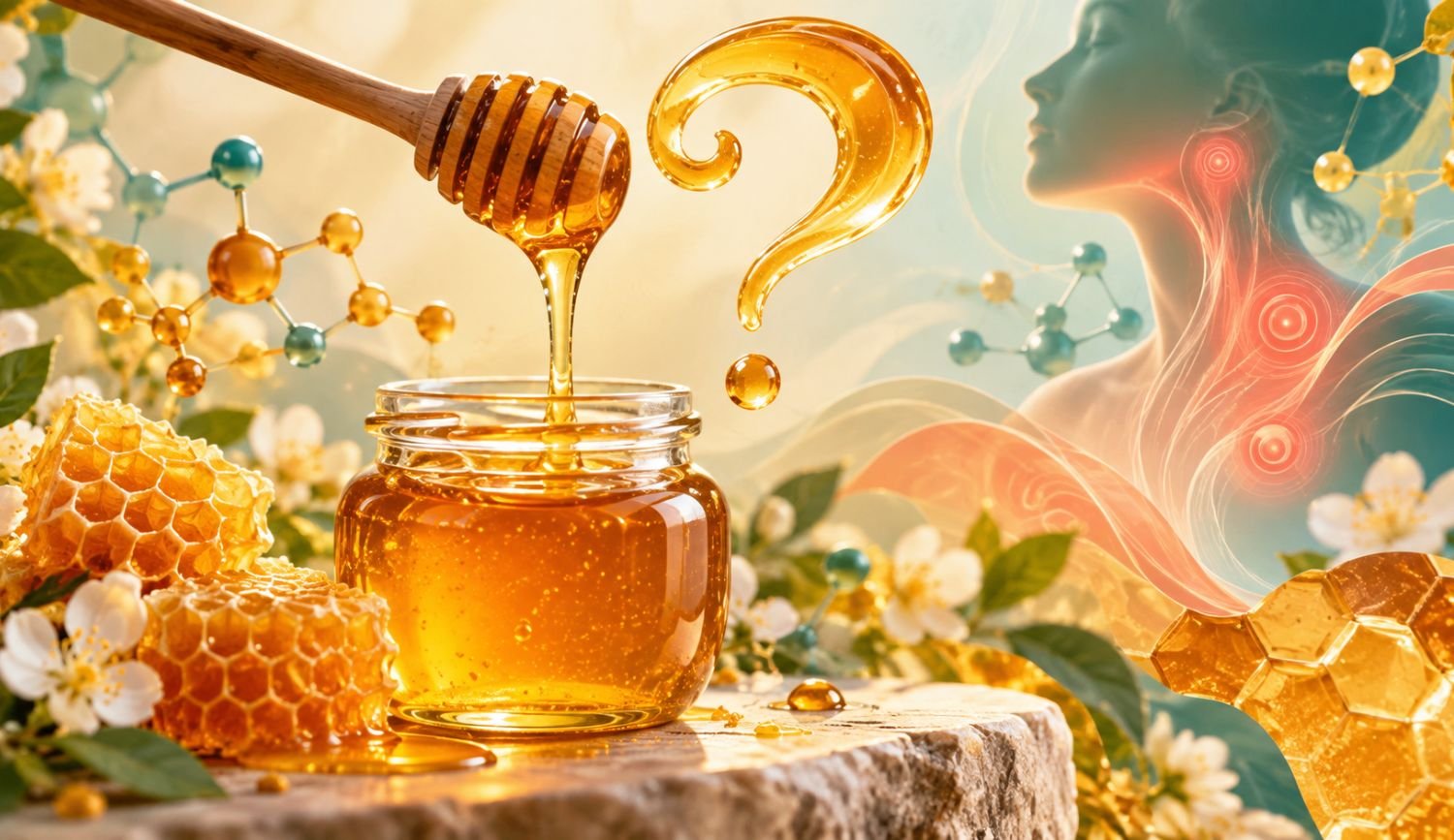
If honey is one of the foods you keep seeing on conflicting histamine lists, the confusion makes sense. So, is honey high in histamine? The best answer from direct testing is that honey is variable, not universally high, low, or histamine-free.
Some tested honeys contained very little histamine, while Brazilian samples showed much higher concentrations. That means the actual product matters, and a laboratory value still cannot predict with certainty whether you personally will react.
So, is honey high in histamine or low?
Honey cannot be placed reliably into one universal high-or-low category. Direct studies have found very different histamine concentrations in different honey sample sets.
In Brazilian honeys, researchers reported clearly measurable histamine with wide variation between samples. In contrast, a 2026 analysis of Algerian and Moroccan monofloral honeys found histamine generally below 1 mg/kg in the products tested.
That difference is the key point. One study does not prove that all honey is high, and another does not prove that all honey is low. The evidence tells us that honey histamine levels can vary substantially.
How much histamine does honey contain?
There is no single number that represents every honey. The best available direct measurements show substantial variation between regions and sample groups.
| Honey sample set | Measured histamine | What the result tells us |
|---|---|---|
| São Paulo, Brazil (n = 64) | Mean 24.1 mg/kg; range 2.83–181 mg/kg | Histamine was measurable and varied widely within this sample set |
| Santa Catarina, Brazil (n = 50) | Mean 16.1 mg/kg; range 1.58–37.7 mg/kg | Measured levels were lower than the São Paulo mean but still clearly variable |
| Algerian and Moroccan monofloral honeys | Generally below 1 mg/kg in the tested samples | Some honeys can contain very little histamine, but these results cannot be generalized to every honey |
These values are food-composition measurements, not symptom thresholds. Researchers have not established a honey-specific histamine concentration that tells us whether someone with histamine intolerance will react.
The studies also used different honey populations and analytical contexts. Geography, botanical source, production conditions, storage, and analytical methods may all contribute to variation, but the current evidence does not let us assign the difference to one single cause.
Is honey low histamine?
Some honeys have tested very low in histamine, but the evidence does not support calling every honey universally low histamine.
This is where compatibility lists can become confusing. A low-histamine food list is a practical dietary framework, while a laboratory study measures histamine in specific samples. Those are different kinds of information.
Why do honey histamine lists disagree?
A food list may classify honey broadly based on dietary experience or a compatibility system. Direct testing can still find a wide range of histamine concentrations from one group of honeys to another.
So if one list tells you honey is “safe” and another says to avoid it, neither label tells you exactly what is in the particular jar you are using. A compatibility rating is a starting point, not a chemical assay.
Is raw honey high in histamine?
There is no verified honey-specific comparison showing that raw honey is consistently higher or lower in histamine than pasteurized honey.
Raw honey differs from processed honey in ways such as filtration, heating, pollen content, and enzyme activity. But those differences do not establish a histamine ranking. Claims that raw honey is automatically the better low-histamine choice go beyond the evidence currently available.
Is Manuka honey low in histamine?
Manuka honey has not been shown to contain less histamine than other honey types in a direct comparative study identified for this guide.
Its antimicrobial and other biological properties are separate research questions. They should not be used as proof that Manuka honey is lower in histamine or that it treats histamine intolerance.
Is honey a histamine liberator?
Honey is not established as a clinically proven histamine liberator.
You may still see the term used on food lists, but the broader “histamine liberator” concept has weak clinical support. A 2021 guideline on adverse reactions to ingested histamine found no reliable evidence establishing presumed food-triggered histamine release as a general clinical mechanism.
That does not mean a reaction after honey should be dismissed. It means the liberator label should not automatically be used as the explanation. For the broader evidence, see our guide to histamine liberator foods.
What if honey makes you feel worse?
If you notice symptoms after eating honey, your experience matters. What it does not prove by itself is that the honey contained a high amount of histamine.
No honey-specific controlled trial in people with histamine intolerance was identified in the evidence reviewed for this article. Your personal response and the measured histamine concentration of a food are therefore related questions, but they are not the same answer.
Honey allergy is a separate concern
True IgE-mediated allergic reactions to honey have been documented. Pollen-derived and bee-derived proteins can act as allergens in susceptible people, which is a different mechanism from dietary histamine intolerance.
If honey causes symptoms that suggest an allergic reaction, seek clinical evaluation rather than assuming histamine intolerance is the cause. After a serious or clearly allergic-type reaction, do not try honey again without medical guidance. Our guide to histamine intolerance vs food allergies explains the distinction.
Can you eat honey on a low-histamine diet?
There is no universal yes or no. Some tested honeys contain very little histamine, while others contain more, and no honey-specific symptom threshold has been validated for histamine intolerance.
If plain honey already works well for you, the current evidence does not support removing it solely because a generic internet list gives it a fixed label. If you consistently notice symptoms after eating it, that pattern is worth taking seriously without assuming histamine must be the mechanism.
There is no evidence-based “safe serving” that applies to everyone. If you are trying to reduce variables, a plain single-ingredient honey is easier to interpret than a flavored blend, but individual tolerance still matters.
This evidence applies to plain honey. Foods such as honey mustard or honey-flavored cereals contain other ingredients, so their histamine profile cannot be predicted from honey data alone.
For broader food guidance, see our low histamine food list and high histamine foods.
References
- Lima GPP, et al. Biogenic amines and stable isotopes in the quality and authenticity of honeys from Brazil. Food Chem. 2023;427:136702. doi:10.1016/j.foodchem.2023.136702.
- Bruno F, Bruschetta G, Miller A, Nava V, Licata P. Toxicological Relevance of Biogenic Amines in Honey: Dietary Exposure and Integrated Risk Indicators in Algerian and Moroccan Honeys. Foods. 2026;15(8):1411. doi:10.3390/foods15081411.
- Gloria MBA, Diniz FB, Dala-Paula BM, et al. Histamine in Brazilian Foods: A Comprehensive Review of Occurrence and Risk Assessment for Intoxication and Intolerance. Food Sci Nutr. 2025;13(11):e71151. doi:10.1002/fsn3.71151.
- Reese I, et al. Guideline on management of suspected adverse reactions to ingested histamine. Allergol Select. 2021;5:305-314. doi:10.5414/ALX02269E.
- Bauer L, et al. Food allergy to honey: pollen or bee products? Characterization of allergenic proteins in honey by means of immunoblotting. J Allergy Clin Immunol. 1996;97(1 Pt 1):65-73. doi:10.1016/S0091-6749(96)70284-1.