

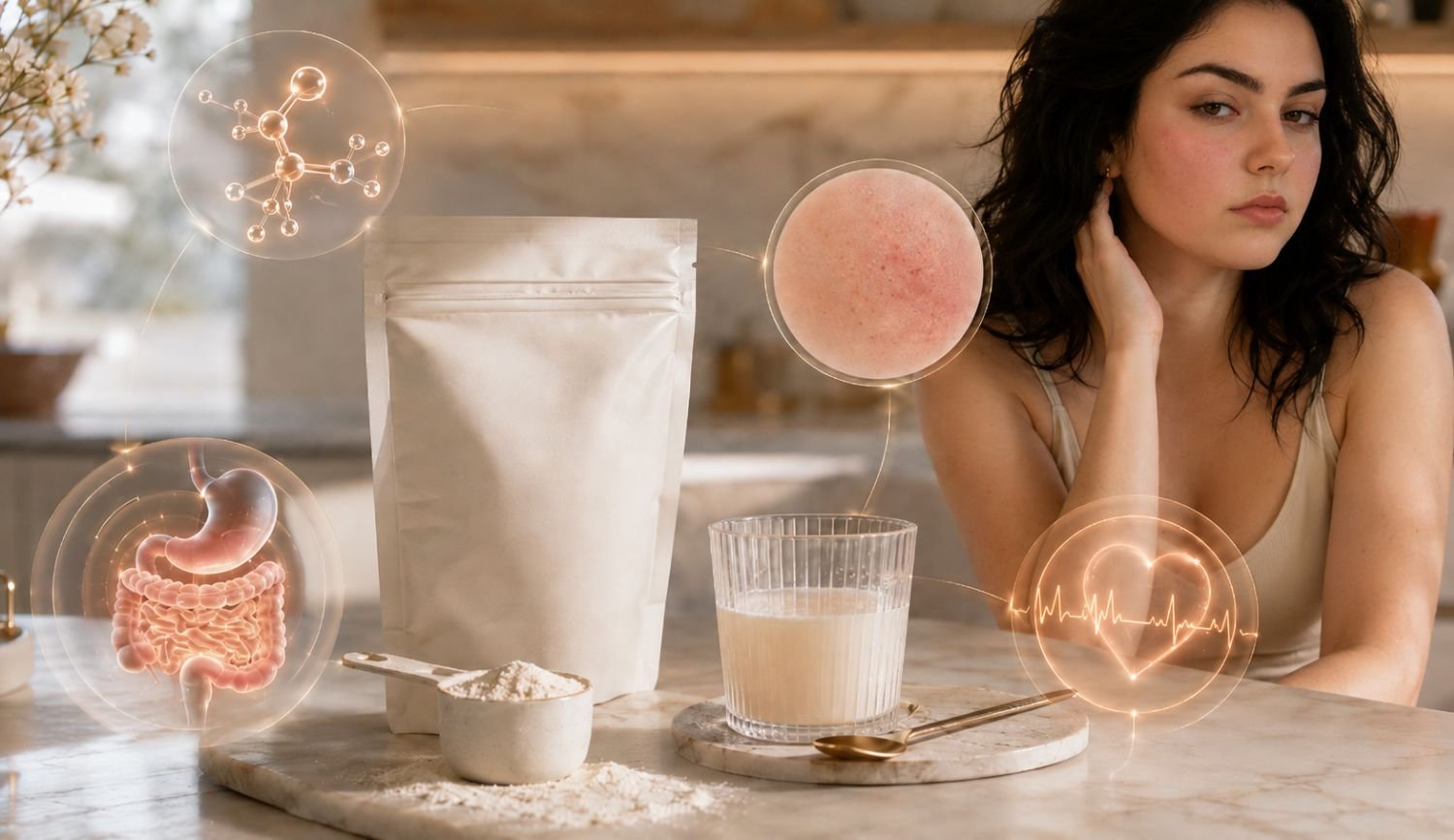
Collagen powder is often marketed as gentle, easy to digest, and low-risk. So when someone starts noticing bloating, flushing, itching, a racing heart, or trouble sleeping after adding it to their routine, it can feel confusing, even a little unsettling.
Collagen powder side effects are not something most product labels or beauty-focused marketing prepare you for. This article isn’t about blaming collagen for every symptom under the sun. It’s about helping you map what pattern your body actually showed, so you and a clinician, if needed, can make sense of it.
If you’re still deciding between collagen powder and other formats like bone broth, Bone Broth vs Collagen Powder compares the two through the same histamine-sensitive lens.
The short answer: collagen powder side effects are usually uncommon, but reactions can happen
Many people take collagen powder without any noticeable issues, and published research on oral collagen supplements has generally described it as well tolerated, with existing studies not reporting significant side effects in the populations they studied [1].
“Generally well tolerated” describes an average across study participants, though, not a guarantee for every person or every product. Sensitive people can still react, and the reason is not always obvious from the product name alone.
Dose, source material, added ingredients, a histamine-type response, or a true allergy-like reaction can all produce different symptoms that happen to look similar on the surface.
Why collagen powder reactions are easy to misread
The same symptom can point in several directions at once, which is exactly what makes this tricky to sort out on your own.
Flushing might be a histamine-type response, an additive reaction, a hormonal shift, simple overheating, or something unrelated entirely. Hives could reflect a true allergy, a histamine-type reaction, or another immune response.
Diarrhea might come from the dose, a sweetener in the formula, general gut sensitivity, or a histamine-like pattern. Heart racing and anxiety-like symptoms deserve particular caution, since they shouldn’t be casually self-diagnosed as “just the collagen” without ruling out other explanations.
Digestive side effects: bloating, reflux, nausea, constipation, or diarrhea
Digestive symptoms are the most commonly reported reactions to collagen powder, and they cover a fairly wide range:
- Fullness or bloating
- Gas
- Reflux or heartburn
- Nausea
- Constipation
- Diarrhea
- Stomach cramps
A few things tend to contribute. A large scoop taken all at once, or taken on an empty stomach, can be harder on digestion than a smaller amount taken with food. Sweeteners, gums, and added flavors in a formula are common culprits separate from the collagen itself, and general gut sensitivity or an unrelated digestive condition can play a role too.
Can collagen powder cause diarrhea? Some people do report diarrhea after taking collagen powder, although the cause may be the dose, added ingredients, gut sensitivity, or another digestive issue rather than collagen itself. One small study on a daily collagen peptide supplement in healthy women found that most participants who completed the study reported improved digestive symptoms rather than worsened ones, though this was a small, industry-supported study, and individual responses clearly vary [3].
A reaction in one person doesn’t predict what will happen for someone else.
Skin reactions: flushing, itching, rash, hives, or facial heat
Skin symptoms are often what prompt people to search for a histamine connection in the first place:
- Flushing
- Itching
- Rash
- Hives
- Facial heat or redness
- Occasional acne-like changes
These symptoms may look histamine-like, but that’s not the only explanation. They can also reflect a true allergy, sensitivity to an additive, a reaction tied to the source material, or a skin condition unrelated to the supplement entirely.
Mild, temporary redness is different from hives, swelling, or a rash that’s spreading quickly, and the second category deserves more caution and a closer look. Collagen Supplements and Histamine covers the histamine-type mechanism in more depth.
Heart and nervous-system symptoms: racing heart, palpitations, jitters, anxiety-like surges, or headache
A racing heart, palpitations, a jittery feeling, sudden anxiety-like surges, headache, and brain fog are symptoms some people report after starting collagen powder.
These shouldn’t be brushed off as “just stress,” but they also shouldn’t be assumed to prove histamine intolerance. Several things can contribute: a histamine-type reaction, sensitivity to an additive, caffeine or green tea extract sometimes included in fortified blends, too large a dose, an already-active flare, or an unrelated medical issue.
If chest tightness, fainting, or other severe symptoms show up alongside these, that calls for prompt medical attention rather than watching and waiting.
Sleep changes: insomnia or feeling wired after collagen
Some readers notice trouble sleeping, a wired feeling, or nighttime waking after starting collagen, especially when it’s taken later in the day.
This may relate to timing, dose, current nervous-system sensitivity, other ingredients in the product, or simply individual variation in response. Collagen has a distinctive amino acid profile compared with other proteins, and it isn’t considered a complete protein on its own, but that alone doesn’t mean it directly causes insomnia in everyone who takes it.
If sleep disruption shows up consistently after an evening dose, it may be worth discussing timing, dose, and ingredients with a clinician or testing only after symptoms are stable.
Allergy-like reactions need a different level of caution
Collagen products come from animal sources: bovine, porcine, fish or marine, chicken, or occasionally eggshell membrane. A true allergy to one of these source materials is a different situation than histamine intolerance, and it deserves to be treated differently.
Anyone with a known fish or shellfish sensitivity should be cautious with marine collagen specifically. Marine Collagen and Histamine covers that source in detail.
People with diagnosed or suspected alpha-gal syndrome should speak with a clinician before using mammalian-derived collagen. Gelatin and collagen allergies are uncommon, but allergy reactions to animal-derived collagen or gelatin products have been documented in medical literature [6].
Seek urgent medical care right away if any of the following appear:
- Throat swelling
- Trouble breathing or wheezing
- Facial, lip, or tongue swelling
- Fainting
- Severe chest tightness
- Rapidly spreading hives
- Any other signs of anaphylaxis
Do not attempt a home re-challenge after a serious allergic reaction. That’s a decision for a clinician, not a self-test.
Additives and beauty blends can confuse the picture
Plenty of collagen products aren’t just collagen. Common additions include:
- Sweeteners
- Gums
- Natural flavors
- Acids
- Biotin
- Vitamin C or other vitamin blends
- Probiotics
- Herbs or adaptogens
- Caffeine or green tea extract
- “Beauty complex” formulas
Any one of these can cause a reaction that has nothing to do with the collagen itself, which makes troubleshooting a multi-ingredient product genuinely harder than troubleshooting a plain one. High-dose biotin, in particular, is worth knowing about beyond just symptoms: the FDA has warned that high biotin intake can interfere with certain lab tests, including some cardiac and thyroid tests, potentially producing inaccurate results your clinician should know to account for if you’re taking a biotin-containing supplement [8].
Does this mean collagen powder is high histamine?
Not necessarily. Collagen powder is not usually grouped with fermented foods, aged meats, wine, vinegar, or long-simmered bone broth, where fermentation, aging, extended cooking, or storage are more central histamine-risk variables [4].
That said, “not usually high histamine by default” does not mean guaranteed low histamine either. Source, processing, additives, dose, and your own threshold on a given day still shape the real answer for any specific product [2][5].
Is Collagen High in Histamine? and Collagen Peptides and Histamine cover this question in more depth than this article can.
What to track before blaming collagen itself
If you’re trying to figure out what’s actually going on, a simple tracking approach beats guessing. Before drawing conclusions, note:
- Product name and source (bovine, marine, porcine, chicken, or eggshell)
- Dose taken and timing
- Whether it was taken with food
- Full ingredient list
- Symptoms, onset time, and how long they lasted
- Other high-histamine foods eaten that day
- Whether you were already in an active flare
- Other medications or supplements taken around the same time
This isn’t a full buying checklist, just enough detail to spot a real pattern rather than reacting to a single confusing episode.
When to stop and ask for medical help
Stop the product and speak with a healthcare professional if symptoms are severe, repeated, worsening, or allergy-like. That includes palpitations, chest symptoms, faintness, persistent diarrhea, persistent hives, swelling, or any breathing symptoms.
Check with a clinician before starting collagen supplements at all if any of the following apply:
- Pregnant or breastfeeding
- Kidney disease, liver disease, or gout
- Known food allergies, alpha-gal syndrome, or a fish or shellfish allergy
- A complex chronic condition
- Taking prescription medications
It’s also worth remembering that dietary supplements aren’t reviewed by the FDA for safety or effectiveness before they reach store shelves the way medications are, so manufacturers, not the FDA, are responsible for ensuring a product is safe before it’s sold [7].
The bottom line
Collagen powder side effects appear uncommon for most people, but sensitive individuals can still react. The more useful question usually isn’t “is collagen bad?” It’s “what pattern did my body actually show?”
Digestive symptoms, skin reactions, heart and nervous-system symptoms, sleep changes, and allergy-like reactions each point toward different possible explanations, and they’re worth separating rather than lumping together as one thing.
If collagen powder keeps triggering symptoms no matter what you try, that doesn’t mean you’re stuck. Low Histamine Collagen Alternatives covers other ways to support the same goals.
Frequently asked questions
These answers summarize common questions about collagen powder side effects. They are meant to help you recognize patterns, not diagnose the cause of a reaction.
What are the most common collagen powder side effects?
Digestive symptoms like bloating, fullness, and mild stomach upset are the most frequently reported. Skin symptoms, sleep changes, and heart or nervous-system symptoms are reported less often but are still worth tracking if they occur.
Can collagen powder cause diarrhea?
It can in some people, often tied to dose size, an added sweetener, or general gut sensitivity. It isn’t a universal reaction, and most reports describe mild, temporary digestive changes rather than severe symptoms.
Can collagen powder cause hives or itching?
Yes, in some people, though the cause isn’t always the same. It could be a histamine-type response, a true allergic reaction, or sensitivity to an additive rather than the collagen itself.
Can collagen powder cause anxiety?
Some people report a wired or anxious feeling after starting collagen, which may relate to dose, added ingredients like caffeine or green tea extract, a histamine-type response, or an already-active flare. It shouldn’t be dismissed, but it also isn’t proof of a specific cause on its own.
Can collagen powder cause heart palpitations?
It’s been reported by some people, and it deserves attention rather than being brushed aside. Possible contributors include dose, additives, histamine-type reactions, or an unrelated medical issue, so persistent or severe palpitations are worth discussing with a clinician.
Can collagen powder cause insomnia?
Some people notice sleep disruption, especially when taking it later in the day. Timing, dose, and individual sensitivity all likely play a role, and shifting the dose earlier in the day is a reasonable first thing to try.
Is collagen powder high in histamine?
Not automatically, and not in the same category as fermented or long-aged foods. But it isn’t guaranteed low histamine either; source, processing, and additives still matter for any specific product.
Can collagen powder trigger allergies?
Yes, since it’s derived from animal sources like bovine, porcine, marine, or chicken material. True allergy is different from histamine intolerance, and allergy-like symptoms need medical evaluation rather than continued testing at home.
Should I stop collagen powder if I react?
Stopping is a reasonable first step for any noticeable reaction, and it’s the right call immediately if symptoms are severe, repeated, worsening, or allergy-like. Tracking what happened can help a clinician sort out the likely cause if you decide to investigate further.
What should I use if collagen powder keeps causing symptoms?
Fresh tolerated protein and targeted nutrients like glycine, proline, and vitamin C can support the same underlying goals without relying on a collagen supplement. Low Histamine Collagen Alternatives covers this in detail.
References
- Al-Atif H. Collagen Supplements for Aging and Wrinkles: A Paradigm Shift in the Field of Dermatology and Cosmetics. Dermatology Practical & Conceptual. 2022;12(1):e2022018. https://doi.org/10.5826/dpc.1201a18
- León-López A, Morales-Peñaloza A, Martínez-Juárez VM, Vargas-Torres A, Zeugolis DI, Aguirre-Álvarez G. Hydrolyzed Collagen—Sources and Applications. Molecules. 2019;24(22):4031. https://doi.org/10.3390/molecules24224031
- Abrahams M, O’Grady R, Prawitt J. Effect of a Daily Collagen Peptide Supplement on Digestive Symptoms in Healthy Women: 2-Phase Mixed Methods Study. JMIR Formative Research. 2022;6(5):e36339. https://doi.org/10.2196/36339
- Maintz L, Novak N. Histamine and histamine intolerance. American Journal of Clinical Nutrition. 2007;85(5):1185–1196. https://doi.org/10.1093/ajcn/85.5.1185
- Comas-Basté O, Sánchez-Pérez S, Veciana-Nogués MT, Latorre-Moratalla M, Vidal-Carou MC. Histamine Intolerance: The Current State of the Art. Biomolecules. 2020;10(8):1181. https://pmc.ncbi.nlm.nih.gov/articles/PMC7464760/
- Bogdanovic J, Halsey NA, Wood RA, Hamilton RG. Bovine and porcine gelatin sensitivity in children sensitized to milk and meat. Journal of Allergy and Clinical Immunology. 2009;124(5):1108–1110. https://doi.org/10.1016/j.jaci.2009.06.021
- Dietary Supplements. U.S. Food and Drug Administration. https://www.fda.gov/food/dietary-supplements
- Update: The FDA Warns that Biotin May Interfere with Lab Tests: FDA Safety Communication. U.S. Food and Drug Administration. https://www.fda.gov/medical-devices/safety-communications/update-fda-warns-biotin-may-interfere-lab-tests-fda-safety-communication